

























Why Ash Wednesday Draws Crowds — and What Lent Will Look Like in 2026

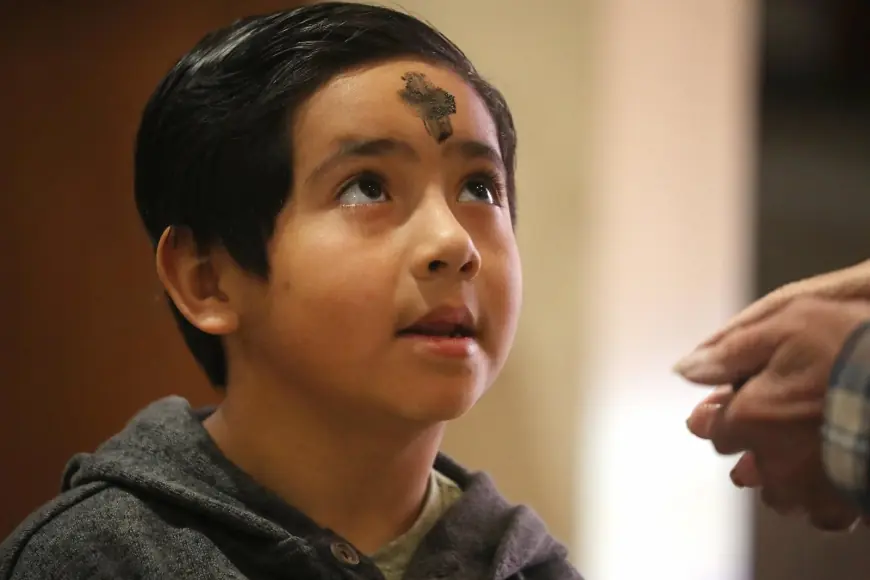
Ash Wednesday — the first day of lent — regularly fills church pews even when attendance is otherwise low. The ritual of receiving ashes is a public marker, a prompt to reflect on mortality, and an entry point into a 40-day season of penitence and renewal. With Ash Wednesday falling on Wednesday, Feb. 18, 2026 (ET), many communities are already preparing for the season ahead.
Why so many people turn up on Ash Wednesday
Data tracking Mass attendance from 2019 to 2024 by Georgetown University’s Center for Applied Research in the Apostolate found that Ash Wednesday consistently competes with Easter and Christmas for the highest-attended services each year; in 2024 Ash Wednesday attendance even topped Christmas 2023. That surge is made up of regular parishioners and a larger group of occasional worshippers who make a point of coming out for the ritual.
For many, the ash cross applied to the forehead is an unmistakable identity marker. Jesuit Father Bruce Morrill, a theology professor and chair of Roman Catholic Studies at Vanderbilt University, says younger worshippers often embrace the practice as a public statement of faith. But the draw isn’t only identity: the ritual sharply focuses attention on themes of sin, mortality and the need for reconciliation.
That public aspect — a small black cross on the forehead or hand — works on several levels. It signals belonging, invites conversation, and acts as a visible reminder of the spiritual work people plan to undertake during lent. Yet the ashes themselves are meant to lead inward; the external sign is intended to prompt internal reflection and conversion rather than merely serving as a social badge.
What the ashes mean and how the ritual connects to older practices
The ashes used on Ash Wednesday are traditionally made from the palms distributed on the previous Palm Sunday. The practice of imposing ashes dates back many centuries and evolved from penitential rites in which converted sinners underwent public penance. Liturgical guidance emphasizes that ashes symbolize human fragility and mortality and are meant to dispose the faithful toward genuine conversion and renewed commitment in the weeks leading to Easter.
Beyond the historical roots, the ritual’s emotional power remains strong. Even as formal confession may be less frequent than in earlier generations, the simple act of receiving ashes can provoke a renewed sense of spiritual seriousness. The ritual points to the “Four Last Things” — death, judgment, heaven and hell — while also gesturing forward to spring and the promise of new life that Easter brings.
Key dates for Lent and Easter in 2026 (ET)
Ash Wednesday in 2026 falls on Wednesday, Feb. 18 (ET). Lent spans the 40-day penitential period that begins that day and runs through Thursday, April 2, 2026 (ET). Good Friday will be observed on April 3, 2026 (ET), with Easter Sunday celebrated on April 5, 2026 (ET). These dates place the 2026 season earlier than the previous year, offering parishes and worshippers an earlier opportunity for reflection, fasting and spiritual preparation.
Easter’s date follows the long-standing ecclesiastical rule: it is celebrated on the first Sunday after the full moon that occurs on or after the spring equinox, which is why the exact date shifts from year to year. Churches and communities use the season to plan spiritual programs, Lenten observances, and services that culminate in Holy Week and the Easter celebration.
Whether driven by tradition, public identity, or a desire for spiritual renewal, the Ash Wednesday ritual continues to draw large numbers into worship spaces. For many, a single mark of ash is a powerful starting point for 40 days of reflection, repentance and hope.