

























‘Ring of fire’ annular solar eclipse to track across Antarctica in February 2026; South Africa to see a partial show

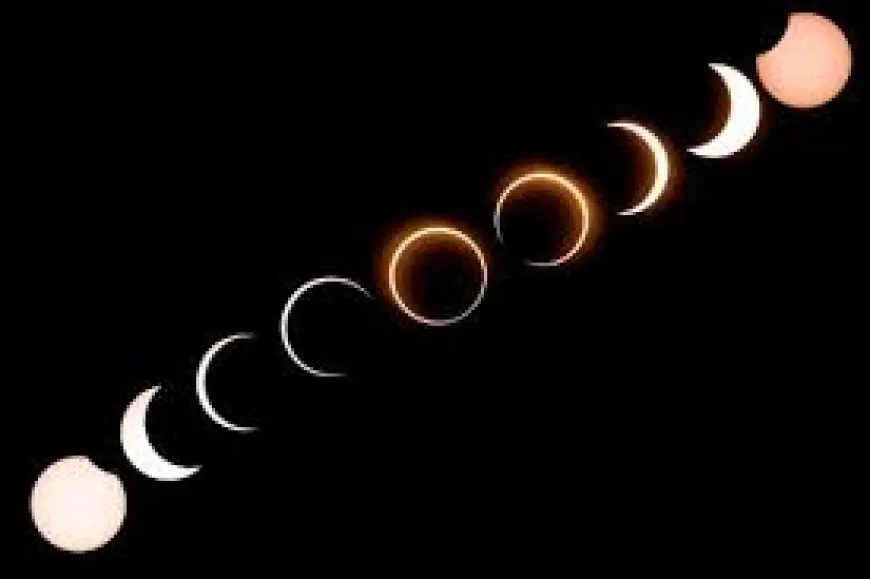
Skywatchers and polar researchers are turning attention to February 2026 when an annular solar eclipse — the dramatic "ring of fire" event — will sweep across Antarctica, with a partial eclipse visible across parts of southern Africa, including South Africa. The phenomenon offers rare viewing opportunities, logistical challenges for would-be observers, and scientific value for those studying the Sun-Earth connection.
Path of the eclipse and who will see it
The eclipse taking place in February 2026 will be annular along a path crossing primarily uninhabited stretches of Antarctica and the surrounding Southern Ocean. Observers located within the narrow track of annularity will see the Moon cover the center of the Sun, leaving a bright ring of sunlight at maximum — the so-called "ring of fire. " Outside that path, a much wider region will experience a partial eclipse, including locations in southern Africa where a noticeable dimming and partial obscuration of the Sun will be visible.
Because the core path runs over polar regions and remote waters, the best vantage points for those seeking a full annular experience will likely involve specialized travel arrangements or work at scientific stations on the Antarctic continent. Residents and visitors in South Africa and neighboring countries should be able to witness a partial eclipse, with the degree of obscuration increasing closer to the southern tip of the continent. Cloud cover and local weather on the day will determine how much of the event is visible from any particular site.
Preparation, safety and the logistics of polar viewing
Viewing any solar eclipse requires careful eye protection. Observers must use certified solar filters or eclipse glasses at all times when looking directly at the Sun, except during any brief, specific phases when it is safe without protection — a condition that does not apply for most of an annular eclipse. Regular sunglasses are not sufficient. Telescopes, binoculars, and camera lenses must be fitted with appropriate solar filters to avoid permanent eye damage or equipment harm.
Logistics for reaching prime viewing areas during a polar eclipse are complex. Antarctica’s remoteness, extreme conditions and seasonal access windows mean that travel planners, scientists and expedition leaders will need to coordinate transport, permits and survival gear well in advance. Ship-based viewing in the Southern Ocean offers an alternative for travelers unable to access land-based sites, but seaworthiness, timing and weather remain significant variables. For residents in South Africa and the broader southern Africa region, local parks, observatories and astronomy groups typically organize viewing events that make safe equipment available to the public.
Scientific and cultural importance
Annular eclipses, while not providing totality, still present opportunities for solar observation. The unique geometry of an annular event offers researchers a chance to study the solar limb and chromospheric features under different light conditions than a total eclipse. Institutions focused on solar physics and atmospheric science often plan coordinated observations to capture precise measurements of solar irradiance, atmospheric scattering and the response of Earth's ionosphere during the eclipse.
Beyond research, eclipses continue to hold cultural and educational value. They draw public interest in astronomy and provide teachable moments about celestial mechanics, the scale of the solar system and the importance of safe viewing practices. For communities within the partial visibility zone, local events can bring people together around a shared natural spectacle.
Whether watching from a coastal vantage in South Africa or from a vessel skimming the Southern Ocean, anyone planning to view the February 2026 eclipse should finalize arrangements early, prioritize certified eye protection, and prepare for rapidly changing weather conditions that are common in southern latitudes. The combination of rarity, spectacle and scientific usefulness makes this annular eclipse a standout event for both professionals and the public.