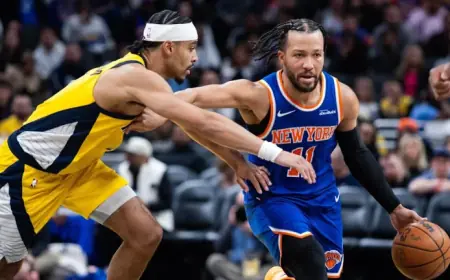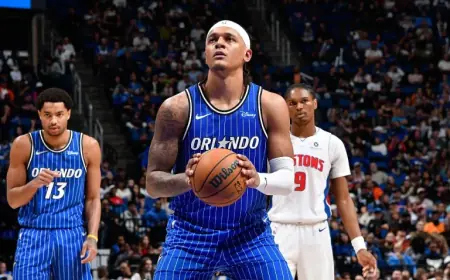

























Cole Anthony and Amir Coffey Head to Phoenix as Bucks Add Nick Richards and Nigel Hayes-Davis in Deadline-Day Shakeup


The NBA trade deadline delivered a clean, role-player swap on Thursday, February 5, 2026 (ET), with the Phoenix Suns and Milwaukee Bucks exchanging four players whose value is tied less to star power and more to roster fit, financial flexibility, and playoff insurance. Phoenix is acquiring guard Cole Anthony and wing Amir Coffey, while Milwaukee is bringing in center Nick Richards and forward Nigel Hayes-Davis.
On paper it’s a straightforward two-for-two. In practice it’s a snapshot of how contenders and near-contenders operate at the deadline: one side tries to stabilize ball-handling and perimeter depth, the other side tries to shore up size and frontcourt options without touching the core.
What happened: the trade at a glance
Phoenix receives:
-
Cole Anthony
-
Amir Coffey
Milwaukee receives:
-
Nick Richards
-
Nigel Hayes-Davis
All four players are widely viewed as rotation or depth pieces rather than franchise cornerstones, which is exactly why deals like this often sneakily matter in April and May.
Why Phoenix wanted Cole Anthony and Amir Coffey
Phoenix’s motivation reads as a mix of practicality and optionality.
Cole Anthony gives the Suns another guard who can create shots, push tempo in short bursts, and soak up regular-season minutes when stars sit or when the offense bogs down. He’s the kind of guard who can win you a random Tuesday by getting hot, and he can also help a second unit survive when the main engines rest.
Amir Coffey is the steadier, connector-style add: a wing who can slide between positions, defend multiple matchups in a pinch, and keep the ball moving. For a team that has lived on razor-thin margins with injuries and lineup juggling, a reliable “does a bit of everything” wing matters.
Behind the headline, the Suns are also making a bet on flexibility. Deadline deals aren’t only about talent; they’re about clean contracts and the ability to pivot. If Phoenix believes the current roster needs a different mix for the stretch run, swapping into guard-and-wing depth can be a low-drama way to reshape nightly rotations.
Why Milwaukee targeted Nick Richards and Nigel Hayes-Davis
Milwaukee’s end of the deal is about size, physicality, and insurance in the frontcourt.
Nick Richards gives the Bucks a true center option with rim presence. Even if he isn’t closing games every night, a functional big who can protect the paint, rebound, and finish plays can be crucial across an 82-game season and into matchup-heavy playoff series. The Bucks have lived through stretches where big-man depth becomes a problem fast; Richards is a direct answer to that vulnerability.
Nigel Hayes-Davis is the more intriguing name for casual NBA fans because his recent reputation has been built largely outside the league. He’s a tough, versatile forward profile—strong frame, defensive edge, and a willingness to do the unglamorous work. For Milwaukee, he looks like a depth swing that could pay off if he translates quickly into the role-player demands of a playoff team.
The “why now”: deadline incentives and roster math
This is the kind of trade teams make when they want improvement without chaos.
-
Phoenix addresses ball-handling and wing depth, two categories that become fragile the moment a top scorer misses time or defenses load up in the half court.
-
Milwaukee adds a more traditional frontcourt body and a physical forward option, a common need for teams anticipating heavier postseason matchups.
The second-order effect is rotation clarity. In February, coaches don’t want to reinvent the system—they want pieces that fit without a steep learning curve. A guard who can create and a wing who can defend are easier to plug in than a specialist who requires a new scheme.
What we still don’t know
A trade like this hinges on details that won’t be obvious on day one:
-
How Phoenix staggers minutes so Anthony’s shot-creation complements—not duplicates—existing ball-dominant lineups
-
Whether Coffey’s role becomes nightly or matchup-based depending on opponent wings
-
How quickly Richards earns trust in Milwaukee’s defensive coverages and rebounding responsibilities
-
Whether Hayes-Davis becomes a real rotation piece or a developmental/insurance option for the rest of the season
What happens next: realistic scenarios and triggers
-
Phoenix stabilizes its bench offense quickly
Trigger: Anthony strings together efficient scoring nights and reduces the load on the starters. -
Coffey becomes a playoff matchup tool
Trigger: he consistently defends bigger wings without forcing Phoenix into awkward lineups. -
Milwaukee’s frontcourt minutes get cleaner
Trigger: Richards reliably anchors non-star minutes with rebounds and rim protection. -
Hayes-Davis either sticks fast or stays dormant
Trigger: if his defense and physicality translate immediately, he plays; if not, he’s depth for emergencies.
Why it matters
Deadline headlines usually belong to stars, but championships often hinge on whether the seventh-to-tenth men can survive high-leverage stretches. This deal is a classic example of two teams trying to win the margins: Phoenix leaning into guard-and-wing versatility, Milwaukee leaning into size and frontcourt stability. The real verdict won’t come tonight—it’ll come in the first playoff series where one of these names swings a quarter.