




















Knicks Trade for Jose Alvarado as New York Upgrades Backcourt Depth and Re-routes Dalen Terry to the Pelicans

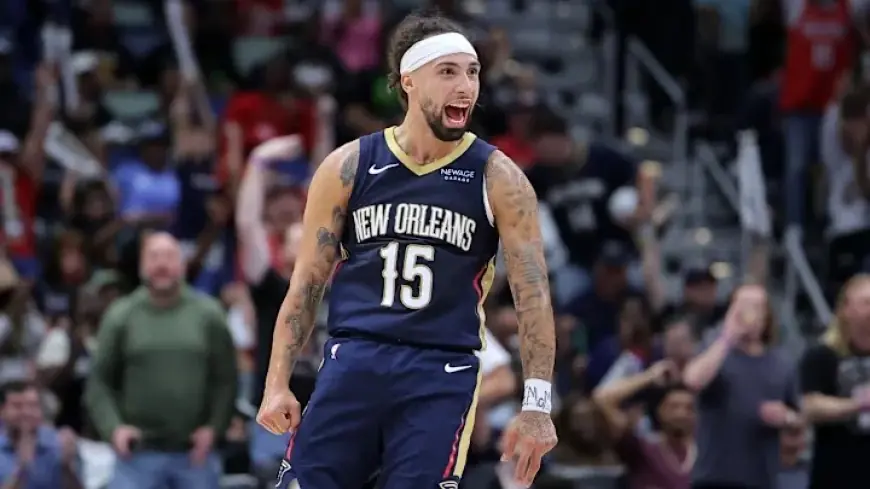
The New York Knicks made a deadline-day move on February 5, 2026 ET, acquiring guard Jose Alvarado from the New Orleans Pelicans in a deal that sends Dalen Terry to New Orleans along with two second-round draft picks and cash. The trade lands as the Knicks sit near the top of the Eastern Conference and are trying to protect their rotation against injury risk heading into the stretch run.
Alvarado, a Brooklyn native known for relentless on-ball pressure, arrives as a ready-to-play guard who can soak up regular-season minutes and add a defensive edge behind Jalen Brunson. For the Pelicans, the return is a young wing in Terry plus future draft capital as they pivot toward longer-term asset building.
What happened in the Jose Alvarado trade
The basic exchange is straightforward:
New York Knicks receive
Jose Alvarado
New Orleans Pelicans receive
Dalen Terry
Two second-round picks
Cash
A notable wrinkle is how quickly Terry’s destination changed. He was moved earlier in the day in a separate transaction and then flipped again, turning him into a bridge piece that helped multiple teams solve different needs within hours.
Why the Knicks made the move now
This trade is about insulation, not reinvention.
The Knicks have been operating with heavy minutes at the top of the guard rotation, and the second unit has faced added strain with Miles McBride sidelined following a sports hernia issue and an expected surgery timeline. Alvarado gives New York a plug-and-play option who can initiate offense in short bursts, pick up full court, and pressure opposing ballhandlers to change tempo.
Alvarado’s 2025 to 2026 season profile fits the role: 7.9 points and 3.1 assists in 21.9 minutes per game across 41 games, primarily as a reserve. He also brings a recent track record of higher usage when needed, after posting career-best averages last season.
The second part of the “why now” is contract strategy. Alvarado carries a player option for next season at a manageable number, which gives the Knicks flexibility. If he fits, they can keep him without a complicated process. If he does not, the commitment is limited, and the team can reassess in the offseason.
Behind the headline: incentives, leverage, and what New York is really buying
Context matters: the Knicks are not shopping for a star. They are protecting a seed.
New York’s incentive is to reduce the probability of a single injury turning into a multi-week skid that costs home-court advantage. That sounds small until you remember the playoff math: one or two games in February can decide who hosts a Game 7 in May.
Alvarado also changes the identity of bench minutes. When a team’s second unit struggles to defend the point of attack, it forces help rotations, which leads to corner threes and foul trouble for bigs. A guard who can stay attached and disrupt timing is often worth more than an extra shooter in matchups where the opponent’s bench is guard-driven.
For the front office, this is a low-cost way to raise the team’s nightly floor without locking into long-term salary.
Why the Pelicans did it
New Orleans is making a different bet: convert a rotation guard into picks and a young player while the season is already trending away from the playoff picture.
The Pelicans’ record sits near the bottom of the West, and in that context, Alvarado’s value is highest as a deadline asset: a competent, well-defined role player who contenders can use immediately. The two second-round picks are meaningful in aggregate because they can be used as trade grease, draft-and-stash swings, or cost-controlled roster filler. Terry, meanwhile, gives the Pelicans a wing defender with energy and upside, even if his offensive role is still a work in progress.
Knicks standings and what this means for the East race
As of February 5, 2026 ET, the Knicks are 33 and 18, tied in record with Boston and sitting just behind Detroit in the Eastern Conference. That positioning is exactly why depth matters now: teams at the top cannot afford extended slumps created by missing one rotation piece.
Eastern Conference snapshot
Detroit 37 and 12
New York 33 and 18
Boston 33 and 18
Cleveland 31 and 21
Philadelphia 29 and 21
What we still don’t know
Several key questions will decide whether this trade becomes a footnote or a genuine advantage:
How quickly Alvarado earns consistent minutes behind Brunson, and whether his offense holds up in tighter playoff-style possessions
Whether New York treats him as a temporary injury patch or a longer-term bench guard option
How the Knicks’ bench spacing looks with Alvarado on the floor, since his biggest value comes from defense and pace control rather than high-volume scoring
Whether Terry’s development pops in a larger-opportunity environment in New Orleans
What happens next: realistic scenarios and triggers
Alvarado becomes a steady 18 to 22 minute rotation guard
Trigger: McBride remains out and Alvarado’s defense stabilizes second-unit lineups.
Alvarado plays situationally, matchup dependent
Trigger: opponents that hunt non-shooters force New York to prioritize spacing.
New York makes a second move built off the added flexibility
Trigger: the team uses its improved guard depth to explore a wing or big upgrade.
Terry gets a real audition in New Orleans
Trigger: the Pelicans shift minutes toward younger players and give Terry a consistent role.
The deal looks smarter in April than in February
Trigger: one key game swings because Alvarado absorbs a tough defensive assignment or closes a fourth quarter when the rotation is stressed.