




















Billie Eilish’s “stolen land” Grammys moment ripples beyond the winners list

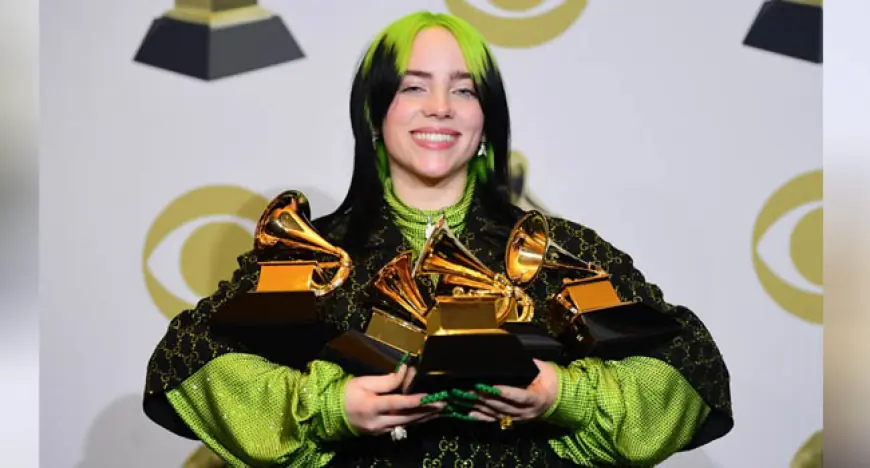
Billie Eilish’s acceptance speech at the 2026 Grammy Awards turned a routine “Song of the Year” win into one of the week’s most argued-over cultural flashpoints. Her line, “No one is illegal on stolen land,” delivered on Sunday, Feb. 1, 2026 (ET), has since pulled in immigration politics, Indigenous land acknowledgment debates, and a viral pile-on cycle that now includes influencer backlash and calls for more specific recognition of the Tongva people in Los Angeles.
Billie Eilish wins Song of the Year
Eilish won Song of the Year for “WILDFLOWER”, sharing the moment with her brother and collaborator Finneas. Instead of focusing on the recording, she used most of her short time at the mic to speak about immigration and enforcement, wearing an “ICE Out” pin and closing with an expletive aimed at ICE that was partly censored on broadcast feeds.
The speech landed during a ceremony where multiple winners and presenters used pins and stage time to speak to immigration and protest themes, making politics a through-line rather than a one-off interruption. Still, Eilish’s phrasing and blunt delivery made her the focal point in the days that followed.
The “stolen land” line sparks two debates at once
Eilish’s sentence did two things at the same time, which is why it has traveled so widely.
First, it challenged the language of “illegality” applied to immigrants by tying modern borders to colonization and displacement. Supporters framed it as a moral argument about belonging and humanity; critics framed it as an oversimplification that collapses centuries of history into a slogan.
Second, it raised an immediate “so what does that mean in practice?” question—especially in a city like Los Angeles, where land acknowledgment conversations are common but often generic. That second debate became the hinge for the Tongva conversation that followed.
Tongva leaders push for direct acknowledgment
In the aftermath, attention shifted to the Tongva people, whose ancestral territory includes much of the Los Angeles Basin. Public statements circulating this week emphasized a recurring frustration: broad “stolen land” language can increase awareness while still leaving the specific Native community unnamed and unseen.
The core ask has been straightforward—be specific. Land acknowledgment that never names a people can feel like symbolism without recognition, and recognition without relationship can feel like branding. The conversation also surfaced a practical point: celebrity moments create huge amplification, but that attention can vanish quickly unless it translates into clearer education, direct engagement, or material support for Indigenous communities.
Eilish has not publicly expanded on the Tongva-specific aspect as of Thursday, Feb. 5, 2026 (ET).
Emily Austin and the backlash ecosystem
Another strand of the story has been the speed at which a single clip generates a secondary culture war. A conservative influencer, Emily Austin, posted a reaction that circulated widely and was met with heavy pushback, criticism, and parody content. That exchange matters less because of any one person and more because it illustrates how the Grammys now function as an instant political arena: a speech becomes a clip, the clip becomes identity signaling, and the reaction becomes its own headline.
This cycle also blurs what people are even arguing about. Some responses target Eilish’s views on immigration enforcement. Others target the “stolen land” framing. Others treat it as “celebrities should stay quiet,” regardless of the issue. The result is a debate with shifting goalposts—loud, fast, and often detached from what was actually said onstage.
Grammy winners 2026: the top categories
While Eilish’s speech dominated the post-show conversation, the awards themselves marked several notable wins at the top of the ballot. Here are the headline categories, as posted on the official winners list:
| Category | Winner |
|---|---|
| Album of the Year | Bad Bunny — “Debí Tirar Más Fotos” |
| Record of the Year | Bad Bunny — “DtMF” |
| Song of the Year | Billie Eilish — “WILDFLOWER” |
| Best New Artist | Olivia Dean |
The split between Song of the Year and Record of the Year also became part of the chatter, since both categories were repeatedly referenced in commentary and recaps: “Song” honors songwriting, while “Record” rewards the overall recording and performance.
What comes next for Eilish and the larger conversation
The next phase likely hinges on whether Eilish (or her team) chooses to clarify the statement or connect it to a more explicit Indigenous acknowledgment—naming communities, supporting organizations, or using future public moments to add specificity rather than repeating a slogan.
More broadly, the Grammys are now a predictable stage for political expression, which means the real story is no longer “should artists speak” but “what happens after they do.” In this case, the speech has already become a test of follow-through: immigration advocacy on one side, and Indigenous visibility on the other—two conversations that intersect in rhetoric but often diverge when it comes to concrete action.
Sources consulted: Recording Academy, Associated Press, Reuters, The Washington Post