

























TrumpRx launches as drug-discount push meets skepticism over savings and safeguards

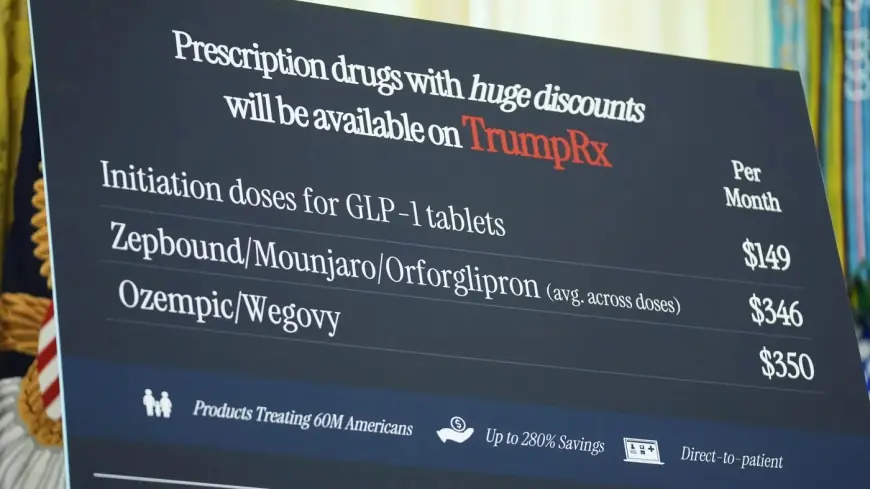
The Trump administration is formally rolling out TrumpRx on Thursday, February 5, 2026 (ET), pitching it as a new front door for Americans seeking lower prescription prices outside traditional insurance channels. The launch arrives after weeks of delays and intense scrutiny over how the program will work in practice—especially around transparency, privacy, and whether discounts will meaningfully beat what many people already pay through insurance, coupons, or existing manufacturer programs.
TrumpRx is not positioned as a government pharmacy. Instead, it functions as a government-hosted directory and routing tool designed to steer consumers to participating drugmakers’ direct-purchase pathways and advertised discount prices.
What TrumpRx is and what it isn’t
TrumpRx is framed as a “navigation” platform: users look up medicines and are directed to manufacturer purchasing options tied to special pricing commitments. The administration’s messaging has emphasized lower out-of-pocket costs for people who pay cash or face high deductibles, alongside a broader political argument that Americans have long overpaid versus other wealthy countries.
What it is not: a direct dispenser of drugs, a replacement for Medicare Part D, or a universal price cap. It does not eliminate prior authorization rules, pharmacy benefit manager (PBM) dynamics, or insurance formularies. It also doesn’t automatically apply to every drug—participation and included products depend on agreements with manufacturers.
Key dates and rollout timeline
The program has been discussed for months, but its public timeline has been uneven. Here are the milestones most relevant to where things stand now:
| Date (ET) | Milestone | What changed |
|---|---|---|
| Sep. 30, 2025 | TrumpRx concept publicly unveiled | Administration links the effort to “most-favored-nation” pricing rhetoric |
| Jan. 2026 | Expected launch window slips | Rollout delayed without a firm public timetable |
| Feb. 5, 2026 (evening) | TrumpRx formally launches | White House presents it as a live, consumer-ready portal |
The administration has described the build as “state-of-the-art,” mindful of past government tech rollouts that struggled at launch.
The deals behind the discounts
TrumpRx is tied to negotiated commitments with major pharmaceutical companies. The White House has said multiple global drugmakers have signed agreements to provide discounted pricing for select medicines through direct-to-consumer channels, including for some of the most expensive and most in-demand categories.
One focal point has been GLP-1 medicines used for weight loss and diabetes. Public descriptions of the agreements indicate certain participating manufacturers will offer materially lower monthly prices than typical list prices—numbers frequently cited in the mid-hundreds per month for select products and eligible buyers.
Still, the practical question for consumers is comparative: whether the TrumpRx-linked price beats what they can access through insurance copays, existing manufacturer cards, employer plans, Medicare-negotiated prices (where applicable), or independent discount programs.
Why the savings are being questioned
The sharpest skepticism centers on three gaps:
-
Who qualifies and for what. Public announcements often highlight headline prices without fully detailing eligibility rules, supply constraints, or which formulations and dose strengths are included.
-
Insurance overlap. Many Americans already have some form of drug coverage. If TrumpRx routes users to a cash-pay pathway, it could help the uninsured or underinsured most, while offering limited incremental benefit for people with strong pharmacy coverage.
-
Price comparisons that vary by patient. What’s “cheaper” depends on plan design, deductible phase, preferred pharmacy networks, and whether a drug is on-formulary. A discount that looks dramatic against list price may be modest versus an insurance copay—while still being a lifesaver for someone paying full price today.
Privacy and operational concerns
Another line of criticism has focused on privacy and the risk of exposing sensitive health data when a government portal routes users to external purchasing platforms. Even without direct sales, a search-and-click pathway can create data trails about which medicines a person is trying to obtain.
Senators and consumer advocates have also raised concerns about transparency of the underlying agreements and about guardrails that prevent steering, conflicts of interest, or marketing practices that could pressure patients into cash-pay routes when insurance might be better.
What to watch next
In the days after launch, the clearest signals will be practical, measurable outcomes:
-
Uptime and usability: whether the site functions smoothly under national traffic on Day 1 and Day 2.
-
Real basket comparisons: whether consumers can consistently find prices that beat their existing options for high-cost drugs.
-
Scope expansion: how quickly the list of medicines and participating manufacturers grows, and whether “high-impact” categories broaden beyond a handful of marquee products.
-
Disclosure and oversight: whether more detail emerges on eligibility rules, pricing terms, and privacy protections.
TrumpRx is arriving with maximal political branding and minimal patience from a public that has heard “lower drug prices” promises for years. If it delivers reliable, easily verifiable savings for cash-paying patients, it could become a meaningful tool. If savings prove narrow, hard to access, or inconsistent against existing coverage, the backlash is likely to intensify just as quickly as the rollout headlines.
Sources consulted: Reuters, Associated Press, The Washington Post, The White House