

























Serbia Explores Croatian Natural Gas Route; Decision Pending, Says Đedović Handanović

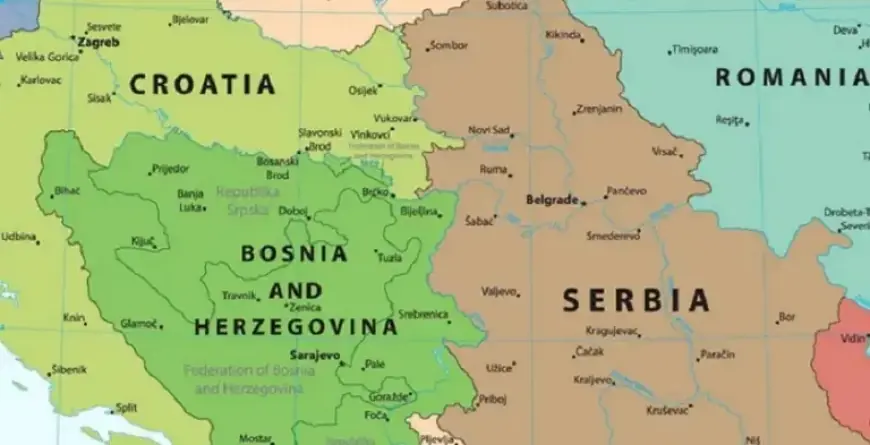
Serbia is exploring a potential natural gas supply route through Croatia, specifically via the liquefied natural gas (LNG) terminal located on Krk Island. Croatian Minister of Economy Ante Šušnjar has confirmed Serbia’s interest in this route, though Serbian Energy Minister Dubravka Đedović Handanović expressed caution, citing past issues with the reliability of such supply lines.
Expansion of Croatia’s LNG Terminal and Infrastructure
The LNG terminal on Krk Island has witnessed significant capacity growth, increasing from 2.9 billion to 6.1 billion cubic meters (bcm) per year. Croatia is also actively investing in pipeline networks to strengthen connections with Slovenia and Hungary, supported by €560 million in European Union funding aimed at modernizing and expanding the national gas system.
Enhancing Regional Energy Stability
Šušnjar stated that discussions are ongoing with Austria, Slovenia, and the European Commission to ensure an effective linkage between Croatian and Slovenian gas grids, enhancing gas delivery across regions including parts of Germany. The Croatian minister emphasized that all upcoming pipelines will be designed to support hydrogen transport.
- Objective: Enable Southeast Europe to utilize Croatia’s LNG terminal effectively.
- Current Croatian gas consumption: Just under 3 bcm annually, with one-third from domestic sources.
- Proposed 15-kilometer pipeline connection to Serbia.
Interconnection Between Serbia and Croatia
Šušnjar pointed out the strategic importance of establishing a pipeline link with Serbia, indicating that the necessary infrastructure to facilitate this connection is minimal. He remarked that Serbia represents an attractive market for LNG transportation, highlighting the economic allure driven by Serbia’s developed infrastructure and expanding gas market.
Serbia’s Cautious Interest
Minister Đedović Handanović acknowledged Serbia’s potential interest in utilizing this interconnection but also conveyed a degree of skepticism due to unreliable past experiences, particularly disruptions in crude oil deliveries through the JANAF pipeline.
- Current status: Awaiting a signed agreement of intent for construction.
- Context: Past issues complicate Serbia’s trust in the reliability of this new route.
Handanović reiterated Serbia’s evaluation of this project, recognizing the increasing gas demand within its growing economy. She affirmed that while Serbia may pursue this opportunity for diversification, caution remains essential in their considerations.