melania movie opens after Kennedy Center premiere as reviews turn combative

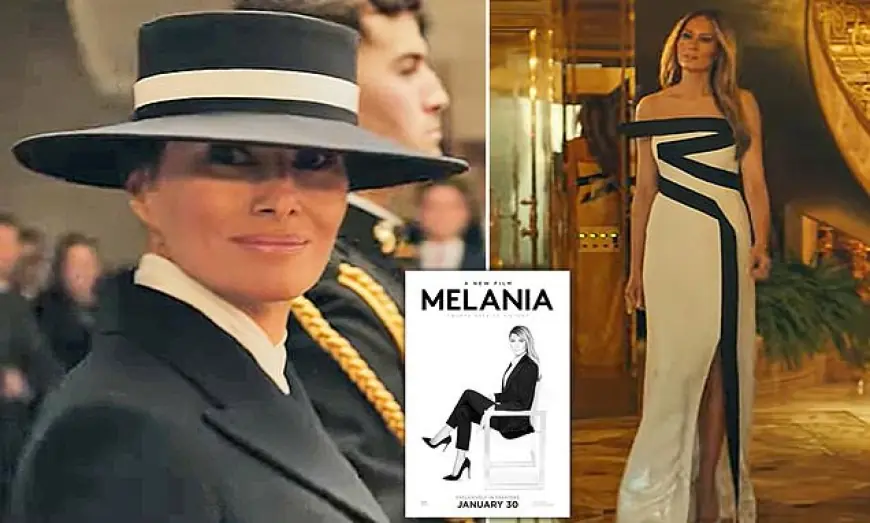
The melania movie reached theaters Friday, Jan. 30, 2026, after a Washington, D.C. premiere that blended red-carpet spectacle with unusually loud online blowback. The project — marketed as both a film and a companion series — has become a test case for how politics, celebrity, and platform-scale promotion can reshape a documentary rollout in real time.
The release centers on Melania Trump and the final weeks leading up to her return to the White House, with Brett Ratner directing and Melania serving as a producer with significant creative input. The premiere drew a mixed roster of political figures and pop culture guests, including Nicki Minaj, while early reactions focused less on what’s on screen and more on money, optics, and the film’s unusually aggressive marketing push.
A premiere at the Kennedy Center, with a twist
Thursday night’s invite-only event took place at the Kennedy Center, though invitations and branding around the premiere used the phrase “Trump-Kennedy Center,” prompting immediate debate over naming and institutional politics. The red-carpet photos and guest lists quickly became part of the story, not just a prelude to the story.
Nicki Minaj’s appearance added to the swirl: her presence at a politically charged premiere turned the event into a crossover moment that traveled far beyond film pages and into fandom and campaign-world timelines. The result was a premiere that functioned as a media event first and a film debut second.
The money and the rollout plan
The financial contours are now inseparable from public perception. The film’s backing has been described as a rights/licensing deal near $40 million plus a marketing push widely pegged around $35 million, often summarized as a $75 million total outlay — a figure the filmmakers and team have pushed back on in parts, arguing the production scope is larger than a typical standalone documentary.
Below is a snapshot of the public, widely circulated release details (some figures remain disputed or framed differently by the filmmakers):
| Item | Publicly circulated figure |
|---|---|
| Licensing/rights deal | $40 million |
| Marketing push | $35 million (often cited) |
| Total spend often referenced | $75 million |
| Runtime | 104 minutes |
| Format | Feature film plus a multi-episode follow-on |
The strategy is straightforward: a theatrical launch first, then streaming a few weeks later, turning opening-week visibility into a longer-tail subscription draw. That approach also creates a clear scoreboard — ticket sales and review aggregates — that can amplify perception quickly in either direction.
melania movie reviews and early reaction
melania movie reviews were messy before many viewers even had a chance to see the film. Melania movie reviews on social platforms and movie apps showed signs of review-bombing and counter-reaction, with users posting extreme ratings and commentary that appeared motivated by politics as much as filmmaking. “Melania reviews” became a standalone trend phrase, often detached from specific scenes or verifiable viewing.
Traditional review signals were also complicated by the film’s screening strategy. Limited critic access and tightly controlled early viewings shifted attention to social chatter, anecdotal theater observations, and metrics like ticket availability. One consequence: the debate often centers on legitimacy — whether the project is a Melania Trump documentary in the conventional sense, or closer to a branded, curated portrait shaped heavily by its subject.
For audiences trying to parse the noise, the most useful lens may be narrower: treat the first weekend as a temperature check on who is willing to buy a ticket before streaming, rather than a final verdict on the film’s content or cultural staying power.
Brett Ratner’s return becomes part of the plot
The choice of Brett Ratner has been a consistent accelerant. For supporters, he is presented as a director capable of delivering a slick, high-gloss product. For critics, his return to a prominent release has become a proxy battle over credibility, rehabilitation, and power — especially given how much the film’s reputation relies on production sheen and access.
That dynamic also affects how viewers interpret the work itself. When a director’s comeback is perceived as the headline, the film risks being judged as an industry story — who financed it, who enabled it, who benefits — rather than as a narrative with its own merits.
Backlash visible in public spaces, not just online
The backlash has not remained digital. In Los Angeles, advertising tied to the film faced vandalism severe enough that transit officials moved buses displaying the campaign to reduce repeated defacement. Commentary around the ads pulled in broader political grievances and conspiracy-inflected insinuations, further blurring the line between film criticism and partisan street-level protest.
Internationally, at least one notable disruption emerged with the film being pulled from theaters in South Africa shortly before release, with distributors citing “recent developments” without detailing a single definitive trigger. The timing, coming amid heightened political sensitivity around U.S.-South Africa relations, made the cancellation read as a risk-management decision even without a full public explanation.
Who Melania Trump is — and where she’s from
Search interest has spiked around basics as much as the project itself, including “where is melania trump from.” Melania Trump was born in what is now Slovenia (born in Novo Mesto and raised in and around Sevnica), an origin story the film’s marketing has leaned on as part of a return-to-public-life narrative.
Whether the Melania Trump movie ultimately lands as a documentary hit, a political artifact, or a streaming-first curiosity will become clearer once the weekend’s box office and verified audience data settle. For now, the melania trump documentary has already achieved one outcome: it has turned Melania into a front-page entertainment story on release day, with the argument around it moving faster than the film itself.
Sources consulted: ABC News; The Hollywood Reporter; The Guardian; Entertainment Weekly; The Verge; The Daily Beast