
























Champions League Draw: UCL Draw Sets February Knockout Playoffs With Real Madrid–Benfica Rematch and PSG–Monaco Derby

The Champions League draw is in, and the UCL draw has produced a slate of knockout phase playoff ties that immediately raises the temperature ahead of February’s two-legged showdowns. The headline pairing is a fast-turnaround rematch between Real Madrid and Benfica, while Paris Saint-Germain drew domestic rivals Monaco in an all-French clash that guarantees one major contender won’t reach the round of 16.
The draw was held Friday, January 30, 2026, at roughly 6:00 a.m. ET, matching teams that finished ninth through 24th in the league phase into eight home-and-away ties. First legs are scheduled for February 17–18, 2026 ET, with second legs on February 24–25, 2026 ET.
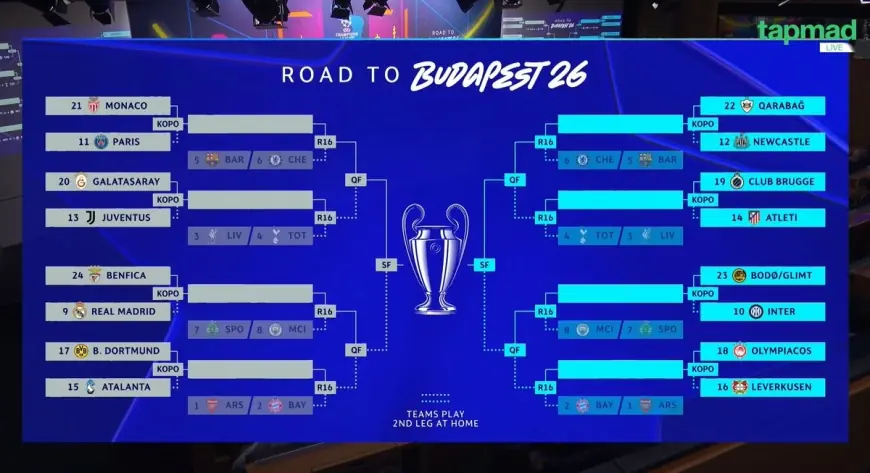
UEFA Champions League Draw Results: The Eight Knockout Playoff Ties
Here are the matchups from the Champions League draw:
-
Bodø/Glimt vs Inter
-
Monaco vs Paris Saint-Germain
-
Qarabağ vs Newcastle United
-
Galatasaray vs Juventus
-
Club Brugge vs Atlético de Madrid
-
Borussia Dortmund vs Atalanta
-
Olympiacos vs Bayer Leverkusen
The reward is significant: the winners advance to the round of 16 to join the eight teams that already qualified directly by finishing in the top eight of the league phase: Arsenal, Barcelona, Bayern Munich, Chelsea, Liverpool, Manchester City, Sporting CP, and Tottenham.
What Happened and Why This UCL Draw Feels So Loaded
This season’s structure compresses drama into the margins. Instead of a traditional group stage, the league phase creates a single table where tiny swings in form can drop big clubs into an extra knockout hurdle. That’s exactly what the draw delivered: brand-name teams now face high-pressure February ties where one bad half can undo months of work.
Real Madrid–Benfica stands out not just for the badge weight, but because it’s a rematch with fresh emotional fuel. Benfica’s recent win over Madrid in the league phase left a storyline that feels unfinished, and the playoff format forces immediate consequences rather than a slow-burn rivalry.
PSG–Monaco is the other blockbuster for a different reason: it’s a familiar opponent with very little mystery. Domestic matchups in Europe tend to be decided by margins—set pieces, discipline, and which coach best weaponizes prior knowledge—making this tie less about scouting and more about execution under stress.
Behind the Headline: Incentives, Stakeholders, and Pressure Points
The incentives are obvious and brutal. Clubs in this round are playing for prestige and progression, but also for money, recruitment leverage, and managerial stability. A February exit can reshape spring priorities overnight: league title races become must-win campaigns, cup competitions turn into reputational lifelines, and transfer planning shifts from “build” to “patch.”
Stakeholders extend beyond the squads. Executives care about revenue and brand momentum; coaches care about time and buy-in; players care about minutes, contracts, and visibility. For clubs like Newcastle, the tie against Qarabağ is also a logistics and rhythm test—travel demands and unfamiliar environments can matter as much as tactics. For teams like Bodø/Glimt, it’s a high-upside opportunity: one strong first leg can turn a heavyweight into a bundle of nerves.
What We Still Don’t Know
Several key details will shape these ties, and they’re not fully clear at draw time:
-
Exact kickoff times and travel schedules for each leg
-
Injury returns and suspension risks coming out of early-February domestic fixtures
-
January-window roster changes that can materially alter a team’s ceiling
-
How teams will balance rotation with the urgency of two-leg survival
In short: the opponents are known, but the conditions aren’t.
What Happens Next: 5 Scenarios to Watch in February
-
Early statement first legs: A dominant home performance can kill a tie quickly, especially if the underdog concedes away goals momentum and loses belief.
-
Tactical stalemates: Some coaches will prioritize not losing the first leg, turning second legs into high-volatility, late-game chaos.
-
Rotation gambles backfire: Clubs juggling tight domestic schedules may rotate once too often and spend the second leg chasing.
-
Travel-driven variance: Long trips and unusual atmospheres can swing one half—often enough to decide a tie.
-
Psychological rematches: Real Madrid–Benfica and PSG–Monaco both have recent-history dynamics that can amplify pressure after the first mistake.
Why It Matters
This Champions League draw effectively moves “must-win Europe nights” into February for teams that would normally expect a smoother runway to March. It’s a format that punishes inconsistency, rewards depth, and creates immediate, high-stakes narratives. By late February ET, half of these clubs will be out—and for some, that will define their entire season.