



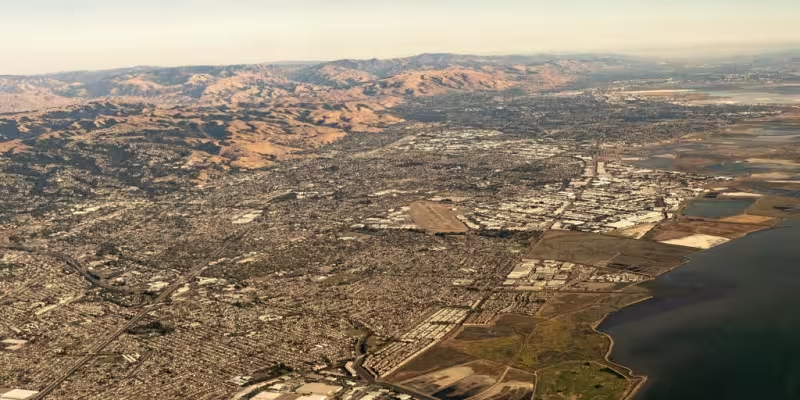
Stress on the San Andreas and San Jacinto fault systems in Southern California is now at or above the highest levels seen in the past 1,000 years, according to a new study published this month in the Journal of Geophysical Research. The research says the region is in a critically loaded state, with Cajon Pass standing out as a junction that could block a major rupture or help it jump between the two fault systems.
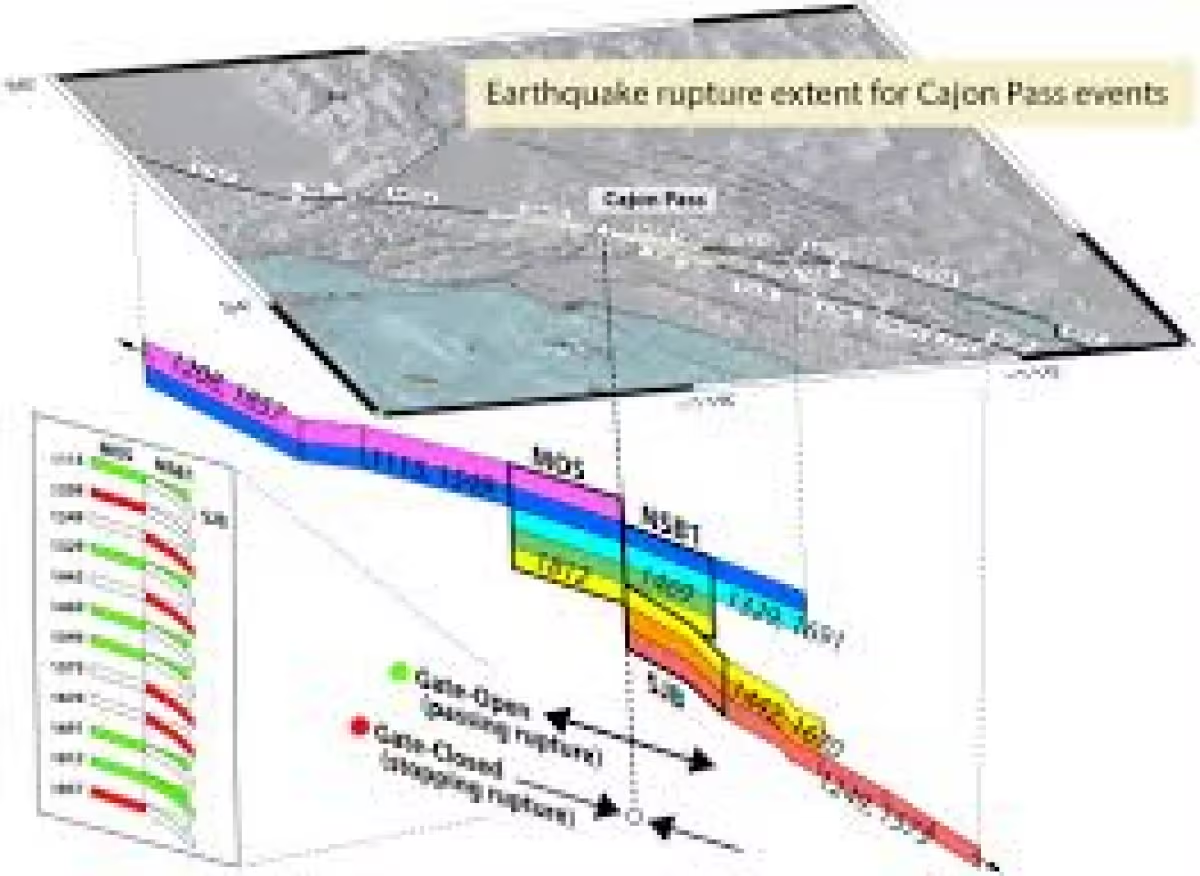
The study focuses on Cajon Pass, northeast of Los Angeles, where the Mojave South and North San Bernardino segments of the San Andreas Fault meet the San Jacinto Bernardino segment of the San Jacinto Fault. Computer simulations of the last 1,000 years of rupture history estimated stress levels of 2.8 on the Mojave South segment, 1.8 on the North San Bernardino segment and 3.6 on the San Jacinto Bernardino segment, making that last segment the most heavily loaded part of the junction.

That loading matters because the study says the two fault systems may interact when their stress levels become equal. In that case, Cajon Pass could act as an earthquake gate, either stopping a large break from spreading or allowing it to move through both systems at once. The researchers say the region may be capable of a large through-going rupture involving both faults simultaneously, and they tie that risk to a history of at least 36 earthquakes of magnitude 6.4 or greater over the past 1,000 years.

For Southern California, the practical concern is not just whether a quake happens, but how far it travels if it does. A joint rupture through the San Andreas and San Jacinto systems would put a densely populated part of the state in the path of a much larger event than a single fault segment might produce. The study’s authors say the fault network has been stressed for more than a century without a major earthquake, and has reported that more than 160 years have passed since the last major rupture.
The study stops short of saying when that stress will break. Burkhard said the system is critically stressed and that physics-based models help show the range of scenarios people should be prepared for. Her point is the central one: the data point to unusual loading, but they do not offer a date, and they do not turn a stressed fault system into a forecast.
That leaves Cajon Pass as the key place to watch, not because it promises a quake, but because it may decide how a future rupture behaves if one starts. The study sharpens the risk picture for a region that has long been known for earthquake danger, yet it also leaves the hardest question untouched: whether the next major event on these faults will be separate, linked, or still years away.



