
A new physics‑based study found tectonic stress along Southern California’s San Andreas and San Jacinto fault systems has reached — and in some places exceeded — the highest levels measured in the past 1,000 years.
The finding, led by Earth scientists at the University of Hawaiʻi at Mānoa and published in the Journal of Geophysical Research: Solid Earth, estimates stress buildup by replaying a millennium of earthquake history through a model that tracks how strain transfers among fault segments.

“Right now, with stress at historically high levels across the region and more than 160 years elapsed since the last major rupture, the system is in a critically loaded state,” Liliane Burkhard said, summing up the study’s central conclusion.
That high stress matters because it is not confined to a single breakable line. The study shows loading across multiple segments of the San Andreas and the adjacent San Jacinto system. Where those segments meet — notably at Cajon Pass — the arrangement can either stop a rupture or let separate breaks link into a single, larger event. The model warns the latter remains a plausible outcome.
In plain tectonic terms, the San Andreas Fault is a strike‑slip plate boundary: the Pacific Plate and the North American Plate slide past each other horizontally. Even in very large quakes on that boundary, motion is lateral rather than a wholesale breakup of land; yet parts of California can move suddenly by feet or even tens of feet during a major rupture.
The practical stakes are clear. A rupture that propagated across both fault systems would be bigger than a single‑fault event and would place shaking close to major population centers — Los Angeles, San Bernardino, Riverside and the Coachella Valley are all named in the study as areas that would feel substantially greater shaking and damage if several segments broke together.
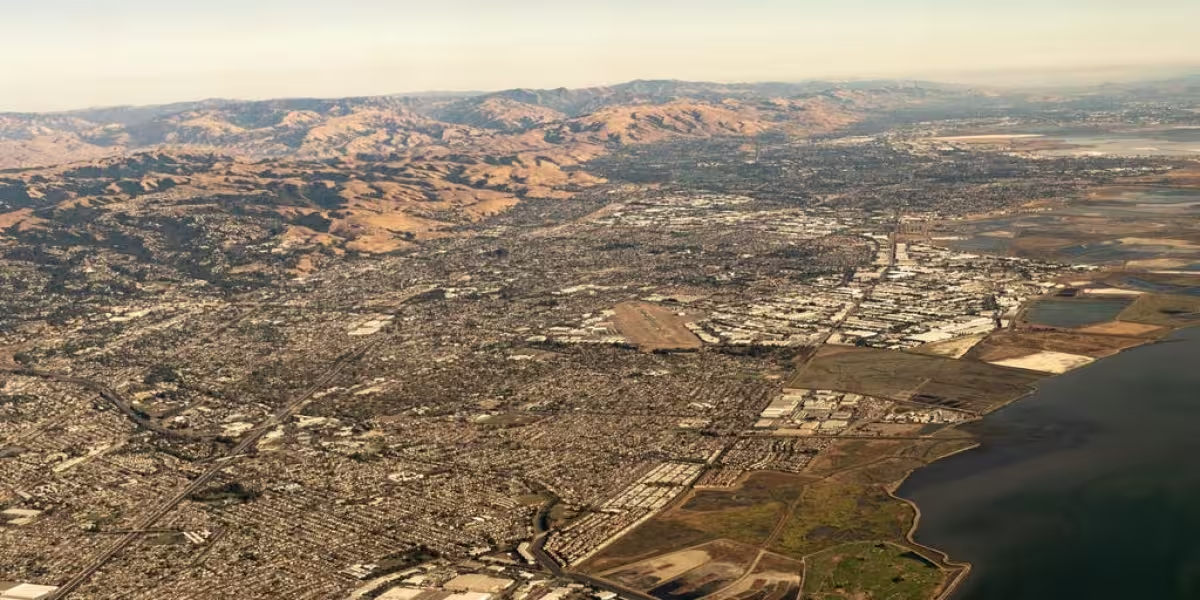
Cajon Pass functions as a geological gate between the systems. If it allows linkage, the resulting quake could cross long distances of the roughly 650‑mile San Andreas trace and involve adjacent structures on the San Jacinto system, multiplying the area of intense shaking and the number of vulnerable lifelines and communities affected.
At the same time, the paper stresses a critical caveat: the system is under historically high stress but is not showing clear signs of an imminent rupture. The model maps a long‑term seismic cycle and places the region in an unusually stressed phase, one capable of supporting large earthquakes — including multi‑fault events — without offering a calendar for when or how they would start.
That tension — very high stored energy, but no short‑term alarm bell — is central to what the study adds to existing hazard assessments. Emergency planners have long incorporated the possibility of large Southern California quakes; the new estimate changes the balance of probabilities between isolated single‑fault ruptures and larger, through‑going events that cross previously independent segments.
For residents and infrastructure, the difference is consequential. A linked rupture would concentrate strong shaking closer to dense urban areas and critical corridors that connect Southern California’s economic centers. Over geological time, continued plate motion along the San Andreas even gradually shifts city positions relative to each other, but the immediate concern is the scale and distribution of shaking and the strain on buildings, roads and utilities if multiple faults rupture together.
The study advances the technical picture by using a millennium of seismic history in a physics‑based framework and by pointing to Cajon Pass as a key control on whether faults link. It does not, however, close the central question readers want answered: when, if at all, a large multi‑fault rupture will happen. That timing remains unresolved — the system is described as critically loaded, but not imminently breaking.
The most consequential unanswered question now is straightforward: what sequence of small failures, stress transfers or unknown triggers would actually turn the current high‑stress state into a through‑going rupture that crosses the gate at Cajon Pass and reaches the major population centers downrange?