



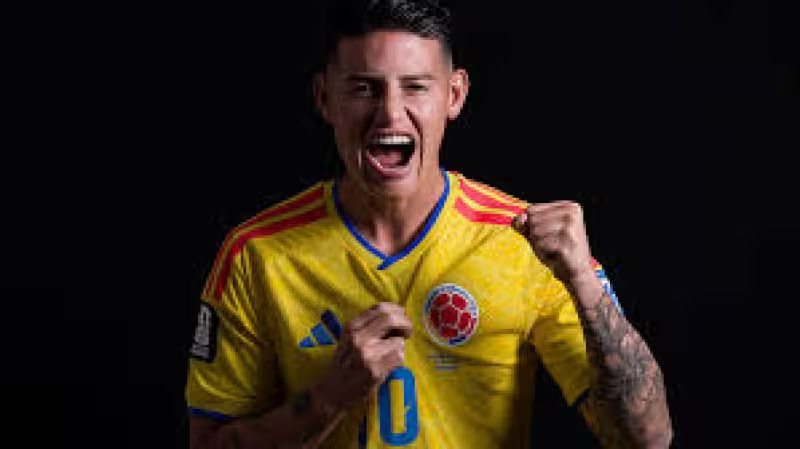
James Rodríguez went to Minnesota United in February intending to adapt to life and the pitches in the United States before the 2026 World Cup — but his stay lasted only long enough for six league appearances, two starts and two assists, and it ended early when he left to rejoin Colombia’s national team.
The numbers are stark for a player who arrived with expectation: at 34 years old, Rodríguez played six league matches, started twice, provided two assists and did not score a goal. Club officials and supporters saw more absences and rehab than minutes on the field; injuries and interruptions defined his time in MLS more than the football he came to show.

Rodríguez has answered criticism the way he usually answers it — by leaning into his own motivation. In February he said, "When you’re not doing what people want you to do, then those bad comments come into play, and then for me that’s gasoline that drives me to do what I want and achieve what I’ve set out to do." He left Minnesota early to rejoin Colombia for the final build-up and has reminded anyone listening what the national team means to him: "When you play for your country, it’s a completely different feeling, something totally different."
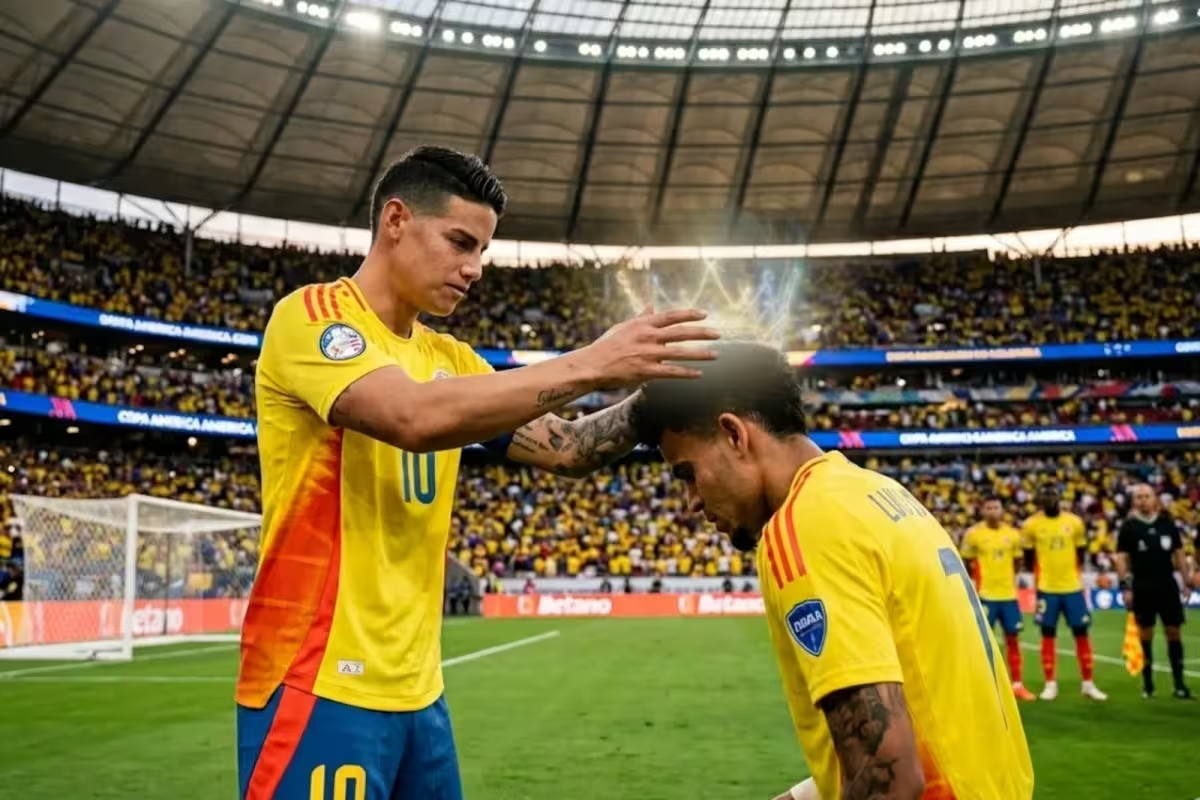
The move to Minnesota was read as part of a practical rehearsal for a World Cup that will be played across the United States, Canada and Mexico. The optics — a Colombian star training and playing in MLS before Group K opens in Miami against Portugal — echo older moments in U.S. soccer history, when Colombian icons crossed into American leagues and helped build local interest. Carlos Valderrama became a household name in the United States after the 1994 World Cup and joined the Tampa Bay Mutiny two years later; he won the league MVP in its first season. As Camilo Durana put it of that era, "The possibility of that fans could see global icons like Carlos Valderrama was key to generating momentum for our league. It also inspired other players to consider (playing in) Major League Soccer."
That comparison is flattering on paper but awkward in practice. Valderrama’s MLS arrival arrived on the back of a World Cup that captured American attention; Rodríguez’s stay was meant to be the inverse — a pre-World Cup residency intended to build familiarity with local fans and conditions. Instead, Minnesota supporters saw a limited version of the player they were promised: two starts, two assists, and no goals. The interruption of injuries means the narrative the club and Rodríguez hoped for — that he would begin cementing a North American connection months before Group K kicks off — never really took root.
Colombia’s immediate schedule now presses the question. The national team’s final friendly before the tournament ended in a 2-0 win over Jordan, and Group K will place Colombia opposite Portugal in Miami and match them with Uzbekistan and the Democratic Republic of the Congo. The football that matters most to Rodríguez is still ahead, played on bigger stages and in front of the sort of audiences Minnesota and MLS hoped to court.
The unresolved, single most consequential question is plain: can James Rodríguez translate a brief, injury-hit taste of MLS into the form Colombia expects at a World Cup staged largely in the United States? He has the record, the experience and, by his own account, the fuel of criticism. What he does with it in Miami against Portugal will decide whether his Minnesota chapter is remembered as a missed marketing opportunity, a short training block, or a necessary step toward one last international campaign.



