



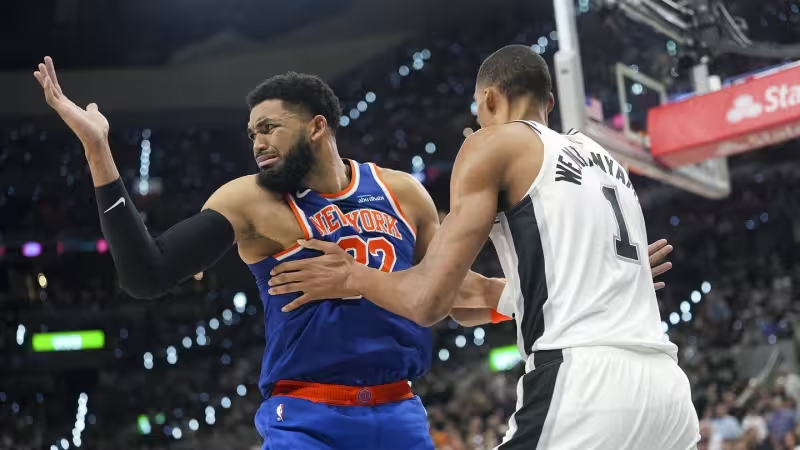
"You know what’s crazy, I really didn’t—there was really not much trash talk," Karl-Anthony Towns told Howard Stern days after the Knicks closed out a five-game Finals. Towns framed the matchup with Victor Wembanyama not as a verbal war but as two players locked on the same, narrow task: outcompete the other at the highest level.
Asked directly whether there was chirping between them, Towns was blunt. "There was two guys that were just so focused on competing against each other at the highest level, we really didn’t get time to speak. It was just more straight to the physicality aspect of the games." That mattered: Towns defended Wembanyama for much of the five-game series, trading close, physical minutes rather than trading words.

The numbers of the moment are plain and heavy: five-game series, a sweep of the last game to seal a title, and earlier in the sequence Wembanyama telling reporters before Game 5, "Everybody knows we are going to do it," as the Spurs insisted they would complete a 1–3 comeback. The Spurs failed to complete that comeback, and the exchange between pregame confidence and the final result now sits next to Towns’s reminder that their on-court interactions were rarely personal.
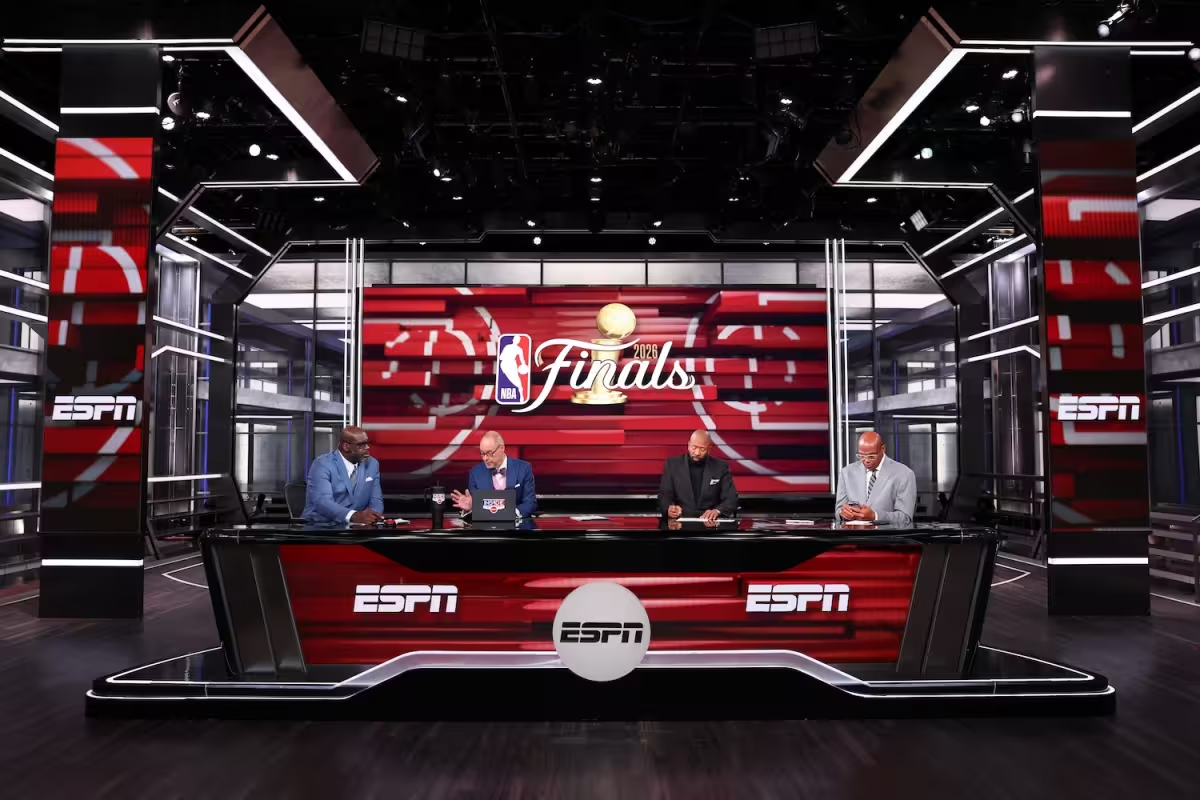
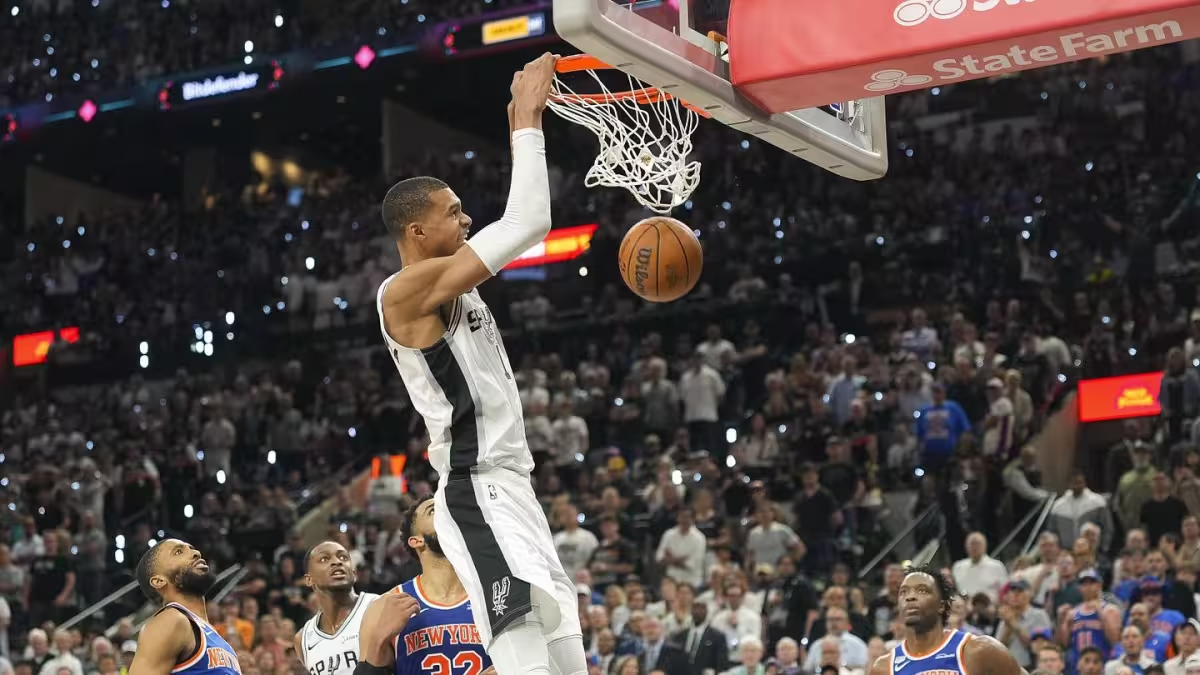
The Finals were not a quiet theater. They included officiating controversies, clutch shooting, out-of-this-world defensive performances and plenty of chirpiness from the stands, with Wembanyama drawing the wrath of the Knicks fanbase during the series. Still, Towns’s description of the on-court duel cuts against the expectation that headline matchups always burn brightest with trash talk; for him, the drama came through contact and attention rather than words.

Towns layered the explanation with a lifetime of competitive shaping. "Competition has always been my driving factor," he said, pointing to how he learned to seek out tougher tests early — his father pushed him to play up, including as a 14-year-old in the U17 group. Those experiences, he implied, made him inclined to treat elite matchups as chess played up close: immediate, physical, focused on possession and positioning rather than postgame soundbites.
That account creates a small but sharp tension in the broader narrative of the series. Wembanyama’s public insistence before Game 5 that the Spurs would finish the comeback reads like a psychological gambit; Towns’s insistence that there was little trash talk suggests those words rarely translated into sustained on-court provocation between the two men. The friction between pregame bravado and in-game restraint leaves a gap: how exactly did Towns defend Wembanyama for much of the series, minute by minute, and what did those matchups look like when the camera and the crowd were not listening for heat?
The coaching staff and film room will have the granular answers — screens, switches, help-side rotations and post-up counters that turned the five-game arc — but Towns’s public account matters because it reframes the headline moments as craft, not theater. He refused to make the matchup about trash talk; he returned it to the fundamentals that made the series decisive: focus, contact and adjustments.
There is no scheduled rematch or confirmed next public event to settle the unanswered specifics. What remains is the tape, and the question sharpened by Towns’s remarks: observers will be looking not for who said what in the locker room or on the court, but for how Towns’s physical answers and Wembanyama’s responses actually tilted the five-game chess match. That is the detail — not the taunt — that will determine how this duel is remembered.



