



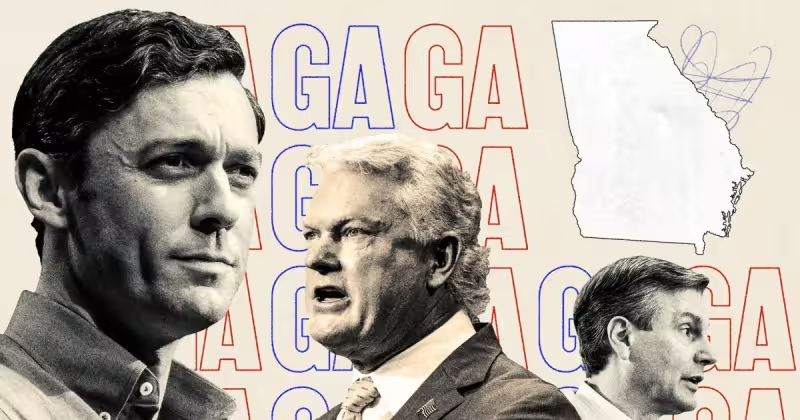
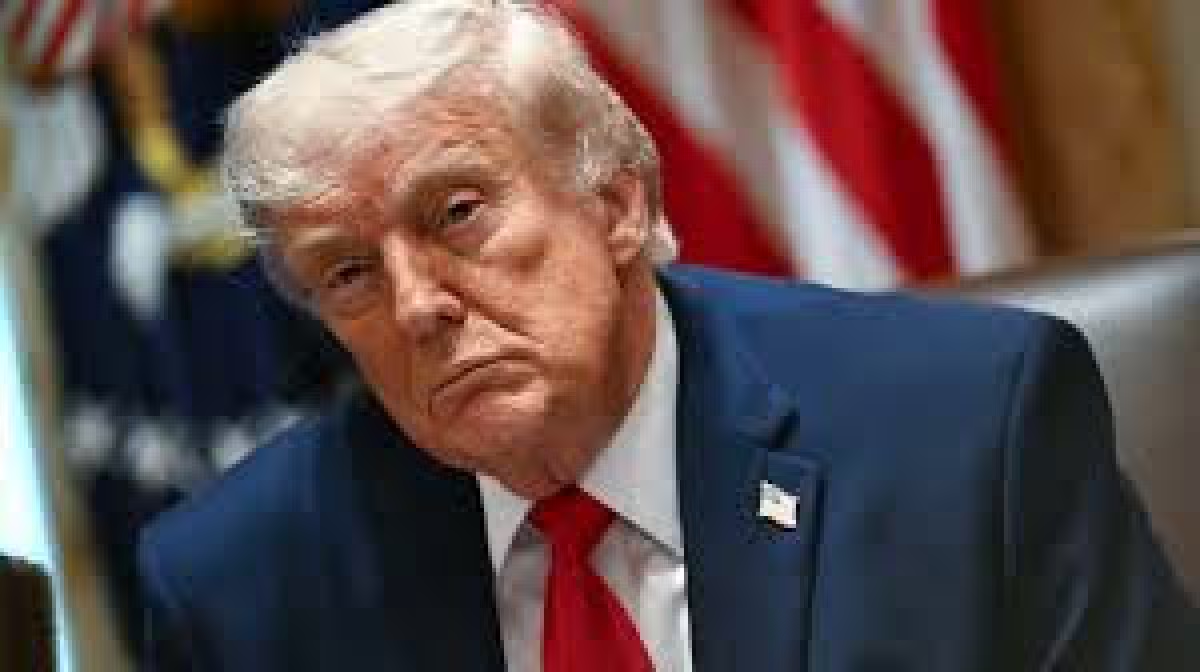
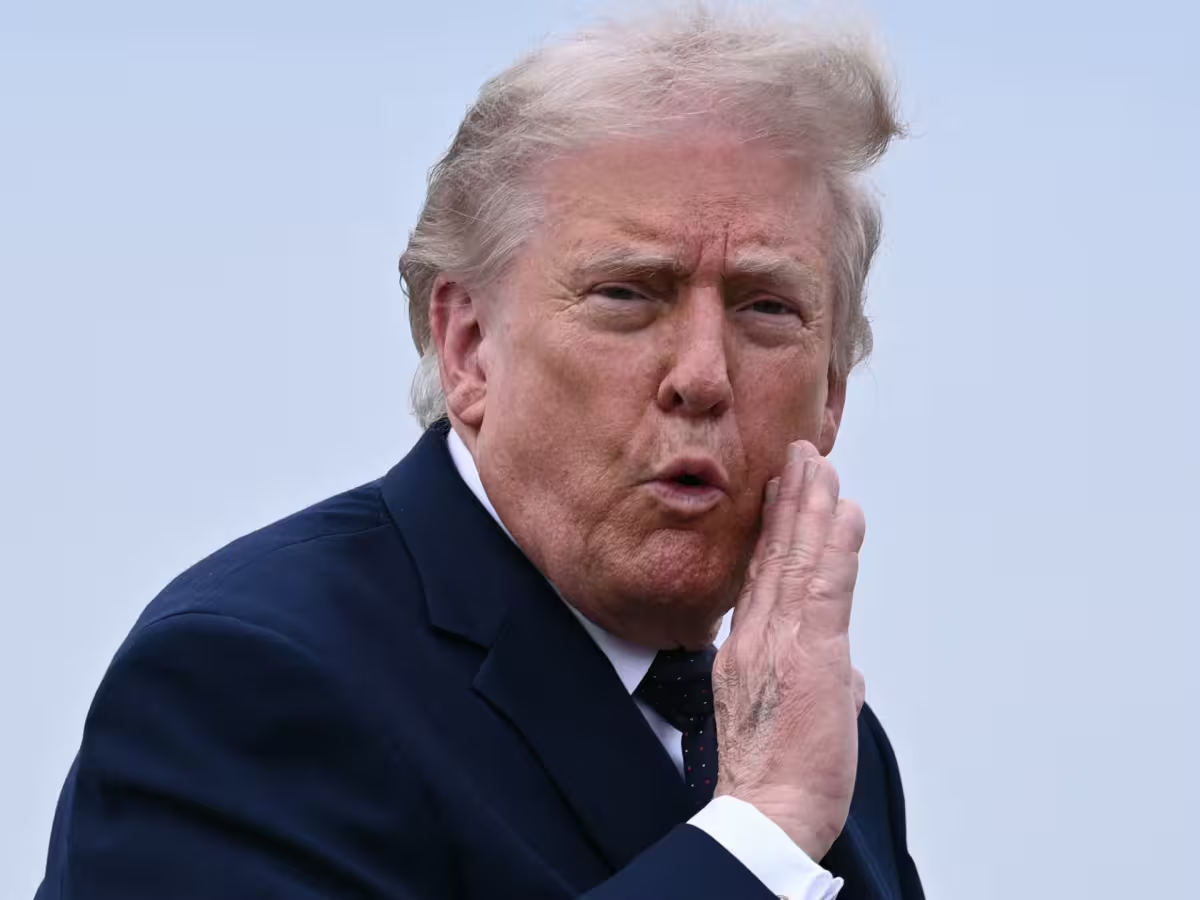
Donald Trump has endorsed Rep. Mike Collins just days before Tuesday’s Republican runoff in Georgia’s U.S. Senate race, giving the congressman a late boost as he tries to clinch the nomination against former football coach Derek Dooley. The winner will go on to face Democratic Sen. Jon Ossoff in November.
The endorsement lands at a moment when Collins is already running with Trump’s backing in a state where the former president still carries weight, but not always with the Republican strategists who have spent years warning that he is a risky general-election bet. Georgia Gov. Brian Kemp has backed Dooley throughout the campaign, underscoring the split inside the party over which candidate is best suited to challenge Ossoff.

Collins and Dooley finished first and second in the initial Republican primary, pushing the race into a runoff that now serves as a proxy fight over Trump’s influence in Georgia and the party’s appetite for risk. Collins has falsely claimed that Trump won Georgia in the 2020 election, a claim that helped fuel the party’s worst recent losses in statewide races. Two Republican incumbents lost Georgia’s January 2021 Senate runoffs after Trump promoted false claims that the presidential election was stolen, and Raphael Warnock later defeated Herschel Walker in 2022.
That history has given the runoff a sharp edge. Georgia Republicans have lost three straight Senate contests over the past eight years, and the nominee chosen on Tuesday will try to break that streak in a state that has shifted from reliably red to fiercely competitive. Recent federal campaign finance filings show Ossoff with a roughly $30 million-plus cash-on-hand advantage over either Republican, a head start that will matter if the GOP nominee enters the general election divided and underfunded.
Collins’ record is also shaping the internal party debate. In an earlier congressional run, he expressed support in a questionnaire for banning abortion without any exceptions. His campaign now says he embraces Georgia’s heartbeat law, which includes exceptions under which the procedure can still be performed, but Republican strategists say that shift does not erase what they see as a broader problem: baggage that could alienate swing voters far beyond the GOP base.
One strategist put the concern bluntly, saying Collins would be the worst possible general-election candidate for Georgia and the current political environment, citing his personal baggage, fundraising challenges, and abortion stance. The same Republican warning went further, saying Collins would lose the Atlanta metro area badly and could drag down other Republicans with him. That is the tension now hanging over Tuesday’s runoff: Trump has chosen his side, but a growing number of Georgia Republicans fear he has chosen the wrong one.
If Collins wins, he will enter the general election with Trump’s endorsement, deep party divisions and a cash deficit that Ossoff can use to define the race early. If Dooley prevails, Kemp-aligned Republicans will have their preferred nominee — but they will still have to solve the same problem of how to beat a Democratic incumbent in a state where the GOP has not won a Senate race since the runoff losses of 2021.



