
Officials urged Midtown Manhattan commuters on Tuesday to plan ahead as MetLife World Cup Games transportation operations were ramping up for the France-Senegal match at MetLife Stadium, a rare weekday fixture that threatened to collide with evening rush hour.
City traffic managers restricted West 42nd Street to FIFA vehicles and buses moving fans between 9 a.m. and 8 p.m., closed streets east of Madison Square Garden and staged hundreds of buses in the area. Officials said 530 contracted buses were positioned near Penn Station and could be deployed if transit issues arose, and World Cup ticket holders would be allowed to use a dedicated NJ Transit entrance at Penn Station between Sixth and Seventh avenues starting at 11 a.m., four hours before kickoff.

The Host Committee shuttle option — often a lifeline for large-event transfers — had already sold out: all 12,000 available Host Committee bus seats were reserved ahead of the match. That left NJ Transit as the agencies’ recommended, and likely the fastest, route to the stadium, even as individual vehicles were barred from approaching MetLife Stadium on match days. Parking at American Dream remained an option but was limited and priced at $225 per vehicle; ride-share operator Uber also offered a $49 shuttle for fans traveling to and from the game.


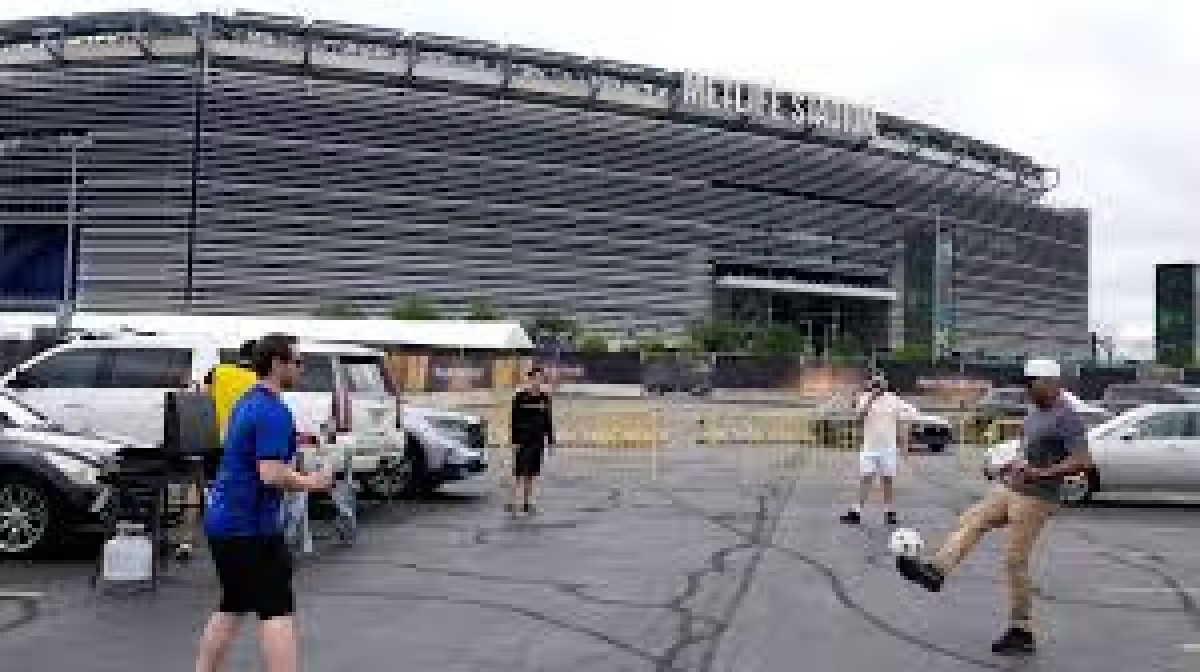
The most immediate friction was built into the plan: officials called NJ Transit the fastest and most reliable option while the organized Host Committee buses were full and private cars could not reach the stadium. Commuters who could avoid the crush chose to do so — "I will work from home and our company has allowed for that, to work remotely for those days," said Laura Rugarber — but not everyone planned around the restrictions.
Some travelers signaled they would try to work around the system. "I may drive until the last goal is made. I'd rather pay the Verrazzano toll than take New Jersey Transit," said Lamel Clark. That sentiment underscores the puzzle city officials face: recommending public transit while confronting both sold-out shuttle capacity and rules that prevent individual drivers from accessing the stadium perimeter.
For readers headed to the match or trying to move through Midtown, the practical picture was straightforward. Expect West 42nd Street closures from 9 a.m. to 8 p.m., arrive at Penn Station early to use the dedicated NJ Transit entrance that opens at 11 a.m., and expect staging activity around Madison Square Garden. With Host Committee buses sold out, alternatives were NJ Transit, the costly and limited American Dream parking, or paid ride-share shuttles. Transit officials also held 530 buses ready to deploy if delays mounted.
What to watch next is whether those 530 standby buses are needed. Agencies said they were in place to relieve pressure if trains and platforms became overwhelmed; what they did not provide on Tuesday was a tally of how many Midtown commuters or outbound fans would actually be delayed. The clearest test of the MetLife World Cup Games transport plan will arrive after the match, when agencies report whether the staged buses were put into service and how Manhattan’s rush-hour corridors held up under a weekday international fixture.