



NOAA’s Climate Prediction Center says the current El Niño has a 63% chance of becoming very strong toward the end of the year, raising the odds of a wetter, stormier winter across parts of the United States. The agency also puts the chance of the event being either strong or very strong at 88%.
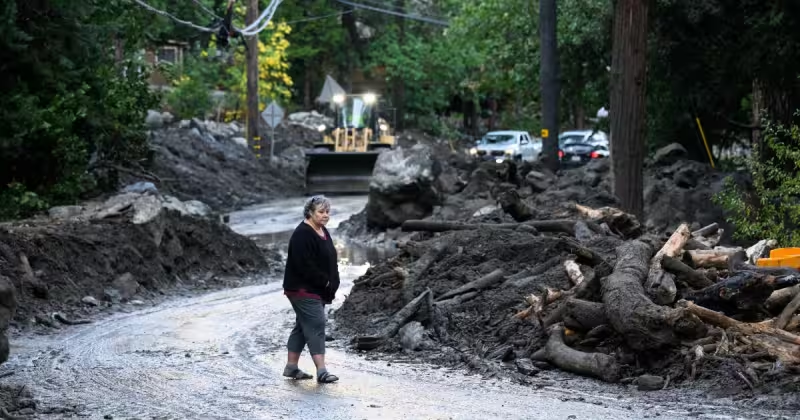
That matters most in California, where a very strong El Niño can increase the odds of unusually wet conditions, heavy precipitation and coastal flooding. NOAA says major El Niño events can lift local sea level by about six to 10 inches during the winter rainy and stormy season, enough to make high tides and strong surf ride higher and push farther inland than normal.

El Niño effects are usually felt most strongly in winter. NOAA says stormier weather is generally more likely in the southern United States during an El Niño, while the Pacific Northwest tends to get drier winters. For coastal California, the concern is not just rainfall. NOAA experts say the El Niños of 2015-16 and 2023-24 brought more frequent, deeper and more widespread high-tide flooding, and the California Coastal Commission said the 2015-16 event caused record coastal erosion along many beaches.
The historical record is uneven, though, and that is the part forecasters cannot ignore. Of the last four very strong El Niños on record, the 1982-83 and 1997-98 events brought coastal Southern California more than double its typical annual rainfall, while 1991-92 delivered 133% of average. But the 2015-16 El Niño, also very strong, brought just 77% of the annual average rainfall in the Southland, a reminder that even big events do not guarantee soaking storms in every part of California.
Daniel Swain said the rapid escalation in the tropical Pacific and increasingly extreme model projections suggest something extraordinary could unfold, and he described the upcoming El Niño as one with a high likelihood of becoming very strong or even historic in magnitude. He said it is possible, even probable, that at least some of the effects could be unprecedented in the modern era because of the combination of a high-end El Niño and more than a century of accumulated global warming.
For now, the key question is not whether El Niño is arriving. It has. The question is whether it reaches very strong or even historic intensity and how much rain, surf and flooding it actually delivers to California and the rest of the winter weather map.



