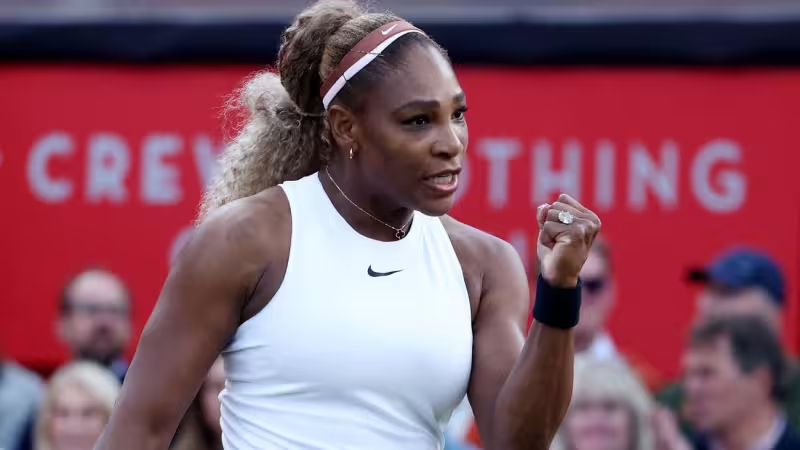
Serena Williams is entered to play at the Berlin Tennis Open this week, pairing with Karolina Muchova as she continues a comeback to Tour competition that began at the London Queen's Club event last week.
The immediate significance is obvious: Williams, a 23-time Grand Slam singles champion, has not played Tour-level tennis in four years and will be 44 this season. Organizers also announced that she and her sister Venus Williams received a Wimbledon women's doubles wildcard, a nod to their history at the Championships — the pair have won Wimbledon doubles six times and took the titles in 2000 and 2002 after arriving with wildcards.

That history supplies the weight behind the entry list. A player of Williams's record does not return to the Tour as a curiosity; she returns as a former dominant figure whose name reshapes draw cards and media coverage. The Wimbledon wildcard is concrete evidence: the organizers reserved a place for the Williams sisters in doubles even as they distributed only eight singles wildcards this year, one of which went to Stan Wawrinka.
Context matters here. Williams had been absent from Tour competition for about four years before the recent comeback sequence that began in London. Wimbledon wildcards traditionally go to established players coming back from injury or absence, and the Williams pair's past success at the All England Club — including those early 2000s wildcard-to-title runs — places this selection inside an established pattern, not outside it.
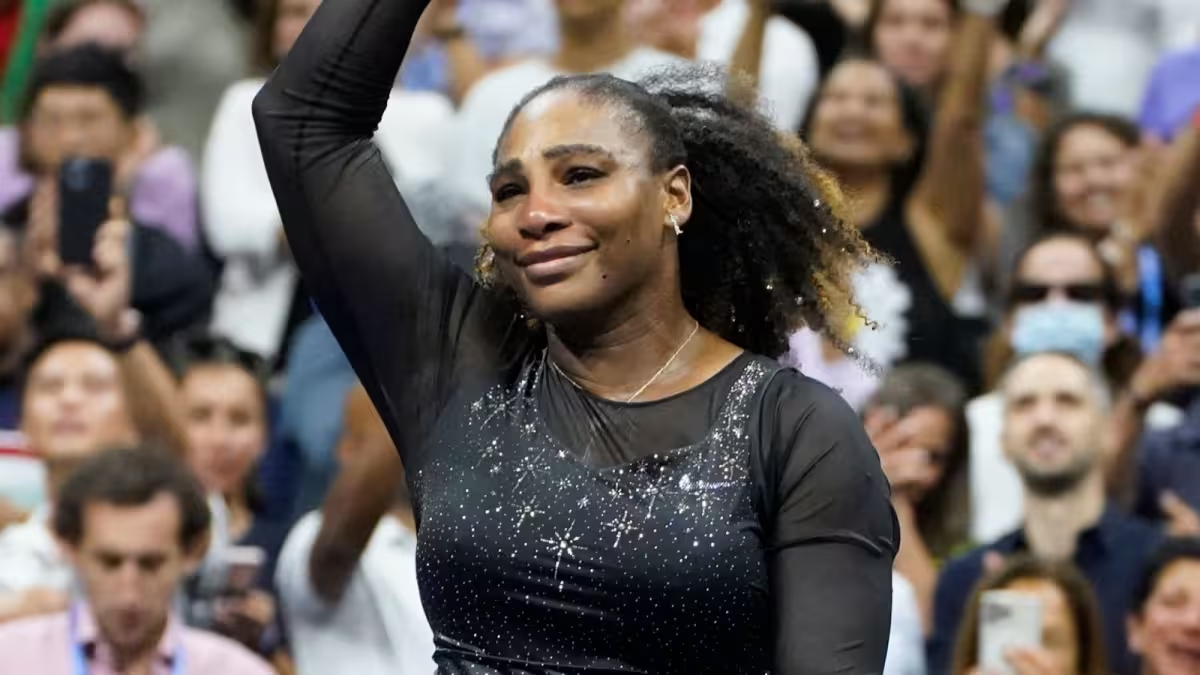

The friction to watch is straightforward. Williams returned to match play at Queen's Club and is heading to Berlin, yet at age 44 she still required a special entry to reach the Wimbledon doubles draw. The organizers granted it, but that dynamic — an elite champion returning after a long break who needs tournament discretion to re-enter top events — frames her schedule. It also illuminates the choices tournament directors make: one of the eight singles wildcards was allotted to Wawrinka, 41 and ranked 111, who will use Wimbledon as part of a farewell tour.
Practical details matter for fans and bettors alike. Williams will share a Berlin court this week with Muchova; that doubles pairing will be one of the matches to monitor for signs of court timing, movement and match fitness after her London appearance. The Berlin Tennis Open will serve as the immediate proving ground ahead of the grass-court Grand Slam, giving Williams a last competitive setting to sharpen her play in front of crowds and cameras.
What to watch when play starts: whether Williams can sustain competitive sets without visible physical restriction; how quickly she and Muchova establish partnership rhythm; and whether her matches in Berlin change the tenor of Wimbledon conversations from ceremonial return to competitive threat. Wawrinka’s wildcard and farewell narrative will run in parallel, underscoring how organizers balanced nostalgia and current form in a limited set of discretionary entries.
The remaining question is consequential and immediate: can Williams translate the movement and timing she showed at Queen's Club into wins in Berlin and, in turn, validate the Wimbledon doubles wildcard with on-court results? Her schedule this week gives the clearest, answerable test before the grass-court Grand Slam arrives.