




“Now it’s time to show the world what we’ve got,” Graham Arnold said, and the sentence landed like a demand rather than a hope. He made the remark as Iraq touched down in Chicago — the end point of a qualifying story that began with his surprise appointment in May 2025 and ended with a 117th‑minute penalty that finally punched Iraq’s ticket to a World Cup for the first time in 40 years.
The scale is what makes the line matter: 40 years since 1986, a campaign stretched over 12 months that included four qualifying rounds, 21 matches across a tumultuous 28‑month window, and a scrambled 9,000‑mile trip to Mexico for one decisive night. The winner’s goal forced an extraordinary return to Baghdad and beyond — the scorer was held up by the FBI on landing and the photographer meant to document the moment was turned back before he could get ashore.

Arnold took the job after Iraq sacked Jesús Casas in May 2025 and almost its entire staff. He says he had three days to respond. He had been out of the game, he told reporters, and admits he was “going a bit stir crazy” before agreeing to lead a squad under pressure most managers never see: players trapped in Baghdad and later Jordan during qualifiers, travel interrupted by conflict, and matches played in desert heat that hit 50C.
Those external facts only sketch the bigger, internal challenge Arnold kept returning to. “One of the first things I saw was that when the boys came into camp they were nearly having panic attacks because it was so much pressure,” he said. The country he inherited is football‑obsessed — Arnold noted top Iraqi matches draw crowds of 30,000, 40,000 or even 50,000 and that Iraqis are “completely obsessed with football.” The day he arrived in Baghdad, Real Madrid were playing Barcelona and the match was treated like a public holiday.
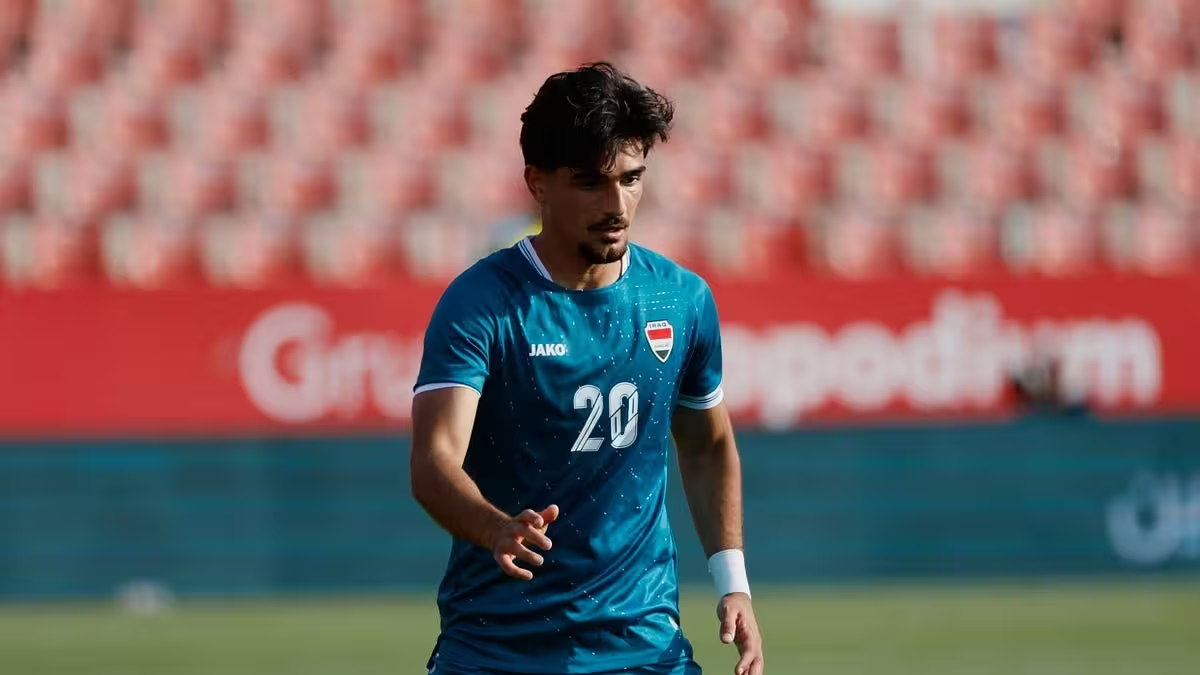
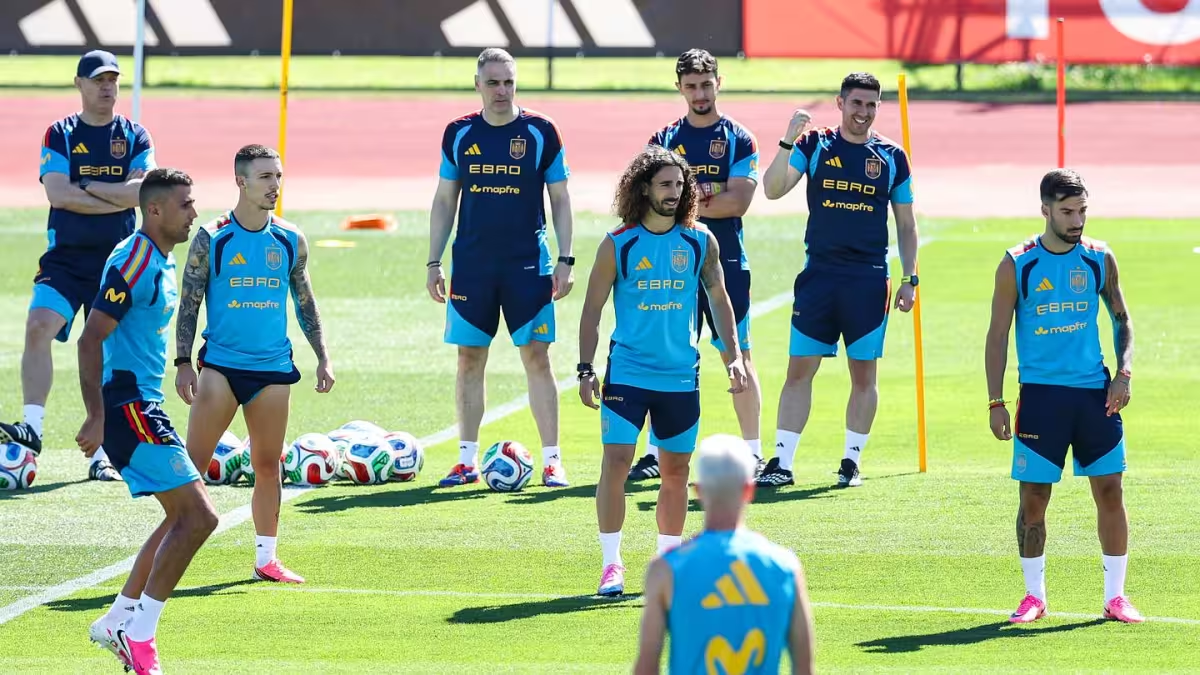
Arnold framed the job personally. “At first the family wasn’t that supportive and friends were worried because of the perception of Iraq,” he said, then added plainly: “I’m a football nut, I just love coaching.” He also described darker nights — watching war start “over the water” while stuck in Dubai — and the logistics that turned a qualifying run into a test of nerves as much as tactics.
The most dramatic proof arrived in stoppage time. A 117th‑minute penalty and a win in the knockout path did what months of planning and travel could not: it erased four decades of World Cup absence. For a nation of roughly 46 million people, the result delivered a shared, explosive release that contrasted with the moments of anxiety Arnold had seen inside camp.
That contrast is the story’s tension. Arnold says Iraq is “capable of doing something that will shock the world,” yet the same campaign exposed players prone to panic when the national gaze tightened. The scorer’s detention by authorities on arrival and the journalist who could not reach the team underline how qualification has been mired in security, bureaucracy and unpredictability as much as celebration.
Arnold’s voice is steady about what he believes the team can become. “It’s been an experience,” he said, more than once, and he keeps returning to the idea that this group can convert passion into performance. But he also acknowledges the pressure is real — a squad that reached the World Cup after relocation, war disruption and a playoff route will now meet opponents on football’s biggest stage under a different kind of scrutiny.
The next, unavoidable question is sharp: Arnold has delivered Iraq back to the World Cup; will the temperament that nearly cracked under pressure hold up when results, not qualification, are at stake? He chose to answer the moment with another challenge to the world. “Now it’s time to show the world what we’ve got,” he said. The results at the tournament will be the clearest test of whether resilience alone can become competitive progress.



