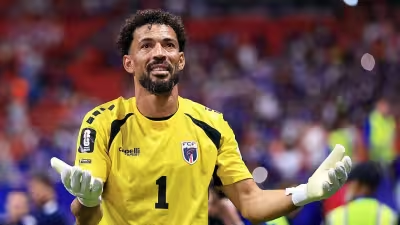
The Group H World Cup reaches its decisive matchday today, when four teams play two simultaneous fixtures and two of them will advance to the knockout stage.
Across a four-team group, each side plays three matches and the group produces six results; by the end of tonight half of those teams will continue in the tournament and the others will be eliminated. That simple math is the immediate weight: two places remain available and everything — points, goal difference and head-to-head — hangs on 90 minutes apiece.

Standings in a World Cup group are determined first by points, then by goal difference and goals scored. If those metrics leave teams level, the next layer is head-to-head results among the tied sides, followed by head-to-head goal difference and goals scored. When every conventional measure fails, fair-play points and, ultimately, a drawing of lots are the final deciders.
Those tiebreakers are the awkward friction in tonight’s narrative. Simultaneous kickoffs are intended to curb collusion by making the teams play without knowing the other result, but they do not stop the arithmetic of goal difference or the way late goals can flip qualification in an instant. Fair-play points and a random draw sit at the end of a list that can determine a team’s fate without a final whistle on the field deciding it outright.
For viewers and followers, the practical details matter: a team that leads on goal difference will be incentivized to protect that cushion, while a team trailing by a single goal might press in ways that leave it vulnerable at the back. Coaches’ substitution patterns in the final 15 minutes, how aggressively sides chase late equalizers and whether goalkeepers are pulled for an extra attacker are all small decisions with outsized consequences in a compressed group finish.
Match timing and the tournament’s bracket structure raise another layer of stakes. Finishing first or second in Group H does more than secure progression; it determines the opponent in the round of 16 and therefore the path through the knockout rounds. That makes the difference between topping the group and finishing second not merely symbolic but strategic, because the bracket is already set and tonight’s order will map directly onto who each advancing team meets next.
The tight math of the group stage ensures scenarios where multiple outcomes remain possible until the last whistle. A single late goal in either fixture can reorder the table, flip head-to-head standings or erase a goal-difference advantage. When teams are tightly bunched on points, a tidy sequence of events can mean the group winner is decided on who scored more away from their own net and, in the rarest cases, on yellow cards or a hat pulled from an urn.
What happens next is straightforward and immediate: by the end of tonight the two qualifiers from Group H will be fixed and their positions in the knockout bracket will be known. The single most consequential unresolved question entering kickoff is whether those places will be settled clearly on the scoreline or whether tiebreaker rules — the math behind the standings rather than the play on the pitch — will have the final say.