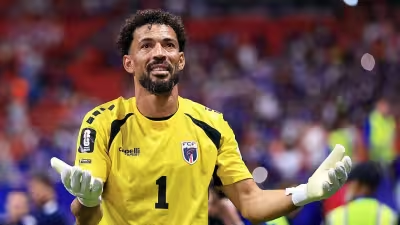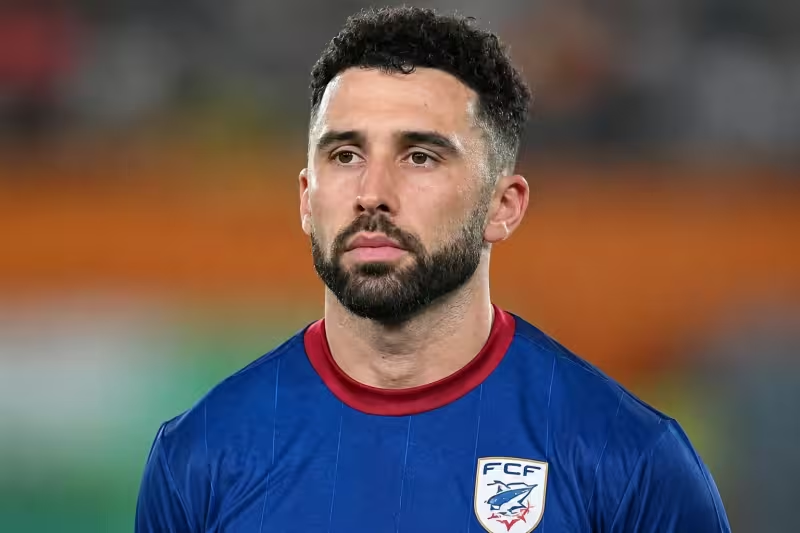
"Achei que a mensagem era um spam. Eu deveria ter usado o Google Tradutor antes," Roberto "Pico" Lopes laughed, summing up a near-miss that would change the arc of his international career. The message arrived on LinkedIn in 2018, written in Portuguese by coach Rui Águas after he learned Lopes had Cabo Verdean ancestry through his father.
Lopes initially ignored that first contact. He believed it was a scam. Months later the federation reached out again — this time in English — and Lopes accepted. He made his debut for Cabo Verde in 2019 and, in the years that followed, became one of the team's defensive pillars as the squad built toward an unlikely milestone: a first World Cup in 2026.

The numerical weight of the story is simple: the outreach began in 2018, Lopes debuted in 2019, and in 2026 the country that prompted the message was taking the field at football's biggest tournament. Cabo Verde was set to face Spain on Monday, June 15, 2026, carrying the small nation's aspirations onto a stage it had never reached before.
That sequence — a Portuguese LinkedIn note, a skeptical recipient, a second message in English, a debut and then a World Cup berth — matters because Cabo Verde's team is built largely from the diaspora. Many of the players were born outside the islands but qualify through family ties, and those transnational connections are how the federation assembled a squad capable of qualifying for a first World Cup in 2026.

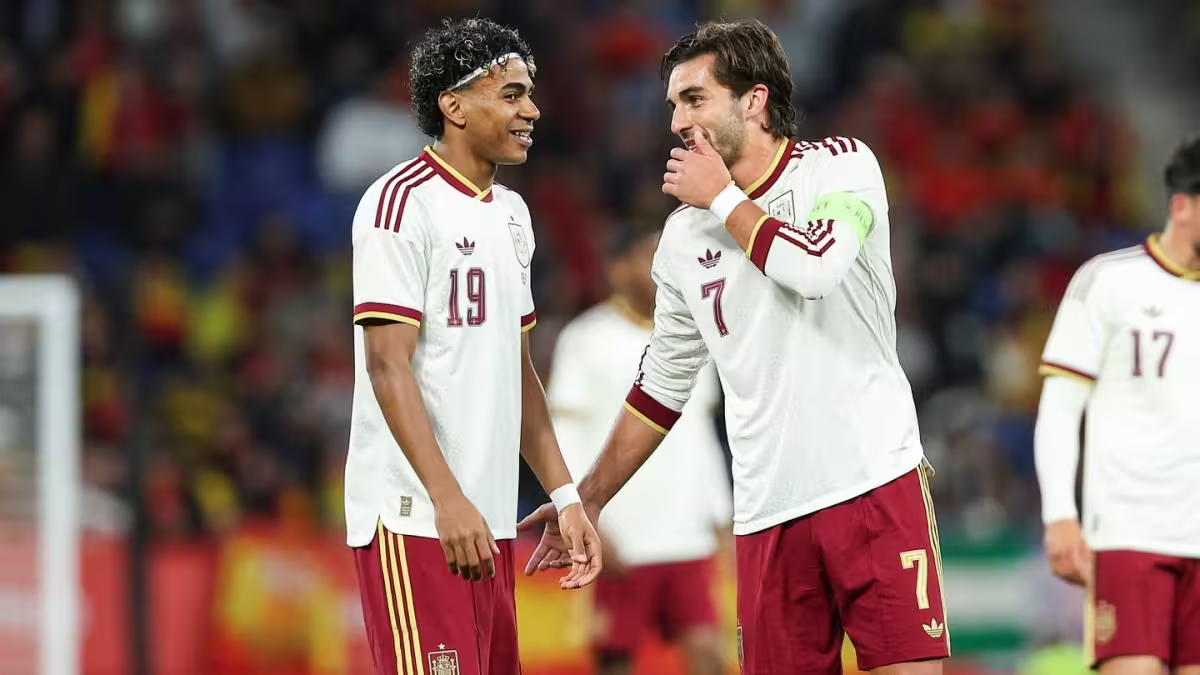
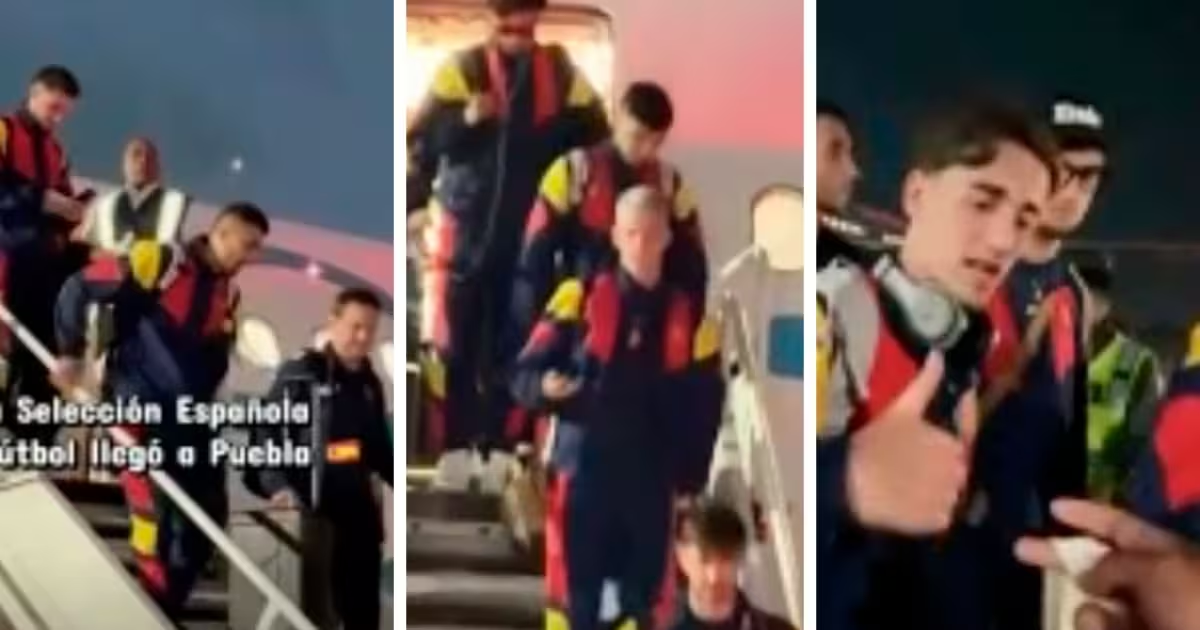
Cabo Verde is a small archipelago of roughly 600,000 inhabitants and about 4,000 km² of territory; it became independent from Portugal in 1975. Those basic facts help explain the federation's approach: with a limited domestic pool, scouting abroad and courting diaspora players is central to mounting an international challenge.
The human friction in the story is telling. A coach reaches out, but language and the formality of a LinkedIn message make it read like a con. Lopes' admission about mistaking the note for spam reveals how fragile talent recruitment can be when it depends on informal, cross-border contact. Had the federation not followed up in English months later, Cabo Verde would likely have missed an established defender for its World Cup run.
For Lopes personally, the episode reframes a routine administrative detail as decisive. From ignoring a Portuguese message in 2018 to wearing the national shirt in 2019, he turned a misunderstanding into a foundation for years of international play. For the team, the save was literal: a player who became a pillar after his debut is now part of the group preparing for a June 15 test against Spain in the 2026 World Cup.
The most consequential question left unresolved is not where Lopes came from — that story is clear — but how many other members of Cabo Verde's squad arrived by similarly fragile paths: scouting notes, social-media outreach and follow-up messages that, if not handled in the right language at the right time, could have produced different rosters. As Cabo Verde takes on Spain on June 15, 2026, the match will answer part of the football question; the broader question—how small federations reliably convert diaspora ties into dependable international players—remains.