




La Roja arrived in Puebla on June 8, 2026, under intense rain and was met at its hotel with folk music and dances as the Spain national team began its last match preparations before the World Cup.
The visit to Mexico is not a training camp diversion: it is a final friendly against Peru scheduled before Spain departs for the tournament. The timing makes the Puebla stop the last full international rehearsal on the calendar for a team that arrives in Mexico with the tournament start imminent.

That placement in the schedule is the story’s weight. Spain’s trip to Puebla is immediately followed in the itinerary by another international match — a meeting with Cabo Verde in Atlanta — so the friendly with Peru stands as the final on-field test before a transatlantic swing to the United States. For a team that frames this Puebla fixture as its last match before the World Cup, minutes and match rhythm from this encounter matter in a way they would not in a mid-cycle friendly.
Context: the trip to Mexico is explicitly presented as Spain’s last match before the World Cup, a preparatory fixture intended to sharpen players and systems. The reception at the hotel — folk music and dances under a downpour — provided an unmistakable public welcome, but the sporting purpose is straightforward: use one competitive 90 minutes to settle selection questions and tactical details that a coach prefers to see in match conditions rather than behind closed doors.


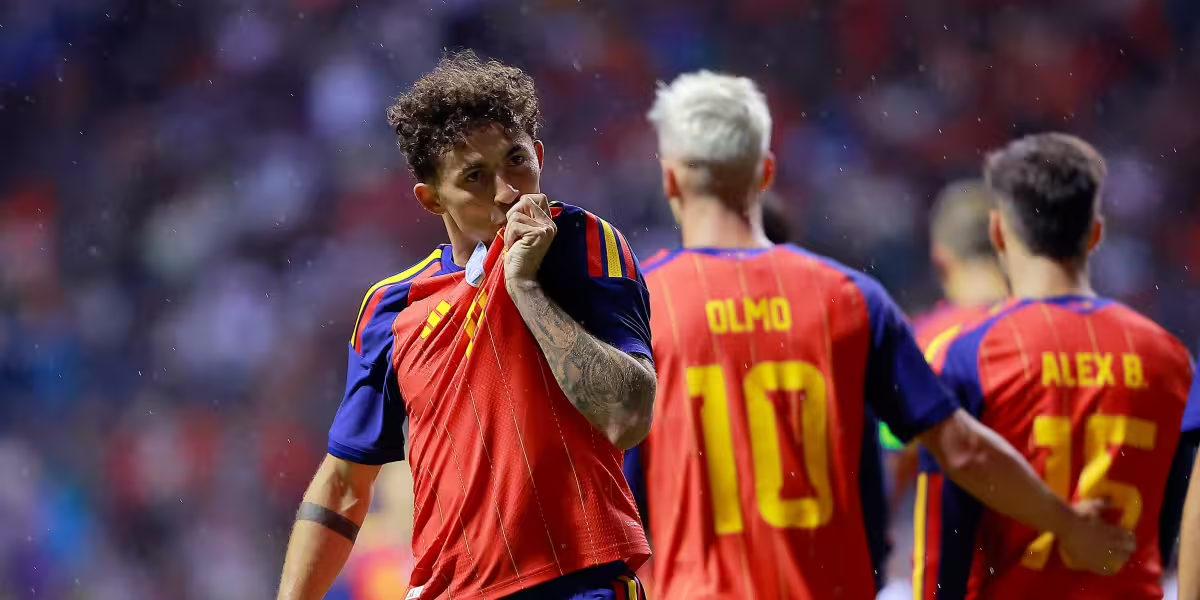
The schedule also introduces friction. Spain’s itinerary places the team in Puebla for the Peru friendly and then requires a match against Cabo Verde in Atlanta. That sequence implies a rapid cross-border repositioning between games, a logistical and physical challenge implicit in the calendar. The source of the travel plan is clear; what is not clear is how the staff will manage minutes and recovery across two high-profile friendlies separated by an intercontinental move.
Practical details fans and media want are partly absent. The reporting that accompanied the arrival confirmed the date, the rain-soaked welcome and the celebratory hotel reception, but gave no score, venue name, kickoff time or lineup information for the Peru friendly. Likewise, there were no specifics about ticketing or broadcast arrangements. In short: opponent, timing and sequence are public; the exact stadium in Puebla and the match-day logistics remain unlisted.
What to watch when the game begins is straightforward even without a lineup: this is the last observable slate of choices the coaching staff can make before the World Cup. Expect rotation aimed at finalizing roles, set-piece rehearsals under match pressure, and a focus on match fitness rather than an experimental overhaul. For Peru, the fixture offers a shot at testing themselves against one of the tournament favorites in conditions the Spaniards hope will sharpen their readiness for the weeks ahead.
The most consequential unanswered fact is simple and concrete: where in Puebla will Spain and Peru play? Organizers have confirmed the trip and the opponent but not the stadium, and that single missing detail will determine pitch dimensions, surface, local climate and crowd environment — all variables that affect how the final tune-up actually unfolds. Spain will leave Mexico for Atlanta afterward to face Cabo Verde; until the Puebla venue is named, the match remains a known opponent on a known date inside an unknown stage, and that unknown will shape how coaches, players and supporters prepare in the last days before the World Cup.



