
Tom Lee, the Fundstrat founder who now chairs Bitmine, has restated a bullish case for Ethereum, saying Ether can reach $22,000 within the next few years and much higher over the long term — a view he ties to the same forces that led him to tell investors to buy bitcoin in 2017.
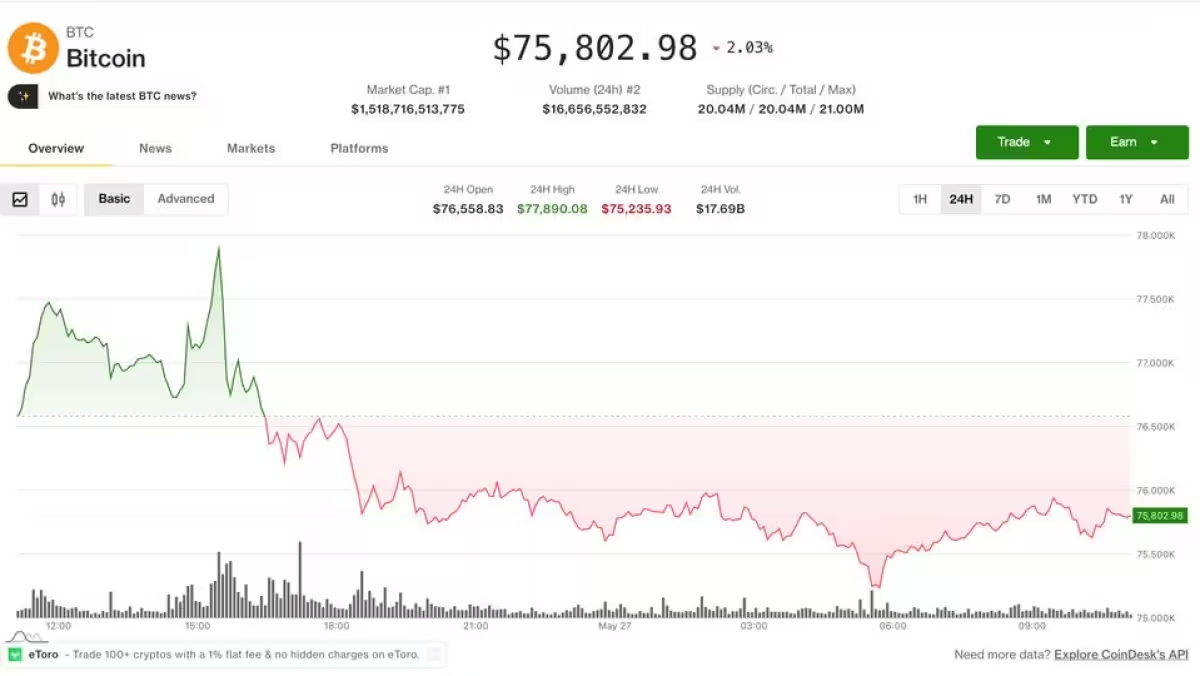
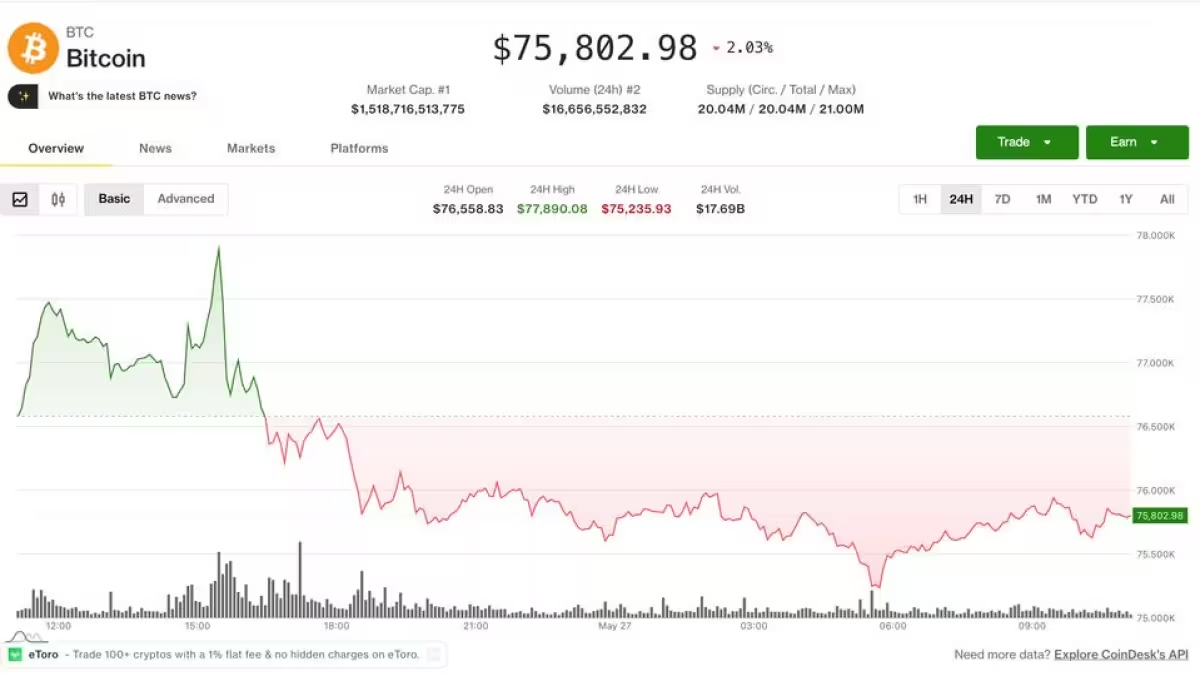
The numbers that give that claim impact are plain: Bitmine holds 5.54 million Ether tokens, about 4.6% of the circulating supply and the largest corporate Ethereum treasury in the world. Lee expects Ether to hit $22,000 in the coming years and later to trade in a range he sets at $62,000 to $250,000; he explicitly links the $22,000 figure to his broader $250,000 Bitcoin forecast. Lee has a track record of high-profile calls — he advised buying bitcoin when it traded near $2,600 in 2017 and projected $20,000 to $50,000 by 2022, a prediction that preceded bitcoin reaching $20,000. Bitcoin today trades at about $64,000.

Lee began recommending Ethereum in late 2024 and, after his appointment as Bitmine chairman last June, directed the company to build an Ethereum treasury. He has characterized Ether’s selloff over the past year as a "bloodbath buying opportunity," arguing that institutional adoption of blue-chip tokens and the mechanics of Ethereum itself should underwrite future gains.
That mechanics paragraph is short and specific: Ethereum is valued, Lee says, by the activity running on its network — developers, smart contracts and the gas fees those applications produce. The blockchain switched from proof-of-work to proof-of-stake in 2022 in an upgrade called The Merge; Ether can no longer be mined. As of late 2025, the Ethereum ecosystem counted nearly 32,000 active developers, a scale Lee points to when describing the currency’s core utility.
The gap between that argument and market action is the story’s tension. Ether has declined about 50% since the last day of 2024 even as Lee presses a $22,000 target tied to rising institutional flows and a $250,000 bitcoin. Bitmine’s 5.54 million-token position amplifies the stakes for shareholders and market sentiment: a large corporate holder buying or selling can affect prices and investor confidence, but holding a sizable treasury also exposes Bitmine to the same drawdown that has hit Ether this year.
For investors the practical takeaway is straightforward and immediate. Lee’s history — the 2017 buy bitcoin call that came before a rapid price run to $20,000 — gives his Ethereum thesis weight, and Bitmine’s holdings make his views consequential beyond mere commentary. But the market has not behaved as his near-term target requires; the 50% drop is a reminder that conviction has to survive drawdowns. Lee’s longer-term bands, and his view that institutional adoption will drive them, demand patient capital and positive institutional flows to be realized.
The single most consequential unanswered question is this: what specific timeline and set of market conditions would have to occur for Ether to climb from its current, much-lower level to $22,000? Answering that requires more than a price target — it requires clear thresholds for institutional inflows, changes in macro liquidity, and supply dynamics tied to staking and corporate treasuries like Bitmine’s. Until those thresholds are spelled out, Lee’s forecast will remain a high-profile thesis with historical precedent but an unresolved path to execution.