



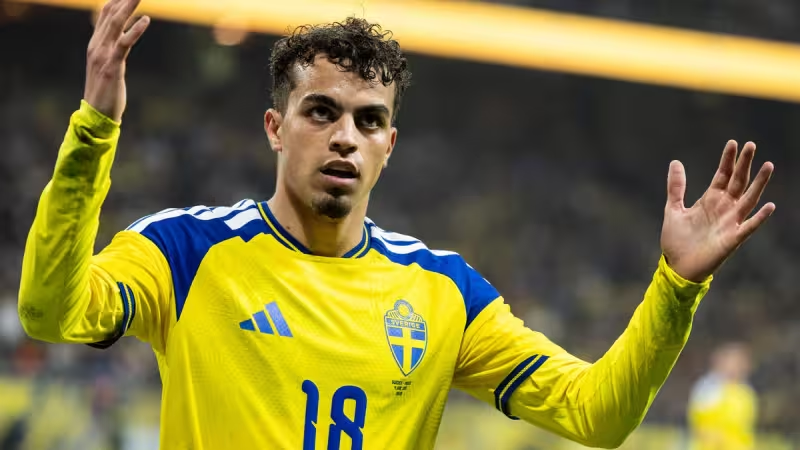
“But I think it will be easier now because we get more time,” 22-year-old Yasin Ayari said, putting his belief in Graham Potter’s project at the centre of Sweden’s World Cup buildup. Ayari, speaking as Sweden prepare to open Group F against Tunisia in Monterrey, cast the extra days with the squad as the change that could let Potter move beyond the short-term fixes of qualifying.
Potter worked on the training pitch in Dallas as part of those preparations, and Ayari drew a sharp line between the hurried nature of qualifying and the breathing room of a summer camp. “It was different because you don’t get as much time,” he said. “You train with your club every day with your team-mates and the coach can implement things easier.”

Potter took over on an interim basis during the qualifying phase, a period Ayari described as one in which the manager’s priorities were clear and basic. “When Graham came in, he had to make sure everyone knows what they are doing and we are together as a team. That’s the most important thing,” Ayari said. “At that time (the play-offs) it wasn’t so much about him showing how good he is tactically. At that time it was about him showing us that he trusts us, putting the team together and always believing in ourselves.”
Now, Ayari said, Potter can push further. The midfielder welcomed the manager’s attempts to integrate with the squad — “Both. He is trying to speak Swedish and he is doing a good job” — and said Potter has encouraged him to play without constraint. “He has asked me to play the way I like to play, because I'm me and I'm at my best when I play free,” Ayari said, framing his own role as one built around instinct and space rather than rigid instruction.
The stakes make that approach personal. Sweden’s Group F opener is scheduled against Tunisia in Monterrey, Mexico, and Tunisia is the country where Ayari’s father was born. The match will rest on more than tactics: it will reopen the decision Ayari made five years ago, when Tunisia’s representatives approached him in 2021 with an offer to switch allegiances for the 2022 World Cup. Ayari said he was born in Sweden and feels Swedish, and “Sweden is the country I want to represent.”
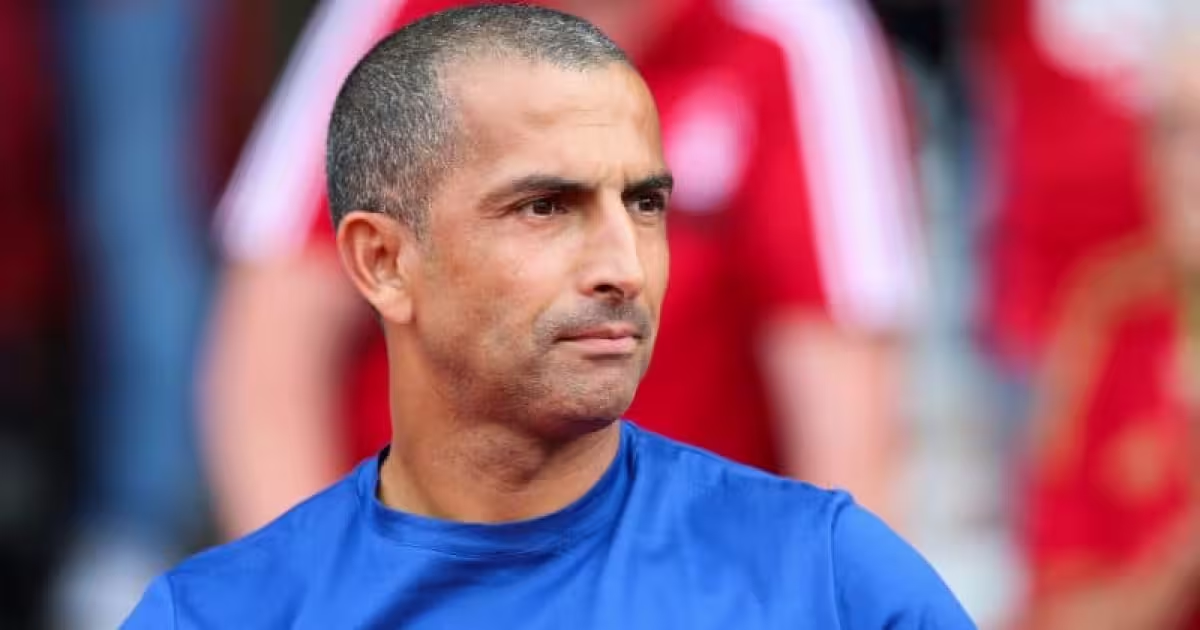
The recruitment attempt did not go without comment from Tunisia’s side. Sabri Lamouchi, who has spoken about the player in the past, said, “I know him and his brother,” and later: “He made a choice, I have a lot of respect, and he's a very good player. We wish him after the game best of luck, but that is after the game.” Ayari’s father, Azzouz Ayari, also weighed in publicly in May, saying his son wanted to play for Tunisia but that he urged him to represent Sweden because “it is the country that welcomed and developed him” and “it was his duty to give something back.”
That backstory gives extra texture to Ayari’s comments about Potter’s timetable. Where qualifying required rapid cohesion, the World Cup allows Potter more than short windows between matches and travel; it gives him sustained days on the training pitch to test systems and roles. Ayari, who has been promised freedom to play, represents one of the variables Potter can now refine in training drills rather than in the heat of a one-off qualifier.
Still, a clear gap remains. Ayari speaks confidently about tactics and trust, and about Potter’s growing imprint, but neither he nor the coaching staff have specified how large a role he will have in Monterrey or across Group F. That is the question that will define the next public moment for both player and coach: how much of Potter’s supposed tactical freedom for Ayari translates into minutes and influence on the pitch against Tunisia and in the matches that follow at the 2026 World Cup?



