



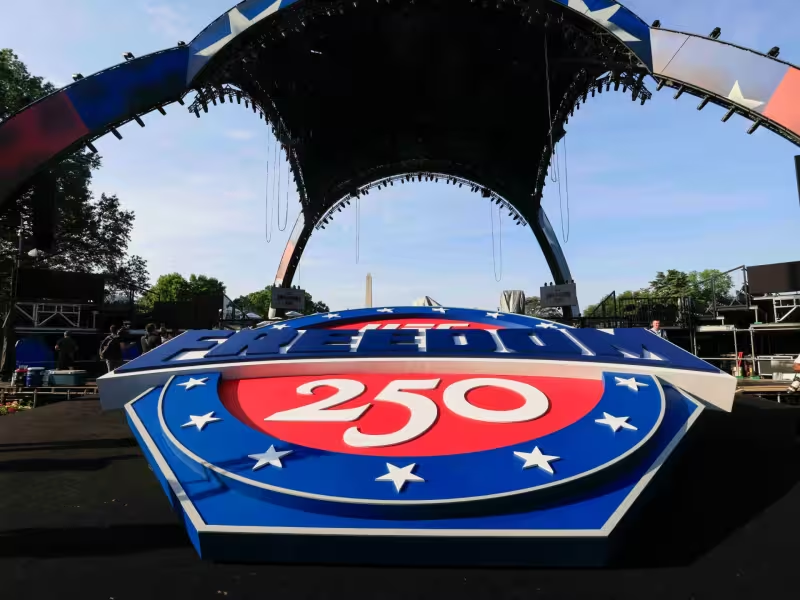
Washington, DC, has been remade for the United States’ 250th anniversary, and the capital is only the opening scene in a celebration meant to stretch across the country. The semiquincentennial, as the nationwide bash is being called, marks two and a half centuries since the signing of the Declaration of Independence on July 4, 1776.
The scale matters because this is not being planned as a single parade or a one-day ceremony. Events are being readied around the country, including mobile museums known as Freedom Trucks and a program called America’s Block Party, which is meant to spur communities to do charitable work and host their own celebrations. For organizers, the goal is to make the 250th anniversary feel local as well as national.

That ambition has a long American precedent. The country has made a habit of marking its milestone anniversaries every 50 years, and the first one, in 1826, came while some of the original signers of the Declaration were still alive. The mayor of Washington invited them to the capital, but former Presidents John Adams and Thomas Jefferson both declined because of failing health. They died within hours of each other on the day of the semicentennial.


The next big markers followed a pattern of spectacle. In 1876, the United States marked its 100th anniversary with its first world’s fair in Philadelphia, where the original Declaration document was put on temporary display. Another world’s fair came to Philadelphia in 1926 for the country’s 150th anniversary, a celebration Variety magazine dismissed as “America’s greatest flop.”
The modern blueprint for a yearlong, cross-country commemoration arrived in 1976, when the 200th anniversary featured a train-mounted museum of documents and historical artifacts that toured the lower 48 states for 21 months. Volunteers also crossed the country in covered wagons. That celebration was generally well received, though the flood of souvenirs earned it the sneering nickname the buy-centennial.
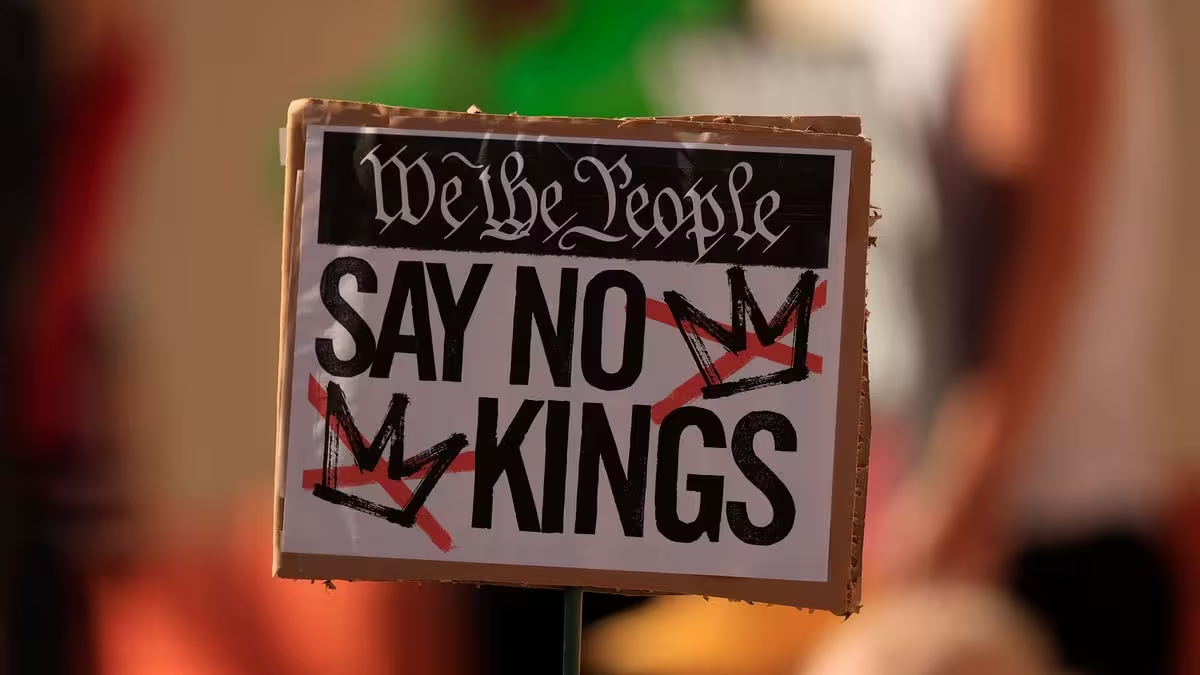
This year’s commemoration is trying to capture the reach of 1976 without repeating its excesses. But the celebrations have also been overshadowed by questions about Trump’s influence, a reminder that even a national milestone can become a political battleground. The unresolved issue now is not whether the anniversary will be marked, but how much of the story around it will be about the country’s founding and how much will be about the fight over who gets to define it.



