



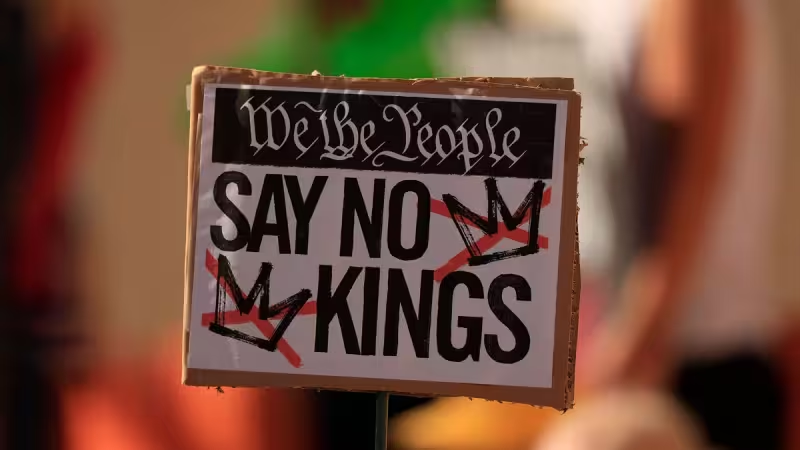
Protesters are planning No Kings gatherings, rallies and a First Amendment concert in New York City on June 14, 2026 — President Donald Trump's 80th birthday — and organizers say matching actions will run in communities coast to coast that day.
The scale organizers point to is massive: in March an estimated 8 million Americans turned out for No Kings demonstrations in roughly 3,300 cities and towns across all 50 states, a turnout the movement cites as its baseline going into the June 14 actions. The coalition has announced more protests for Trump’s birthday and is asking local volunteers to stage living-room discussions, community-center meetings and public rallies in towns and neighborhoods that backed the March events.

The No Kings Coalition frames the day as a response to what it describes as unaccountable power at the top of government; it says it will focus on community-level organizing. The group's public material accuses the administration of sending masked agents into streets, targeting immigrant families without warrants, threatening to intervene in elections, and spending heavily abroad while families struggle at home. The coalition has also argued that the president treats his authority as absolute — and insists that American civic life does not tolerate kings.
Organizers have slated a First Amendment concert in New York City as the headline public-facing event for June 14, alongside smaller rallies and gatherings. They continue to urge local hosts to use living rooms, community centers and businesses as venues, echoing their March playbook. The movement's website and central messaging are explicit about confronting what it calls abuses of power while using decentralized, community-driven tactics rather than single large demonstrations.
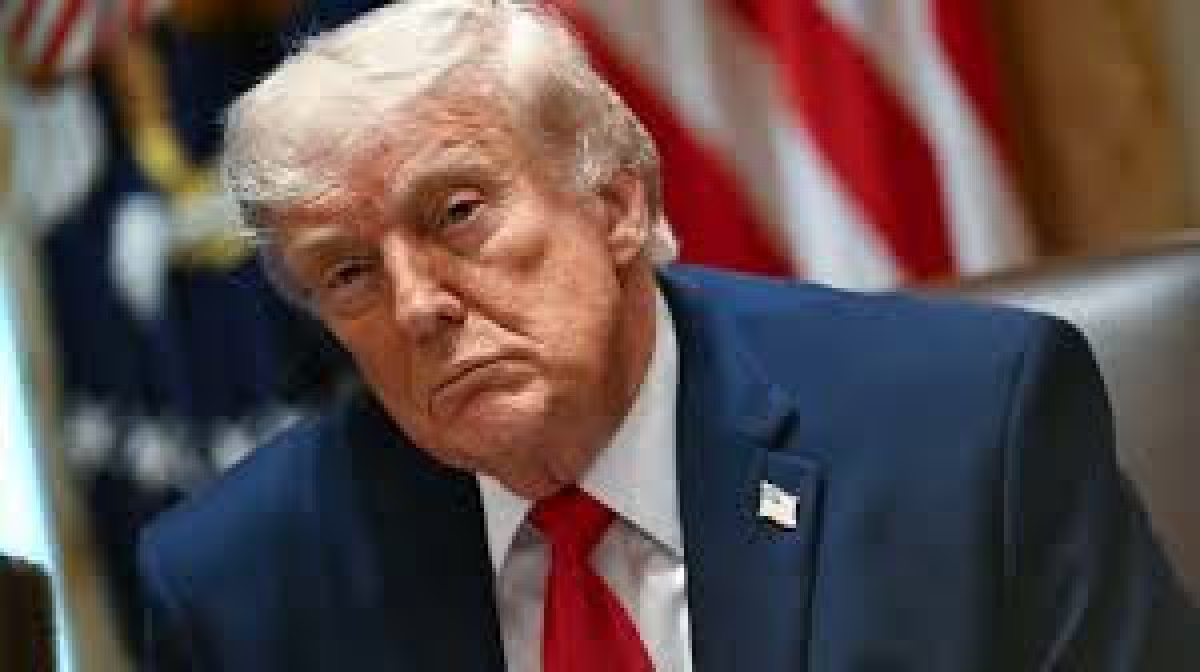
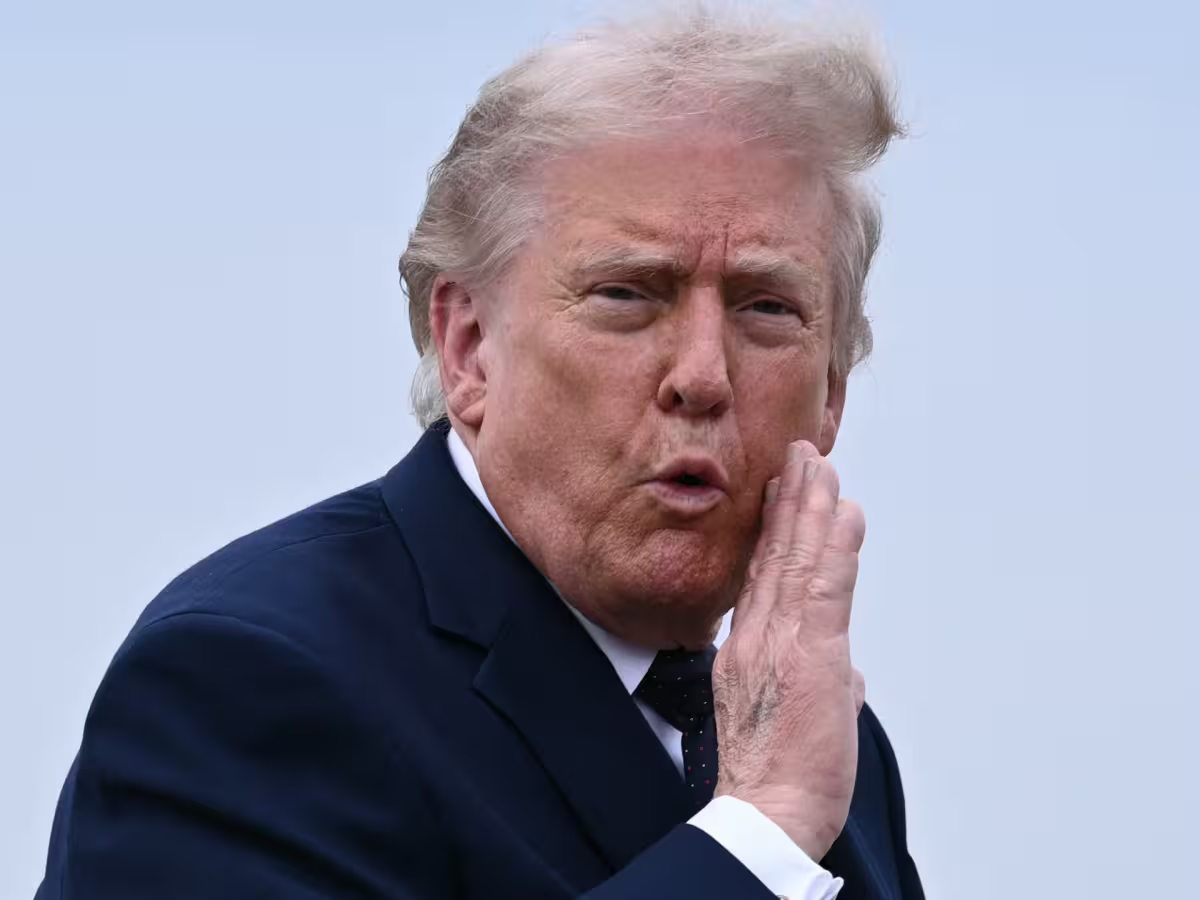
There is historical language woven into the movement's argument. The declarations about kingship draw an obvious line back to 1776: Thomas Jefferson spent nearly half of the Declaration of Independence accusing King George III of a long train of abuses and listing 27 specific grievances. Protesters are using that rhetorical frame to argue that concentrated, unchecked power is a current danger, even as opponents note the differences between a democratically elected president and a hereditary monarch.
That gap — the friction at the center of the No Kings message — is unavoidable. The president has been elected twice, a fact that separates him from historical monarchs, and critics of the movement point out that a real king would not tolerate such public, organized dissent. The recent record complicates the comparison further: the president previously deployed troops to Washington, DC, to restore order, threatened to invoke the Insurrection Act in Minnesota but did not go through with it, and saw the Supreme Court reject a bid to deploy the National Guard in Illinois as well as an attempt to freeze nearly $2 billion.
Practically, the day will be decentralized by design. New York City will host the concert and larger rallies, but much of the No Kings strategy calls for smaller, local actions — conversations in homes, volunteer-led centers and small-business fronts — that organizers say are less vulnerable to shutdown and more likely to sustain later activity. The coalition’s approach is built around amplifying many small gatherings rather than relying entirely on a single mass march.
For readers wondering what to watch on June 14: turnout and geography. Will organizers replicate the March footprint — about 3,300 communities and an 8 million-person benchmark — or will the mobilization concentrate around New York City and a handful of large rallies? The movement's national reach in March is proof of concept; whether it sustains that scale on a dated, highly symbolic birthday for the president is the question that will determine whether No Kings is a recurring organized force or a burst of protest energy tied to a moment.
The most consequential unanswered question is simple: will June 14 match the raw numbers from March and scatter those millions across thousands of communities again, or will the movement's visibility be decided in the streets and parks of a few cities — starting with New York City — where authorities, organizers and a polarized public will be watching closest?



