



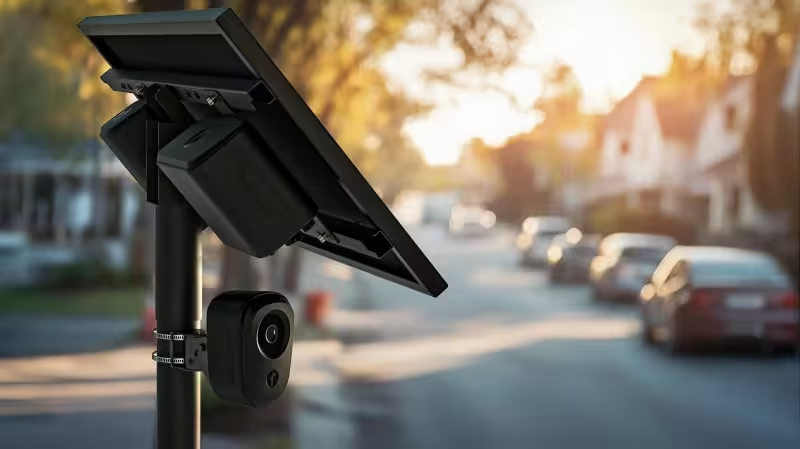
City leaders approved a year-long trial of Flock Safety license-plate reader cameras at several intersections in Washington, giving local investigators direct access to camera data collected inside city limits.
The cameras will be installed at no cost to the city and placed strategically at several intersections, police said, with investigators able to pull plate reads and vehicle descriptions as cars pass through. Detective Brady Stallings said the department has long relied on surrounding jurisdictions' systems and expects the local deployment to speed investigations.

Stallings told city officials, "We get a large flow of traffic through our area," and added, "We rely right now on surrounding jurisdictions' cameras, which have been useful to us." He said Flock agreed to a demonstration to let the department see what resources the company could provide: "We were able to talk with Flock, and they were willing to do this demo to see what resources this could provide for us."
Police emphasized the purpose of the trial is investigative. "Our goal is not to enforce any sort of traffic violations through these cameras," Stallings said, and he repeated that they will not be used for speed enforcement. Instead, the department said the system is designed to generate leads investigators can use to solve crimes.
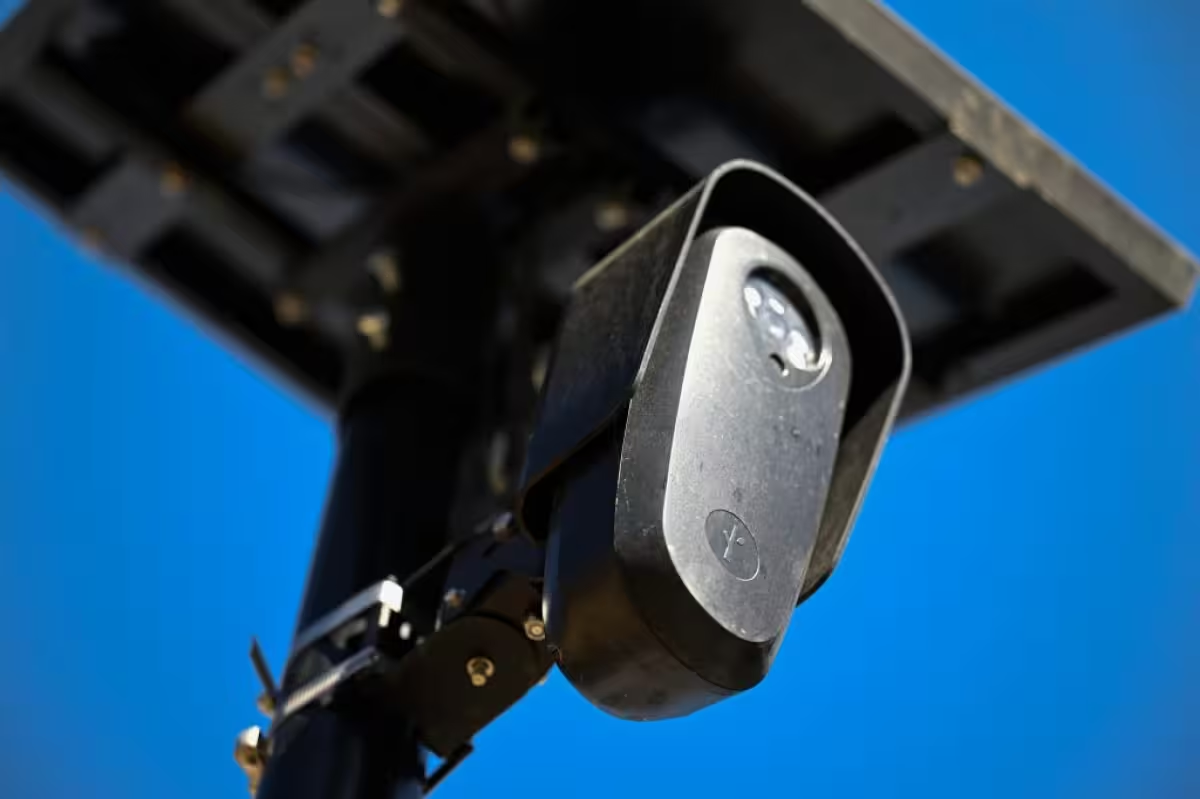

The technology records license plate information and vehicle descriptions as cars move through an intersection. Stallings pointed to results in other communities where the tools have been used, saying the technology has helped solve robberies, vehicle thefts, kidnappings and missing-persons cases.
That capability is the source of immediate friction. Police and city leaders insist the devices are not for ticketing or speed cameras, but the system’s ability to log identifying details beyond license plates has been described as a feature that can be abused. The deployment in Washington will put that capability inside the city’s footprint for the first time rather than relying on neighboring jurisdictions’ databases.
Investigators will have direct access to the information gathered during the year-long trial, but officials have not announced formal rules for who within the department can query the system, how long data will be retained, or what audit controls will be in place. The cameras will be installed and maintained at no cost to the city for the duration of the demo.
The immediate consequence is practical: investigators will no longer need to request data from nearby police departments for incidents that occur within Washington. The broader consequence is political and administrative. The council approved only a one-year demonstration, leaving oversight, retention policy and access controls as the outstanding governance questions that must be answered during the trial.
At the end of the year, city leaders will decide whether to keep the Flock Safety system as a permanent crime‑fighting tool. The single unresolved question that will determine that vote is also the most consequential now: who will control access to the camera data and what safeguards will prevent misuse during the trial period?



