




The Federal Communications Commission has ordered ABC to apply early to renew broadcast licenses for eight local television stations and opened a public pleading cycle for critics and supporters that runs through June 29, accelerating a process that typically follows a regular timetable.
The move places Disney’s ABC squarely in a regulatory spotlight: petitioners can now challenge any aspect of ABC’s fitness to hold licenses and whether the network serves the public interest. Daniel Suhr said, "It’s a license renewal, and so any issues dealing with the license are fair game, and we’ve had a number of pending complaints and concerns about ABC," underscoring how broadly opponents can press their case. The Center for American Rights has signaled it will file a petition to deny on multiple grounds and has already lodged complaints over ABC’s handling of a 2024 presidential election debate, Jimmy Kimmel and The View.

The FCC’s procedural order gives the public until June 29 to submit comments. ABC will have roughly a month to respond to any petitions to deny, petitioners will get a few days to file replies, and replies to those replies are due by Aug. 5 — after which the matter would likely be handed off to an administrative law judge for adjudication.
The agency says the order rests on early findings from an investigation into Disney’s diversity, equity and inclusion practices; ABC counters that the inquiry is a pretext. In an 18-page memo filed in late May, the network argued the investigation is meant to retaliate against a disfavored broadcaster and to chill its speech. One dissenting participant in the proceeding wrote on June 5 that the action reflected a broader effort to discourage corporate diversity initiatives.
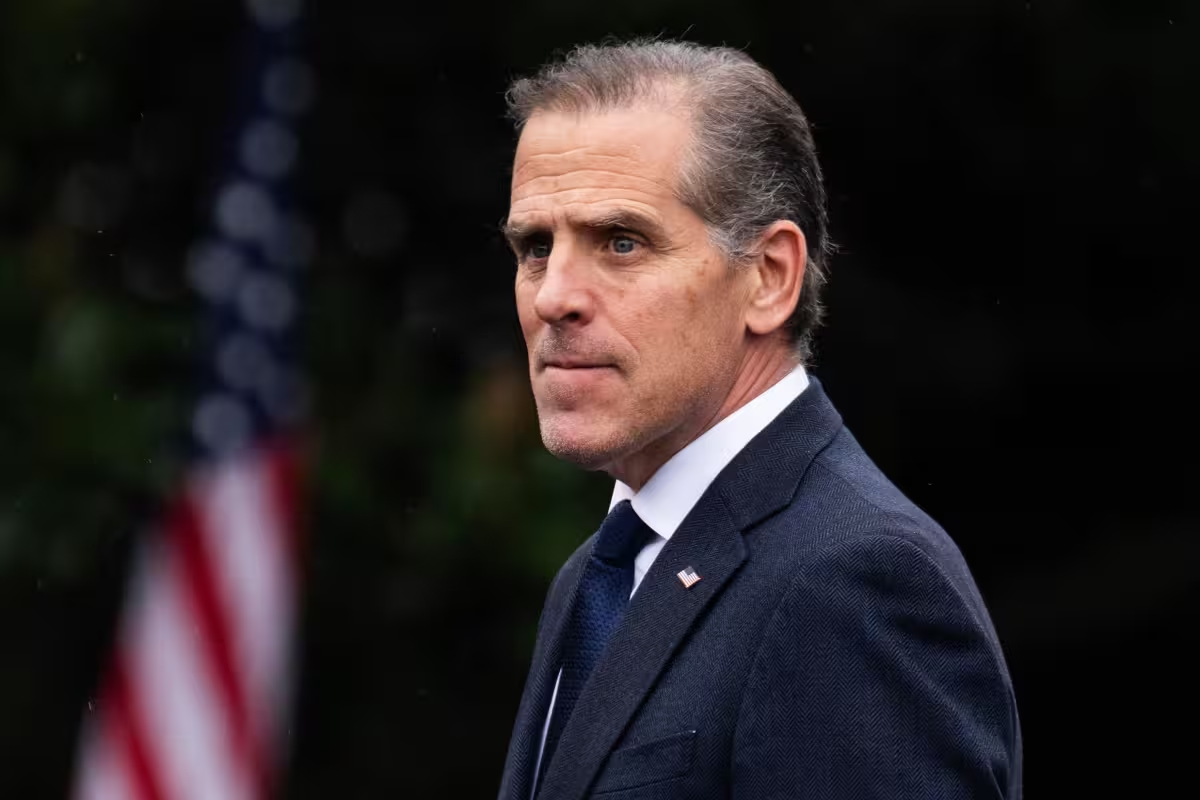

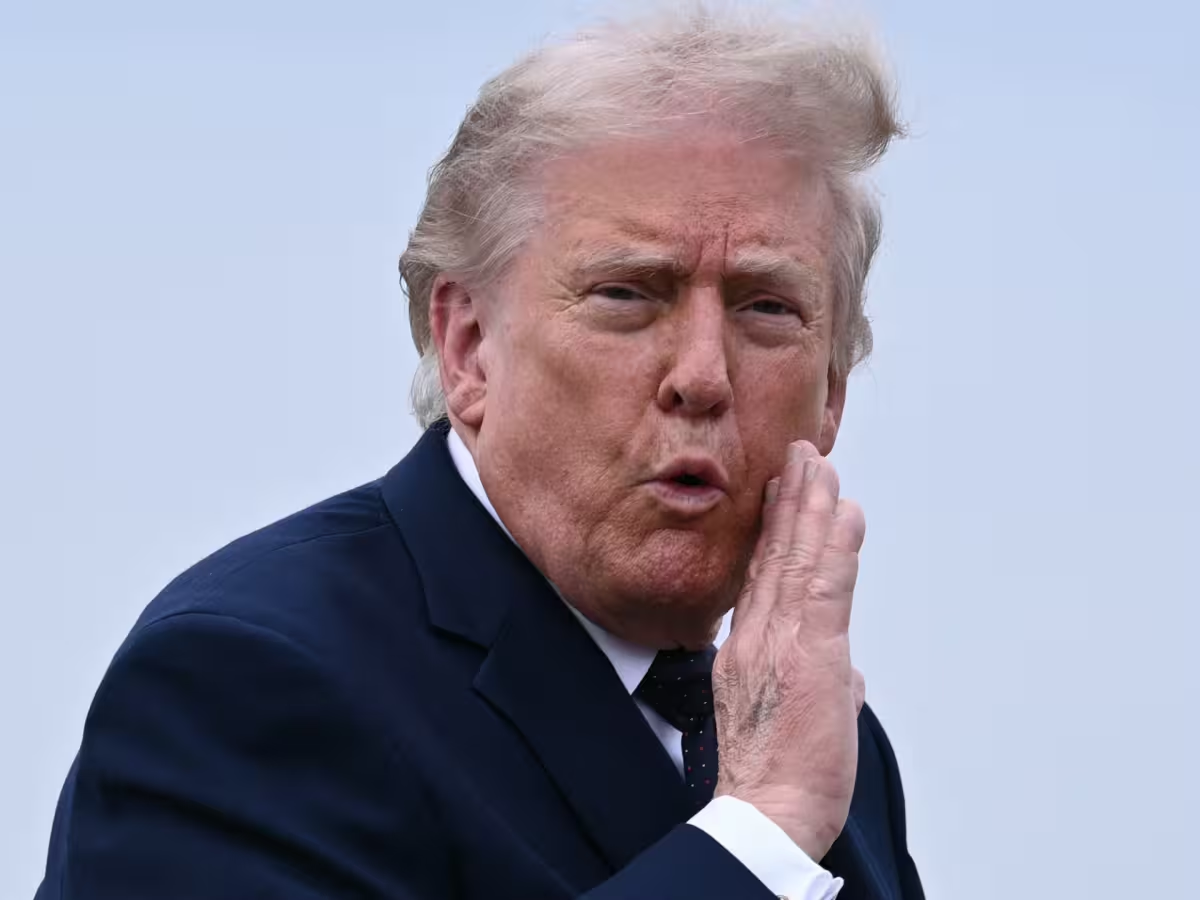
The regulatory escalation has drawn sharp public commentary. Gigi Sohn, a former FCC official and frequent critic of enforcement moves she views as politically motivated, described the situation bluntly: "Is this open season on ABC? Without a doubt," she said, framing the proceeding as part of a larger campaign to use licensing power to police programming and commentary. The order also followed a highly visible political moment: the action was issued one day after Donald Trump and Melania Trump lobbied ABC to cancel Jimmy Kimmel’s late-night show.
The stakes are concrete and procedural. If petitioners file formal petitions to deny, ABC will be required to answer specific allegations about station operations, programming and corporate practices within the fixed reply window. The FCC’s decision to accelerate the renewals for eight stations creates a formal record in which critics can press complaints that had been lodged outside the licensing timetable; it also gives supporters a set period to rebut those claims in the public record.
For readers tracking the industry, the order makes the normally technocratic license-renewal calendar into an immediate political and legal battleground. Entertainment readers may also note continuing developments on the network’s programming front, such as Justin Hartley’s role to executive-produce ABC’s A Forgotten Kill TV adaptation (Justin Hartley to Executive Produce ABC’s A Forgotten Kill TV Adaptation), which will now play out against a backdrop of heightened regulatory scrutiny.
The single unresolved question after the FCC’s procedural step is whether the public pleading cycle and subsequent petitions will translate into actual denials of any of ABC’s license renewals. The order does not itself revoke licenses; it opens a path that, if contested claims persist and succeed before an administrative law judge, could lead to further sanctions. For now, the schedule is clear: comments until June 29, petition replies due by Aug. 5, and then a likely transfer to an administrative law judge — the point at which the theoretical threat of loss becomes a concrete adjudication.



