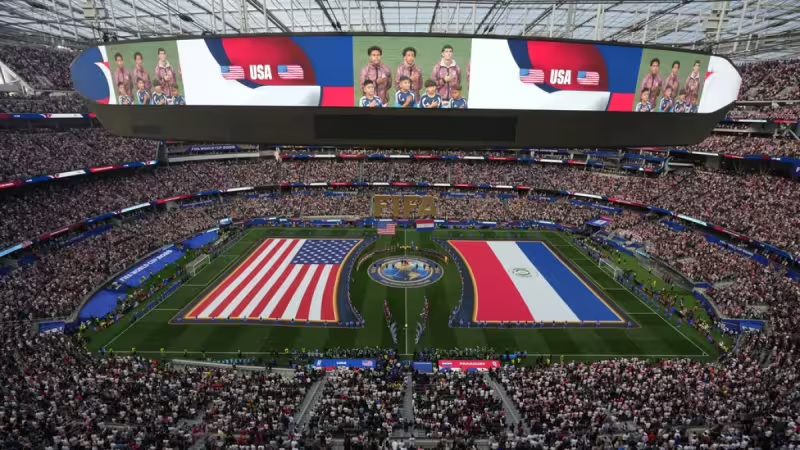
The United States beat Paraguay 4-1 on Friday at SoFi Stadium in Los Angeles in the first World Cup match played on U.S. soil, and the game went largely without incident despite pre‑kickoff concerns about organisation and logistics.
The scoreline — 4-1 — was the headline, but the match also delivered a dress rehearsal for stadium operations that will be repeated across the country: the U.S. is set to host 78 of the tournament’s 104 matches, and Friday’s opening local game required hundreds, if not thousands, of workers and volunteers to manage the crowd.

Security was visible and comprehensive. Heavily armed officers from multiple agencies and police dogs were deployed around the venue, and attendees were required to pass through airport‑style security. The FIFA app FWC2026 was the only accepted method to validate tickets; screenshots and printouts were not allowed at the turnstiles.
For fans, the practical details mattered most. Any bag larger than a wallet was barred unless it was see‑through; Los Angeles commissioned shuttle buses to ferry supporters from downtown transport hubs to the stadium; and concession prices were steep — a bottle of water listed at $5.25, a small bag of crisps at $5.75 and beer as much as $21.50. Those rules and costs framed what attending the next World Cup game in the U.S. will feel like.


Context matters: the United States is co‑hosting the tournament with Canada and Mexico, and with 78 matches at U.S. venues the logistical burden is large and recurring. The systems tested in Los Angeles — ticket‑app‑only entry, clear‑bag enforcement, shuttle services and multi‑agency policing — are the baseline that fans should expect at future U.S. stops as the World Cup gets into full swing.
Still, the scene was not without dissonance. Organisers had publicly faced questions about staffing, queues and transportation in the days before kickoff, and on Friday there were noticeable clusters of empty seats even amid a hometown celebration. That gap — a heavily resourced operation on one hand and pockets of unfilled seats on the other — was the small, visible friction in an otherwise orderly debut.
What the Los Angeles match proved is both reassuring and unresolved. It is reassuring that a complex security posture and a vast stewarding operation can hold together and that a 4-1 win can go forward without major incident. It remains unresolved whether the strict ticketing and entry procedures, the price environment inside stadiums, and the heavy security footprint will scale smoothly across dozens more U.S. matches — and whether the clusters of empty seats observed Friday will be a one‑off or a recurring pattern.
For anyone heading to the next World Cup game: download and set up the FWC2026 app, travel light or bring only a clear bag, be prepared for airport‑style screening, and budget for high concession prices. The tournament’s biggest question now is operational: can this model be repeated cleanly 77 more times in U.S. venues, or will bottlenecks, traffic and attendance quirks force a rethink as the schedule deepens?