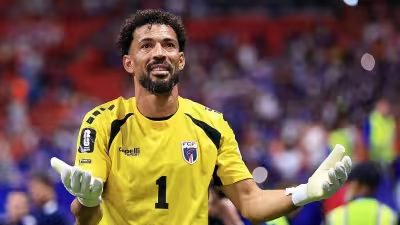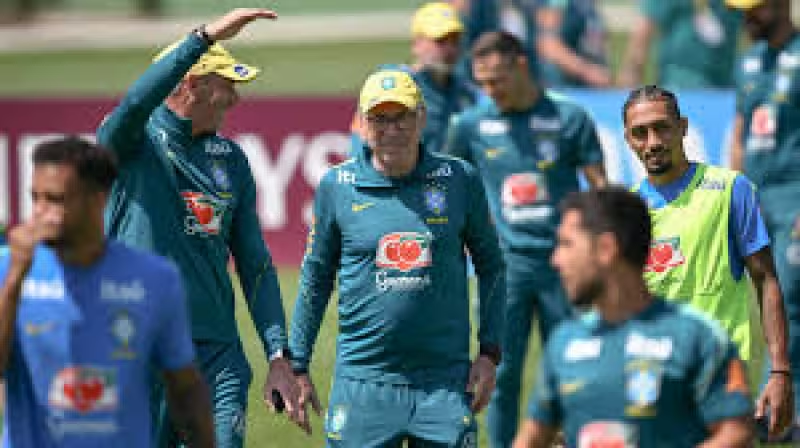
Brazil goalkeeper Alisson Becker said Carlo Ancelotti “perhaps has more pressure than being the president of the country” as the national team prepares to play African champion Morocco on Saturday night in its World Cup opener.
The remark from one of Brazil’s senior players landed early and blunt, an attempt to name the weight on the coach before the first whistle. Brazil enter the match as one of the tournament favourites, chasing a record sixth World Cup title, and carry a long record in openers: unbeaten in 20 World Cup openers since 1934 and winners of 17 of those fixtures. The sides are close in the rankings — Brazil sixth, Morocco seventh — and Vinícius Júnior framed the mission simply on Friday: “We’re here to try to change history, try to put Brazil back to where it never should have left, which is at the top.”

That pedigree and expectation is the article’s immediate context: a team lauded as a contender but one that has not hoisted the trophy since 2002 and has progressed past the quarterfinals only once in the intervening tournaments. The gap between public belief and recent outcomes has become a running subplot for this Brazil side, and it is part of why comments about coaching pressure register so loudly.
Carlo Ancelotti has not softened that spotlight. He warned on Friday that “in modern football, there is no — how we say? — small-time team” and added of Morocco that “they are definitely up to the task.” Morocco arrive as the continent’s reigning champions after a strange ending to their regional tournament in January, when a 3-0 forfeit was awarded in their favour following a stoppage-time protest by Senegal. Morocco also carry the momentum of a run that four years ago made them the first African nation to reach World Cup semifinals.
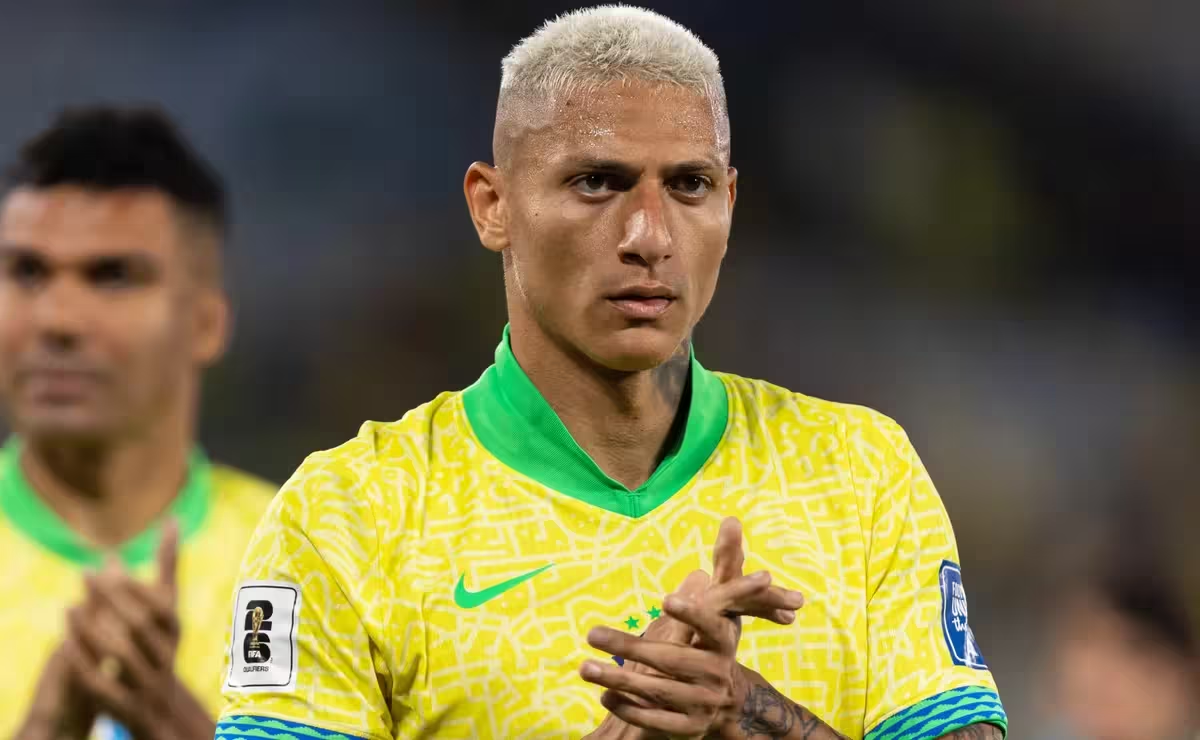
The tension here is not only historical but visceral. Brazil’s modern struggle in the knockout rounds has a headline moment stamped on it: the 7-1 semifinal loss to Germany in 2014 in Belo Horizonte. That defeat, and the follow-up pattern of underperformance, gives weight to Alisson’s framing of pressure. He is Brazil goalkeeper, the last line in a team whose recent World Cup storylines have been about shock exits and unmet expectations as much as stars and buildup.
On the other hand, Brazil’s opening-day numbers are comforting to supporters: unbeaten across two dozen-plus tournaments in first matches and with a heavy winning record in those starts. The squads have met Morocco once at a World Cup, in the 1998 group stage, when Brazil won 3-0; that history does not settle the modern match but it is part of the pregame ledger.
Practical detail to carry into the stadium: Saturday night is the kickoff. The fixture is not just an opening ritual; it is where the season’s pressure gets a first public accounting. For Ancelotti and his staff, the early returns will be scrutinized not only for result but for how the team responds under the kind of commentary Alisson has voiced aloud.
What to watch when the match begins is straightforward. Can Brazil impose its favoured style against an organized Morocco side that has proven it can contend at the highest level? Will Ancelotti’s tactical choices blunt Morocco’s strengths and get the attacking balance Vinícius insists exists — “We are at the same level as the other major teams” — without exposing familiar defensive vulnerabilities? Those questions shape every minute of the opener.
The single consequential unanswered question is this: can Ancelotti convert the extraordinary pressure named by Alisson into a team performance that starts Brazil’s push for a sixth title, beginning with a win over Morocco on Saturday night? The answer will define whether the talk of pressure was a warning, a prompt or simply noise before the tournament has properly begun.