



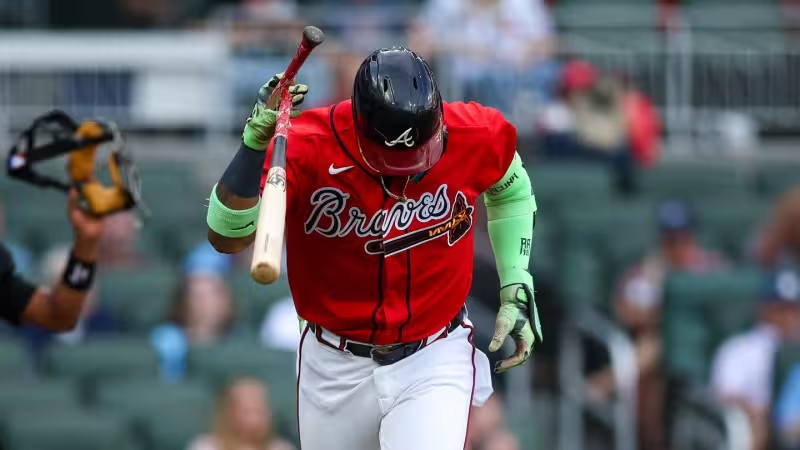
Austin Riley has been a disappointment for fantasy managers so far in 2026: he sits at a career-low.266 BABIP and an 80 wRC+, has been moved down to seventh in Atlanta’s batting order and ranks as the No. 22 fantasy third baseman despite remaining healthy.
The sharpest numbers explain why managers who bought Riley as a bounce-back candidate are sour. His.266 BABIP is a career low, his HR/FB% has dropped to 10.8 — also a career low — and he has struck out more while not hitting the ball quite as hard. Those shifts have pushed his offensive production to levels he has not shown before this season.

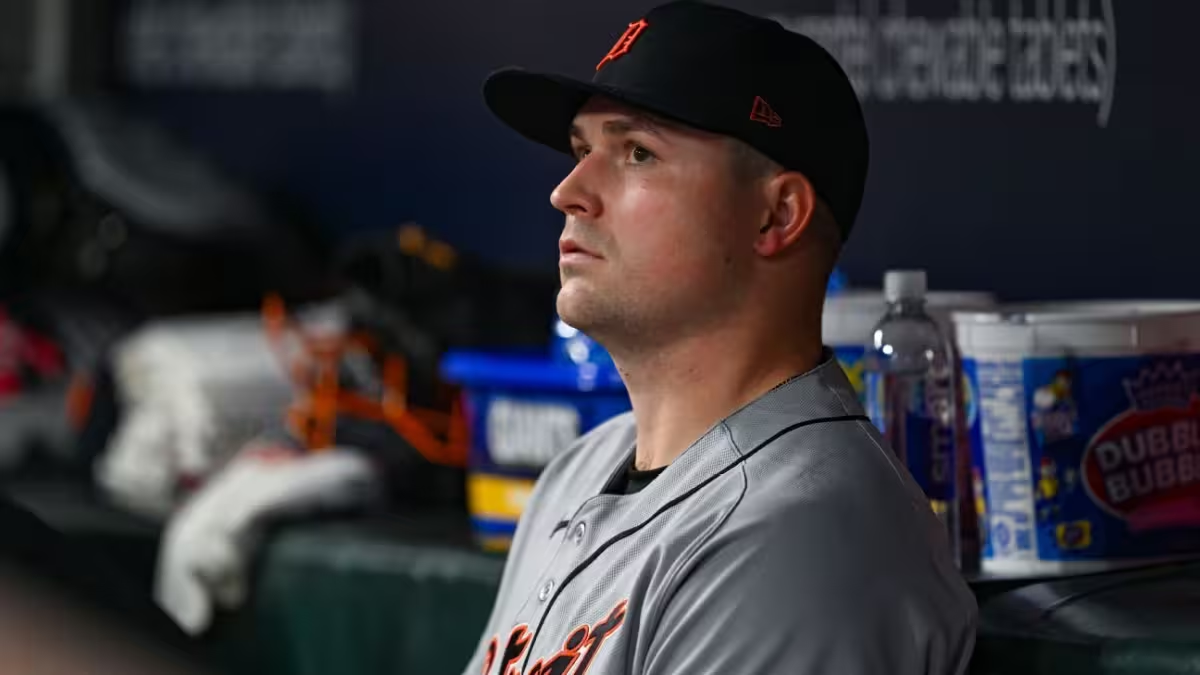

Context matters. Before 2026, Riley was widely viewed as an obvious bounce-back candidate after injuries derailed his previous two seasons. Atlanta’s offense, by contrast, has recovered: the Braves’ lineup posted the third highest wRC+ in MLB in 2026, which makes Riley’s individual slide stick out inside a productive club.
That intersection — bad counting stats in a strong offense — points to a mix of luck and mechanical trouble. A.266 BABIP, in isolation, is often taken as a luck signal; coupled with the career-low HR/FB% it suggests some balls that might have found holes or cleared fences in other years have not this season. At the same time, the rise in strikeouts and the drop in hard contact are concrete changes that could limit a pure luck rebound from translating fully into production.
For fantasy managers the practical consequence is straightforward: Riley’s placement as the No. 22 fantasy third baseman makes him a drop candidate in shallow formats, but his underlying profile still offers a credible path back to usefulness. His track record suggests he should not keep performing this poorly for much longer. Whether improved luck — higher BABIP, a restoration of his previous HR/FB% and better contact quality — will force Atlanta to move him back up in the order and convert those peripheral gains into sustained fantasy value is the central unresolved question for the rest of 2026.



