When Asha Sharma tells the story she favors from her early days, it is not about a boardroom victory or a product launch — it is about being the best kid taking out the trash at the park where she worked. "I never obsessed on what I wanted to be when I grew up," she said, "I only obsessed on what I wanted to do—whether it was selling coupon books or putting on concerts…whether it was being the best at taking out the trash at the park that I worked at, I just tried to obsess on being great at what I was doing, so I can earn the next job." That restless focus is the through-line of the reset she is selling to the company now that she is Xbox CEO.
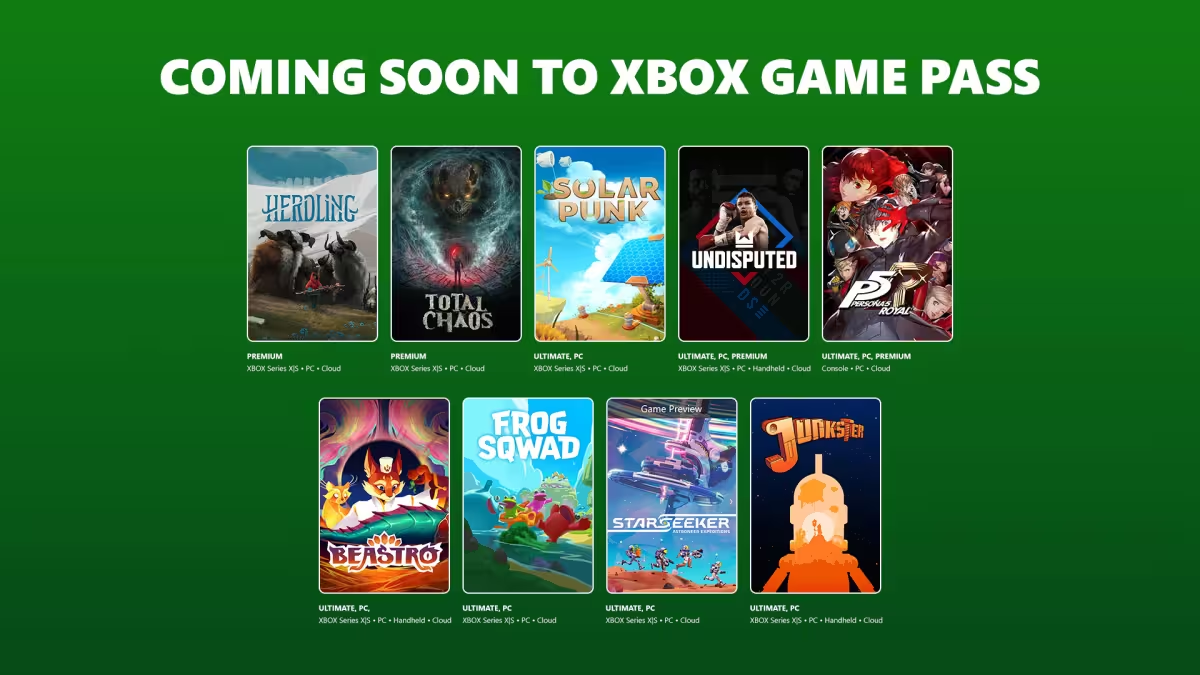
Sharma became CEO in February and used the 100-day mark to declare an early win: platform teams shipped more updates in the last 100 days than they did in the prior year combined, and Game Pass — after more than eight months of decline — has begun to grow again. She added that Xbox now has "more active partners than ever before," that Player Voice provides a 24/7 channel to hear directly from players, creators and developers, and that events like the Xbox Games Showcase and the return of FanFest brought together hundreds of millions of fans globally.

Those changes are concrete: Sharma said the company reintroduced exclusives with Gears of War: E-Day in 2026 and Clockwork Revolution in 2027 and pledged that players can continue to expect signature exclusives every year. She pointed to studios such as Playground Games as proof that established franchises can still reach new highs. "I think it’s really special to be the CEO of Xbox," she said. "It’s beyond my wildest dreams." And she framed her operating philosophy bluntly — she wants to "earn every single player."

The reset matters because it arrives amid clear operational strain. Over the past five years Xbox spent more than $20 billion on ongoing investments (excluding Activision Blizzard King), yet annual revenue has declined nearly half a billion dollars over that same period. The company ended the fiscal year at about a 3% accountability margin, down year-over-year. Microsoft’s most recent earnings report shows Xbox hardware revenue fell 33% year over year and content and services were down 5%.
That financial squeeze collides with a hardware component crisis. Sharma said console storage component prices were more than two times higher in February than the previous fall, then doubled again after February, and she warned of another significant storage cost increase for the 2027 holiday season that would take storage costs to more than five times the prices paid two years earlier. Memory costs have followed a similar trajectory. The result: Xbox is currently unable to make as many consoles as players want to buy, and Sharma said the company needs a new business model and partnerships for hardware while remaining committed to Helix.
There is tension between the optimism of the first 100 days and the scale of the problems still on the table. Xbox says its service has started to grow again and that platform momentum is real, but those gains sit beside multiyear revenue declines and constrained hardware supply. The company also admits it expanded its studio system to build a pipeline for subscription, streaming and devices and ended up overextended; Sharma conceded Xbox "has not adequately funded its franchises to compete and win," which helps explain the renewed emphasis on exclusives and on adjusting consumer plans, including cutting the price of Game Pass.
The next 100 days will be framed as a business reset: Sharma told employees the immediate work is to lock in operating changes, convert platform momentum into retention and growth, and find a sustainable way to get consoles into customers' hands at prices the company can live with. What remains unspoken is the most consequential detail — the specific hardware partnerships and the new business model Xbox will use to resolve its console component crisis. That gap is now the test of the reset: can Sharma translate a burst of technical updates and a revived Game Pass into enough machines, at manageable cost, to satisfy millions of players and justify the studio investments that have stretched Xbox thin?