



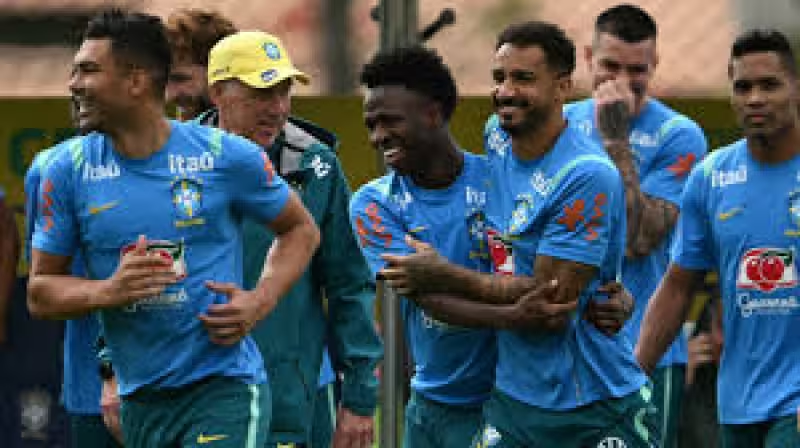
Brazil enters the 2026 FIFA World Cup as the -330 favorite to win Group C but faces an uncomfortable early test: a difficult opener against Morocco before matches with Scotland and Haiti. The listing from FanDuel Sportsbook makes Brazil the clear projected group winner, with a forecast that Morocco will finish second, Haiti third and Scotland fourth.
The -330 price is the clearest measure of expectation: bookmakers see Brazil carrying the group. In a three-game group schedule inside an expanded 48-team format, that projection matters because the top two in each group — and eight third-place teams — advance to a 32-team knockout round. A draw in the opener could be enough for Brazil to top the group, the projection notes, because Brazil can outscore Morocco on the goal-differential tiebreaker across the remaining matches.

Context sharpens the stakes. The 2026 World Cup will be played across Mexico, Canada and the United States and for the first time will feature 48 teams. The change rewrites group-stage math: with eight third-place slots advancing, points totals and goal difference in three games carry outsized value. A team that reels off a big win in one match can secure a margin of safety even if it stumbles elsewhere; conversely, narrow wins or scoreless draws make later margins decisive.
That redesigned ladder is the practical reason Brazil cannot treat the Morocco match as a tune-up. Morocco are the toughest opening opponent on paper in Group C; the projection still favors Brazil overall, but the immediate friction is real. If Brazil fails to impose itself early, it will rely on stronger scorelines against Scotland and Haiti to solidify first place — and to ensure that a slip does not hand Morocco the group on tiebreaks.
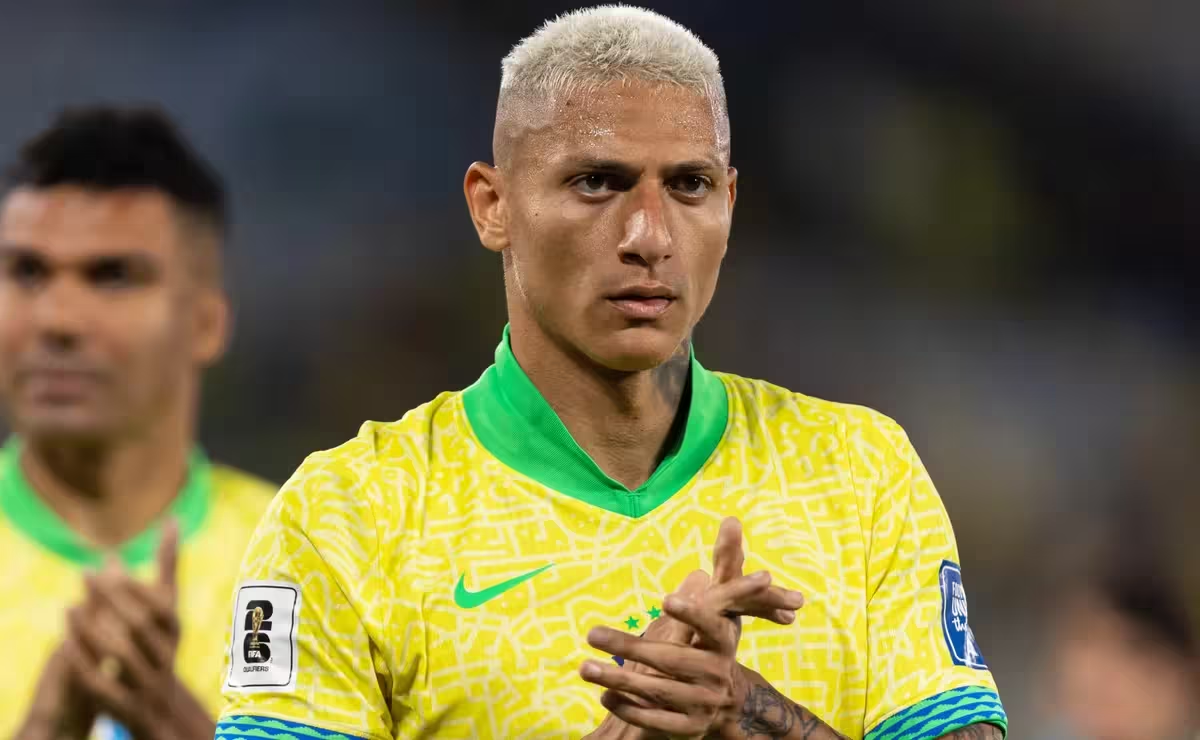
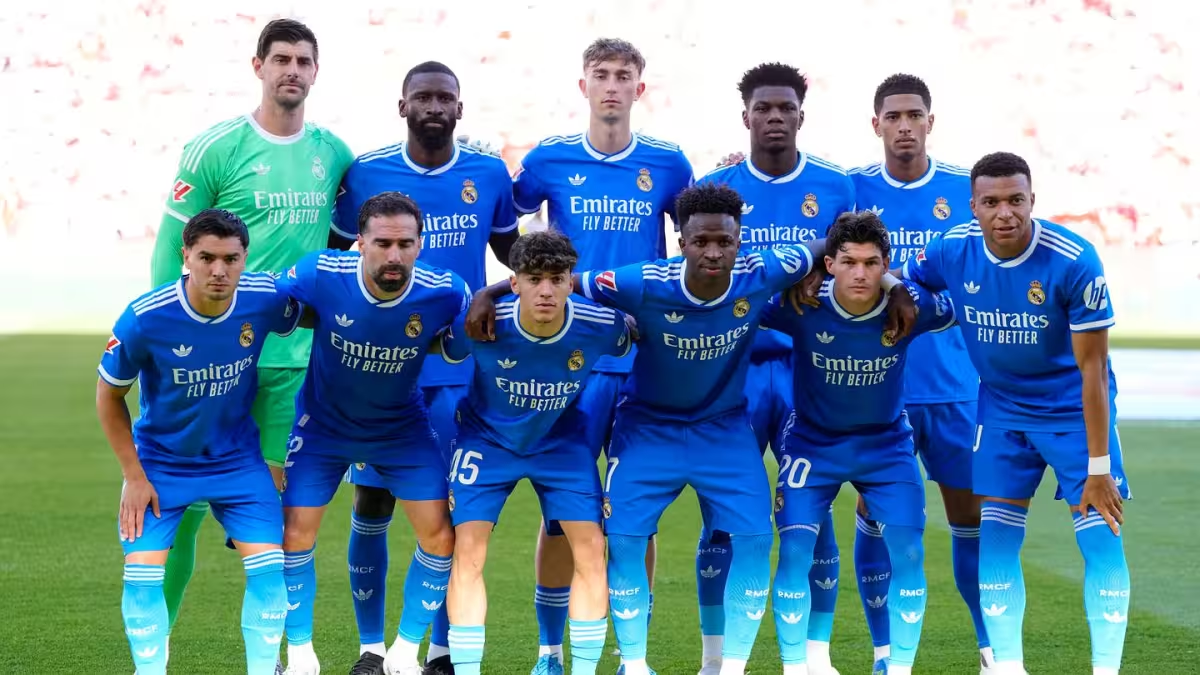
Brazil’s attacking roster gives that strategy plausibility. Vinicius Junior, 25, sits near the top of lists for player of the tournament, a reminder that Brazil’s lineup has game-changing talent capable of converting favourable matchups into the goal differential that becomes a shortcut to qualification. The projection expects Brazil to “cruise” past Scotland and Haiti after the Morocco opener; those are the matches where Brazil can bulk up the margin it may need.
For Morocco, the opener is a chance to upset expectations and seize momentum. For Haiti and Scotland, the expanded format keeps hope alive: eight third-place teams moving on means that a single upset or a tight set of results could elevate a lower-ranked group side into the knockout field. That dynamic turns every goal in Group C into a potential swing factor for qualification arithmetic.
What to watch when the action begins is straightforward: margin and moments. Brazil needs either a statement win against Morocco or solid victories over Scotland and Haiti that create an unassailable goal cushion. Morocco must at minimum avoid defeat to retain the upper hand for second place; Haiti and Scotland must chase results that keep them within the expanded third-place possibilities. The immediate, concrete test is Brazil’s opener against Morocco — a match that will reveal whether the bookies’ -330 is built on performance or reputation.
Prediction models and odds both point to Brazil finishing first in Group C. The unresolved question — and the one that will decide whether Brazil cruises through the group or has work to do later in the tournament — is simple: can Brazil handle Morocco in the opener strongly enough to secure the group and the goal-differential advantage it will need in an expanded, high-stakes group stage?



