



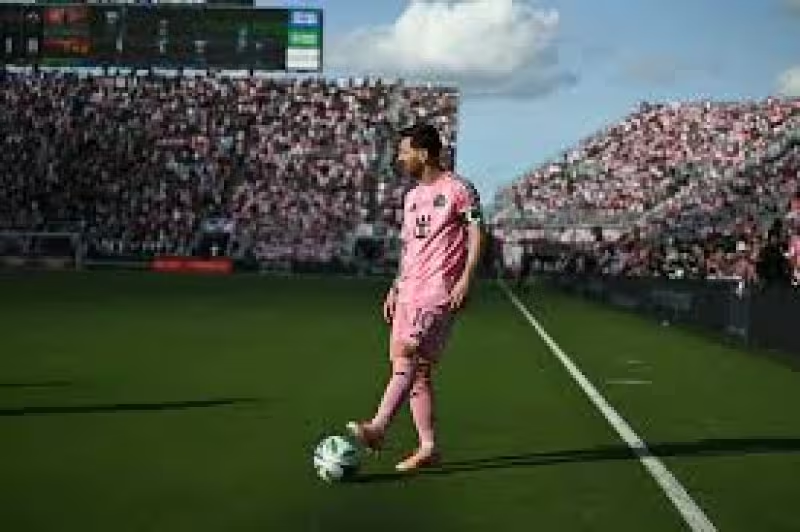
For readers asking what team is Messi playing for in the World Cup, the answer is Argentina: Lionel Messi will enter the tournament as a near‑39-year-old making his sixth and, by his own account, final World Cup appearance. He arrives having already claimed the sport’s ultimate prize and with a line he has repeatedly returned to: “It’s any player’s childhood dream. I am lucky enough to have achieved everything. This is what I was missing. Now it’s here.”
The scale of the moment is simple in the numbers. Sixth World Cup. Final World Cup. December 18, 2022 — the day Argentina won in Qatar, the day Messi’s international résumé acquired the one thing that had eluded him for years. At club level he’s now with Inter Miami in Major League Soccer, but on the international stage his job is plain: lead Argentina again, and possibly provide a swansong few players ever get.

Messi’s return to the tournament lit a familiar debate about longevity and legacy. He will compete for the same shirt he wore to Qatar, the same shirt he finally lifted at world football’s finish line. The obvious fact — that Argentina won the 2022 World Cup — frames every headline, every tactical note and every team selection. That victory is both the capstone of a career and the benchmark against which any repeat will be judged.
Few needs for a reminder of how he does it: early in his career Messi scored four goals for Barcelona in a 2010 Champions League quarter‑final second leg against Arsenal, a flourish that came just months after he picked up the first of what would become eight Ballon d’Or titles. Those seasons established patterns people still try to explain. Arsene Wenger nailed a version of it when he called him “a PlayStation player (…) the best player in the world by a distance. Once he’s on a run, he’s unstoppable, the only player who can change direction at such pace and be a threat.”
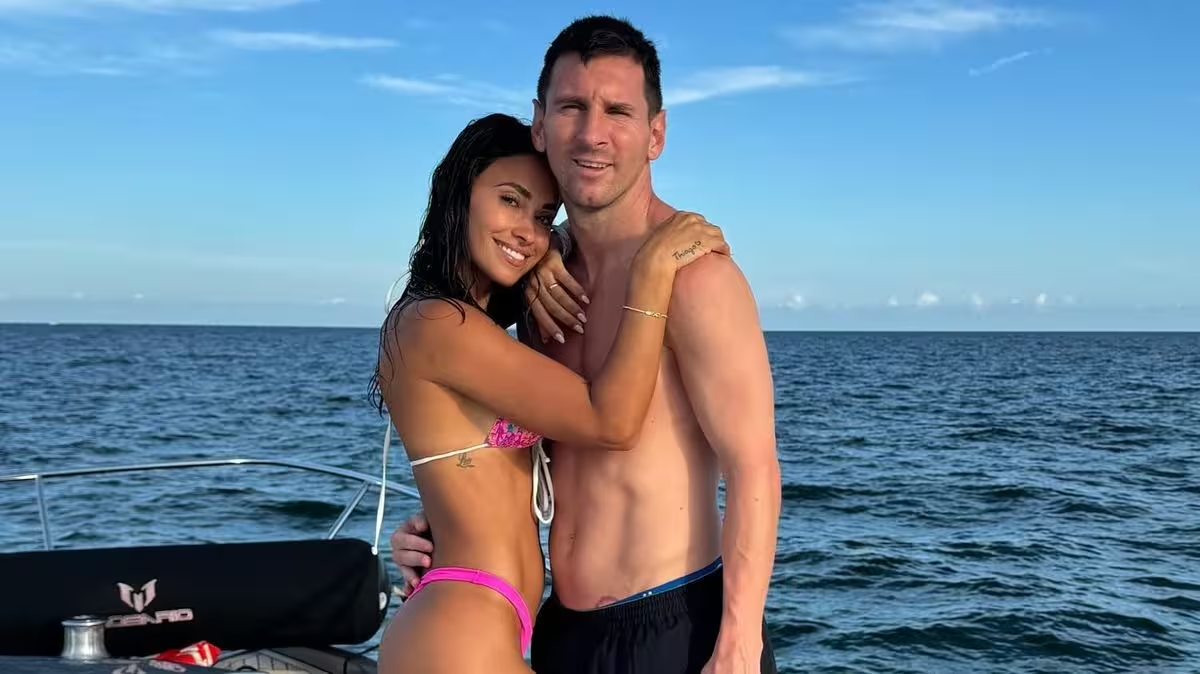

That explanation meets the central incongruity of this moment. Messi has said he has “achieved everything,” yet he’s choosing to return for one more tournament at an age when most elite internationals have already stepped aside. The choice exposes a tension between completeness and appetite: having reached the summit, why keep climbing? Two thoughtful descriptions help: Robert Moreno, in an earlier profile, said, “He’s like The Matrix. Do you remember that scene where the character is moving his body and all the bullets go slowly? Messi plays like this. All the things are happening slower in his mind than are happening for the rest of the world.” David Sumpter added that Messi is “one of those rare people who has something beautiful and unique in his head that allows him to do what he does. It’s a different thing to the intelligence a ‘normal’ person has. He finds solutions where mortal people aren’t able to do so.”
Those voices do two things: they underline why Argentina wants him, and they explain why Messi wants to keep testing himself. If the 2022 win was the crowning achievement, this sixth tournament is framed as a final chapter he has elected to write rather than one handed to him by circumstance.
The practical question now is also unavoidable. Argentina enters the competition with history and expectation stacked behind one player who is, by any athletic measure, late in his career. Tactical planning and squad management will aim to protect him and extract his unique gifts. For Messi, who turned the corner from Barcelona legend to global icon over a dozen years ago and who now carries the Inter Miami badge at club level, the World Cup is the last stage where his international narrative can shift dramatically.
The single, consequential question left hanging is simple: can Lionel Messi, at nearly 39 and already a World Cup winner, lead Argentina to another title in what he has declared his final tournament? How Argentina answers that — in selection, in tactics and in moments on the field — will determine whether this sixth World Cup is an encore or a definitive closing chapter.



