



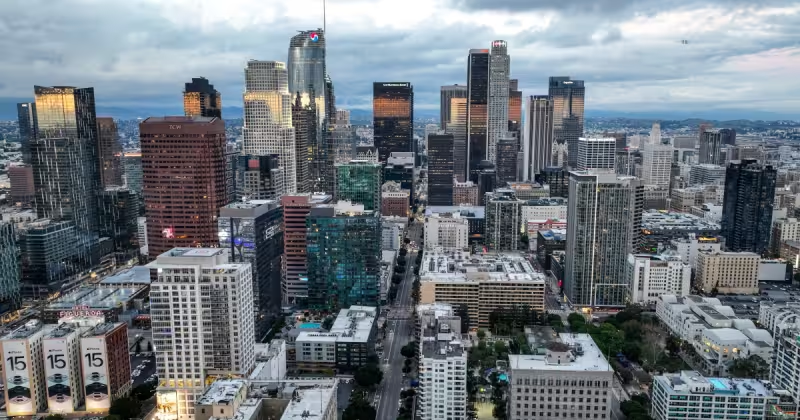
What does FIFA World Cup mean for Los Angeles? For the city it was sold as an economic windfall — a global tournament that would swell hotel stays and tourist spending — but with the World Cup kicking off tomorrow many of the rooms Los Angeles set aside for the event are still empty.
In May, the American Hotel and Lodging Association reported that up to 70% of Los Angeles hotels were booking below expectations ahead of the World Cup. Hotels in the region made a room-block agreement with FIFA around four years ago; now a lot of those rooms are sitting unused while bookings trail both usual summer numbers and World Cup forecasts.

That gap matters because hotels drive much of the direct tourist spending the city counts on. Stafford Nichols, who tracks sports-event impacts, notes the World Cup is set to bring in $550 million for the region and that direct spending on hotel rooms typically accounts for 40–50% of tourist spending in Los Angeles. Nichols also points out that some projected income comes from spillovers — extra business for a hotel’s vendors and partners — and he contrasted the tournament’s estimate with other events, saying next year’s Super Bowl is expected to generate about $470 million while the Olympics could generate many billions.
The shortfall has a few immediate explanations. The report cited high fuel prices and broader geopolitical concerns as possible reasons for weaker international travel to the United States, and forecasters now expect domestic travelers to outpace international ones for this World Cup. Jackie Filla, who monitors local availability, said: "There is quite a lot of hotel availability throughout the region," and added bluntly, "Visitor rates are not meeting expectations currently." She warned that "there are business conferences and leisure travelers that are not associated with the event that [visiting L.A.] is going to feel unappealing to," a dynamic that can both suppress ordinary summer demand and reduce the net gain from a single big event.
Not every property is reporting the same picture. Javier Cano said Marriott International in Los Angeles is "having just about what [they] thought [they] would," a reminder that headline shortfalls mask variation across brands and neighborhoods. The unevenness deepens the central tension: FIFA has consistently billed the World Cup as an economic boon to host cities, but many Los Angeles hotels are still reporting bookings below expectations even as the tournament begins.
The practical consequence is clear and immediate: lower room occupancy will reduce direct hotel revenues and, by extension, the spillover dollars that support restaurants, drivers, suppliers and other local businesses. Because hotel-room spending represents nearly half of visitor spending in some estimates, a persistent shortfall in occupancy could meaningfully erode the $550 million projection Stafford Nichols cited. Major events can also deter traditional hotel customers, a paradox where staging a global event reshuffles rather than simply increases demand.
The World Cup starts tomorrow and the city will quickly get a clearer read on arrivals, per-night rates and downtown foot traffic. What remains unresolved is how much of the projected windfall will evaporate before it is realized: how many booked rooms will actually fill, how much domestic travel will offset weakened international demand, and how big the hit will be to peripheral businesses that depend on steady hotel occupancy. Those are the numbers Los Angeles hosts and hoteliers will need to show before anyone can say whether, this time, the World Cup delivered the boon FIFA promised.



