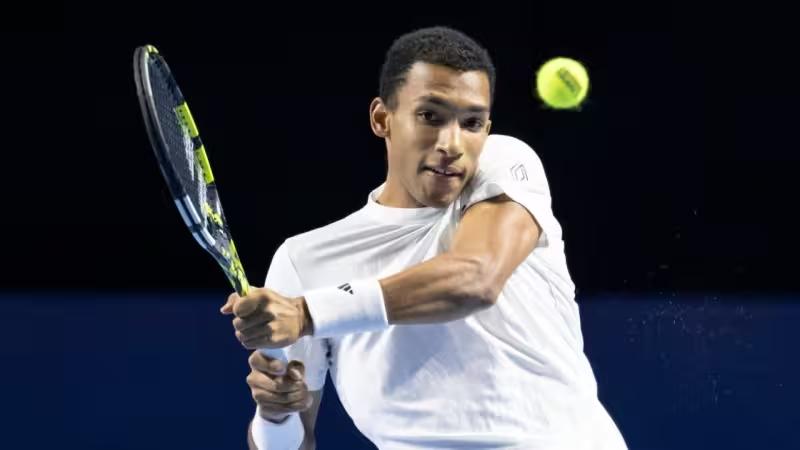
Felix Auger-Aliassime advanced to the Libema Open quarterfinals on Thursday with a 6-3, 6-4 win over Marton Fucsovics and will next face Poland's Kamil Majchrzak.
Auger-Aliassime produced a tidy performance: he did not face a break point, converted two breaks on four chances and improved his head-to-head record against Fucsovics to 5-2. The Canadian had a first-round bye at the tournament and the victory also assured him of keeping his career‑high ATP Tour ranking of No. 4.

The match matters now because the Libema Open sits in the thin slice of grass-court tennis before Wimbledon; the Grand Slam at London's All England Club starts June 29. Players use these events to build rhythm on a surface played only a handful of times each year, and Auger-Aliassime’s run here both preserves his ranking and gives him competitive minutes before the major.
Auger-Aliassime was candid about the surface. "We don’t get to play many tournaments on grass," he said, adding: "It’s a surface I like. I’ve always felt good on the surface." Still, he warned that the first match on grass brings uncertainty: "It’s nice to be back on grass, but in the first match, you’re not sure what to expect. You have to be careful how you move around. There’s a lot of adjustments, but we’re very focused and we try to adjust as well as possible."
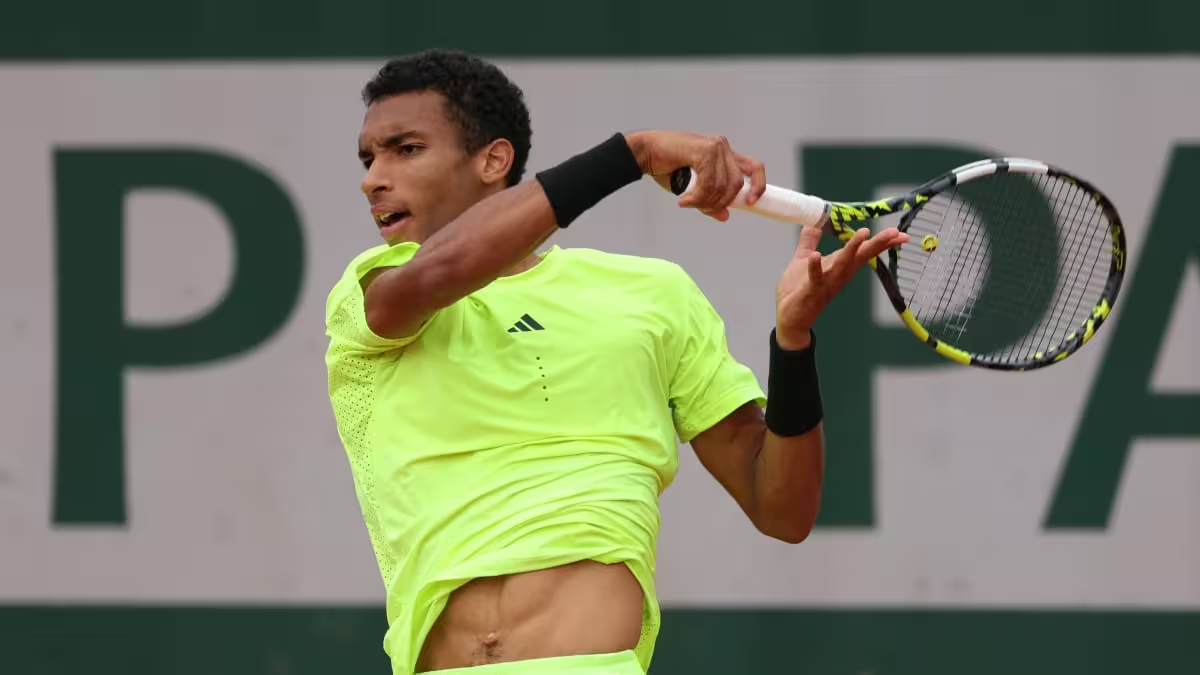
That mixture of confidence and caution frames what to watch when Auger-Aliassime meets Majchrzak. Statistically, Thursday’s match underscored Auger-Aliassime’s serve and early-match control: facing no break points is as much a symptom of his serving as it is of his returning consistency. He also summarized his approach to ranking pressure plainly: "It’s like a rent you have to pay every month: You have to show up on the court."
What remains unclear is how Majchrzak will arrive for the quarterfinal. The available match reports do not describe his immediate form at the Libema Open, leaving an open question about whether he will test Auger-Aliassime’s service games or force longer rallies that demand adjustments on the grass. That gap—incoming form from Majchrzak—shifts the match from a simple seed-versus-underdog script into a real test of adaptation.
The predictable elements are straightforward: Auger-Aliassime has momentum, a favorable stat line from Thursday and the security of keeping his No. 4 ranking. The less predictable element is how the opening-day quirks of grass will play out when Majchrzak begins returning and moving; Auger-Aliassime has stressed the small margins of those early matches and that he will have to "fight hard."
When the two meet, the match will answer the central question left open now—can Majchrzak disturb a player who has shrugged off a first-round bye and arrived here with efficient serving and the comfort of retaining his ranking? The result will determine which player carries momentum into the final weeks before Wimbledon on June 29.