



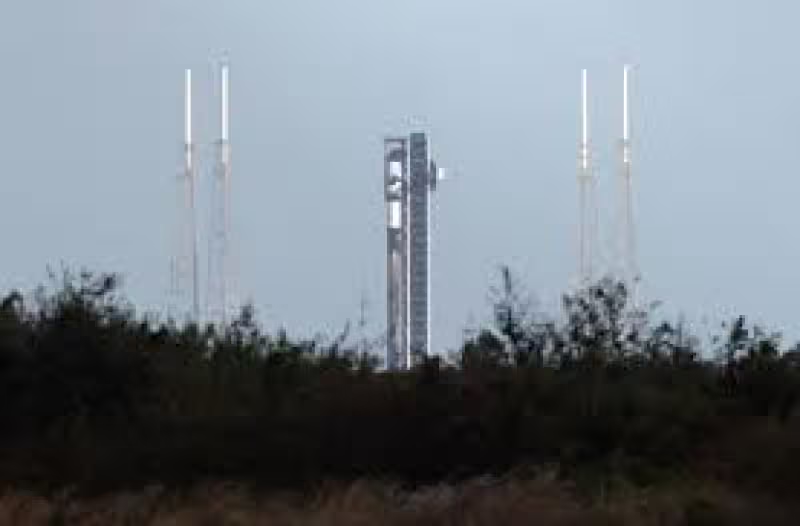
SpaceX launched the Starlink 10-54 mission from Space Launch Complex 40 at Cape Canaveral Space Force Station at 8:37 a.m. EDT (1237 UTC) on June 12, 2026 — less than an hour before the Nasdaq trading day began and on the same morning the company opened as a publicly traded firm.
The Falcon 9 carried 29 Starlink V2 Mini Optimized satellites and SpaceX confirmed deployment at 9:53 a.m. EDT. The flight marked the 650th Falcon 9 launch in the vehicle’s history and the 68th Falcon 9 mission of 2026. First stage booster B1080, flying its 27th mission, returned a little more than eight minutes after liftoff and touched down on the drone ship A Shortfall of Gravitas — the ship’s 155th landing and the company’s 623rd overall booster recovery. SpaceX said this was its 55th dedicated Starlink launch of 2026 and the 56th mission this year to include Starlink payloads, bringing the company’s on-orbit constellation to more than 10,500 satellites.

After the morning launch, Gwynne Shotwell rang the opening bell in New York and addressed the crowd. “Today we make history again. We have a history of making history,” Shotwell said, adding: “We did open this morning in a rather exciting way. We launched a Falcon 9 and Starlink satellites to orbit. So what company would do such a thing on the day they open in the public market? SpaceX would.”
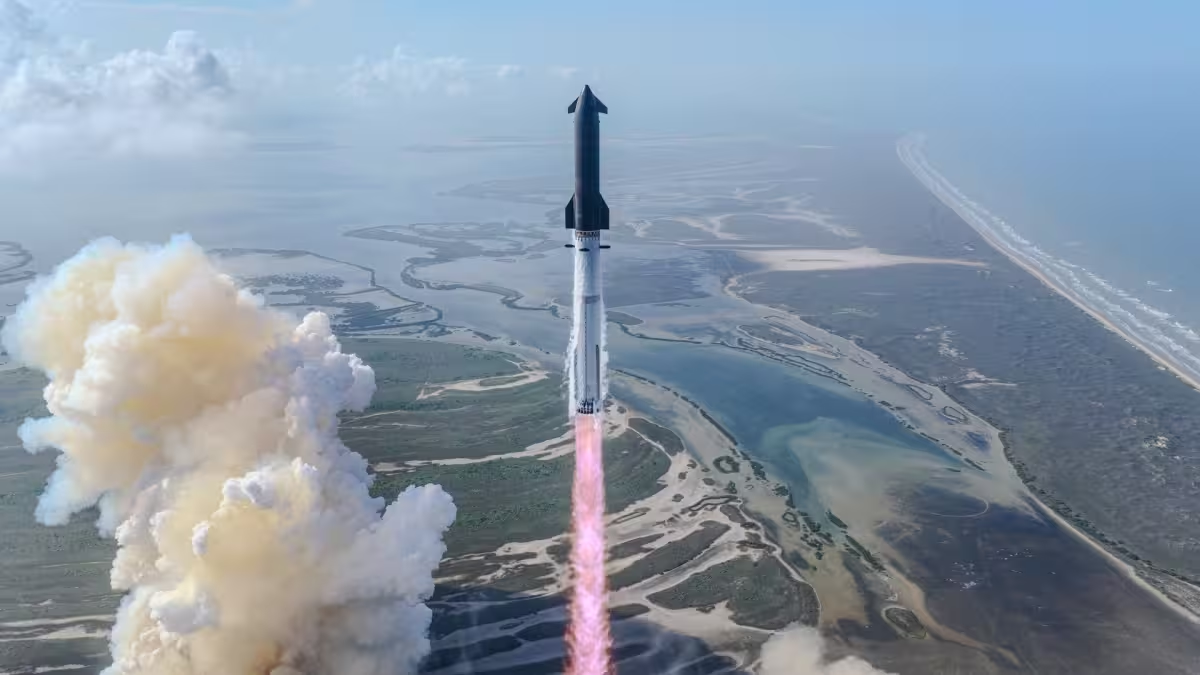

The liftoff was timed to the company’s market debut but came with a modest meteorological risk: forecasts gave an 80 percent chance of favorable conditions at the opening of the window, easing to about 70 percent as the window progressed. That narrowing chance of good weather was a real variable for an operation tied to a public celebration and a precise launch cadence.
SpaceX’s market debut on June 12 came more than 24 years after the company’s founding in March 2002. In the days before the listing the company said it would offer 555.6 million shares of Class A common stock at $135 apiece. The Falcon 9’s early-morning departure from Florida positioned the flight as both an operational milestone — another batch of consumer broadband satellites in orbit — and a symbolic prelude to the start of trading on Nasdaq.
What remains unsettled is whether the timing of the launch had any measurable effect on SpaceX’s performance in public trading later in the day; that connection is not recorded in the flight data and has not been disclosed. On the technical front, SpaceX continues to move through its manifest: the company completed its 12th Starship test flight in May and is working toward a 13th Starship flight on a yet-to-be-disclosed date, while continuing routine Falcon 9 missions to replenish and expand Starlink.
For customers and operators the immediate consequence was clear — 29 more broadband satellites active in low Earth orbit — and for SpaceX the morning was a dual milestone of operations and corporate finance. The company now shifts from a theatrically timed public debut back to the work of launching and recovering rockets; whether the new shareholder era will change that tempo, or how markets will respond over coming sessions, is the outstanding question left by a day that married a routine Falcon 9 flight to a once-in-a-company financial event.



