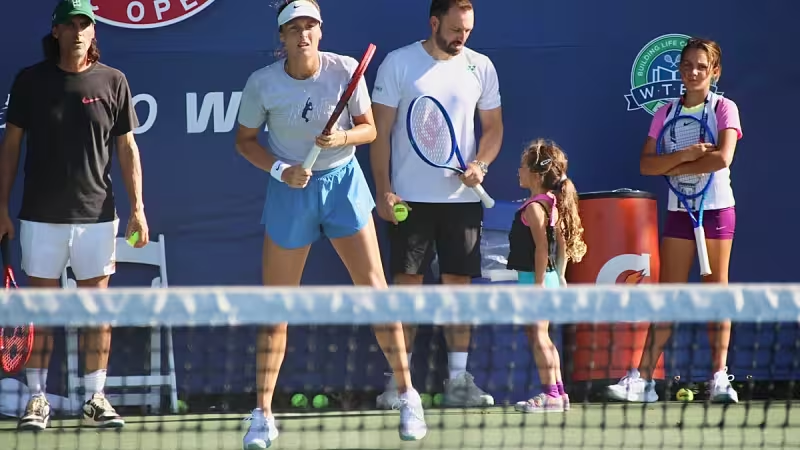
"I deserved a wildcard and to get a little bit of respect," Tatjana Maria said after she won two qualifying matches on Sunday to reach the Queen's main draw, her daughters in the crowd as she fought through another opening day. The 38-year-old, who lifted the Queen's trophy last year as a qualifier, did not receive a main-draw wildcard and had to start over in qualifying.
Maria's route to the draw underlined how stark the decision was: ranked 52nd, she was too low for direct entry into the 28-strong main draw and thus played two matches on Sunday to earn her place. Tournament officials instead awarded all four women's wildcards to British players — Katie Boulter, Fran Jones, Harriet Dart and Mika Stojsavljevic — a move Maria said surprised her after a message from tournament director Laura Robson made the allocations clear.

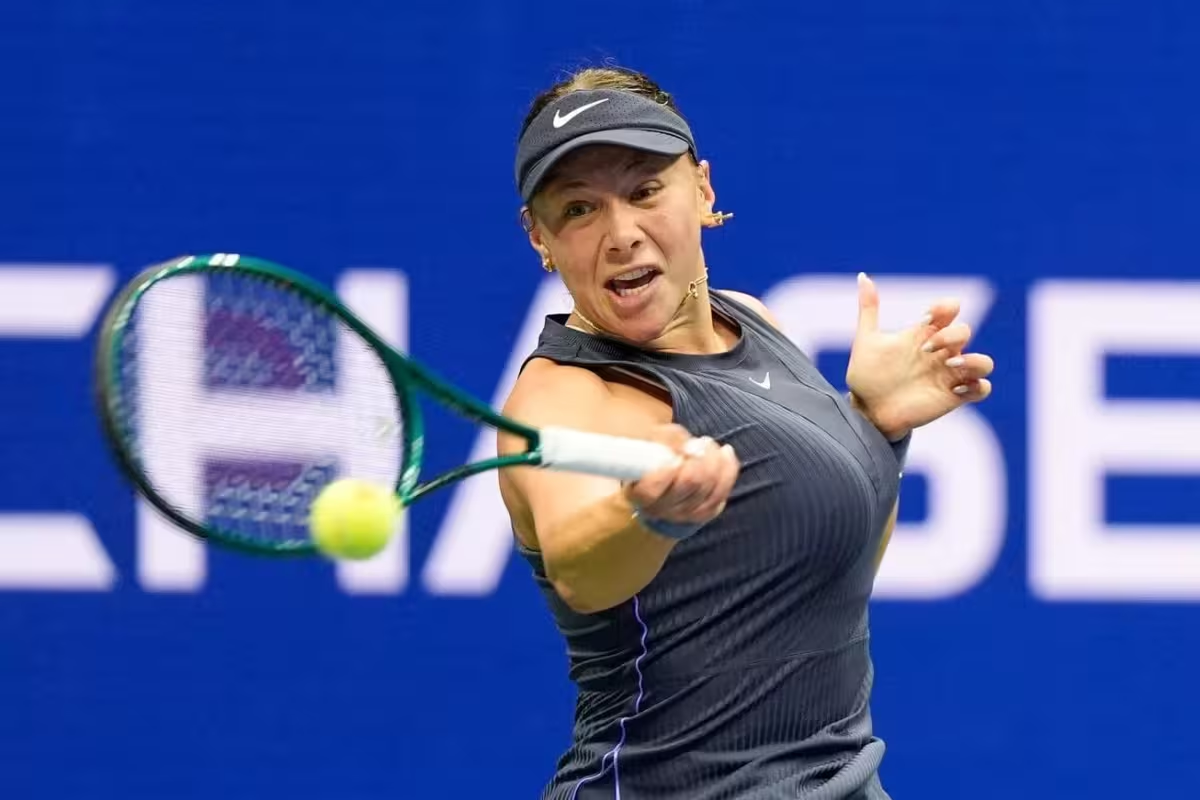
Last year's run on these lawns was exceptional by any standard. Maria reached the final as a qualifier, beating eighth seed Amanda Anisimova and four top-20 players on the way, and became the oldest winner of a WTA 500 tournament. Those 500 ranking points from her title now sit on the cusp of expiry, leaving Maria with 1,111 points overall and the risk that an early loss at Queen's could see her tumble outside the WTA Top 120.
Her comments after qualifying mixed bewilderment with blunt practicality. "It didn't feel [different to last year]. It feels almost like a normal tournament because I had to start over again in qualifying," she said, adding: "Already what I did last year was amazing and to be a champion here, I thought I deserved a wildcard and to get a little bit of respect." Maria also said: "I did it last year. It was not five years ago."
The friction is clear in a short exchange of facts: a defending champion, 38 and the oldest player in the WTA Top 100, required extra matches to reach the same event she won twelve months earlier, while four lower-ranked domestic players were fast-tracked into the field. Maria told reporters she understood the tournament wanting to support British players but found it "tough" that the champion was not granted automatic consideration.
Two immediate consequences follow. First, Maria must convert the work of Sunday into results on the main stage; she is scheduled to face Maria Sakkari in the first round on Tuesday, with a possible second-round meeting against Elena Rybakina on the horizon. Second, the math is unforgiving: failure to defend the 500 points she earned last year would not just be a headline loss of prestige, it could materially damage her ranking and entry routes for upcoming events.
The unresolved question remains procedural and public: why the tournament chose this year to give every women's wildcard to British players rather than offer the returning champion a spot. Maria's answer is a personal one — she says champions should expect recognition — and the tournament's choice is now part of the story heading into Tuesday's matches.
Her next match will not only test whether she can repeat last year's improbable surge; it will determine whether those expiring points survive and whether Maria's protest about respect and wildcards looks justified on the scoreboard as well as in print. For readers tracking her season, a tight win on Tuesday is the simplest, most concrete answer to everything she has loudly questioned off the court.
Related reading: