




Declan Rice laughed through the embarrassment: he turned up to a World Cup photoshoot “bright red” and, he said, “my mum was killing me.” The admission came after England’s 3-0 warm‑up win on Wednesday and as the squad continues to adjust to unfamiliar, searing conditions ahead of the England World Cup group stage.
Rice did more than pose for pictures. He played 63 minutes of the friendly, opening the scoring in the ninth minute, and afterwards he was blunt about the simple shock of the weather. “Honestly, the first day was tough, just getting used to that heat,” he said. “Then you come here and, regardless of whether it's hot or cold, it's 30C and it really does hit you in the face when you're running.”

The detail matters: temperatures in Arlington, Texas hit 36C this week, forecasters warn El Niño will bring scorching and unpredictable weather across the United States, Mexico and Canada, and FIFA has added drinks breaks at the midway point in each half. England’s preparation has included training in heated tents in Spain and stints in sweltering conditions in Kansas to try to blunt the effect.
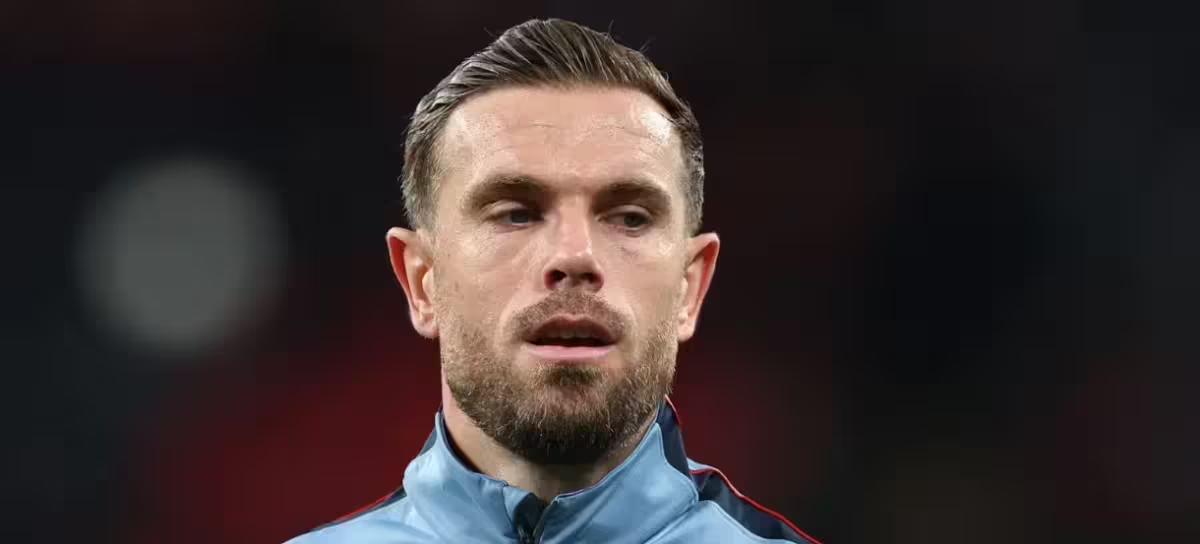
Even so, Rice’s bright‑red photos and the social‑media mockery of a beetroot‑red face and a watch‑strap tan line underline how quickly basic acclimatisation can go wrong. “I think everyone's seen them photos... I was bright red at that photoshoot, my mum was killing me,” he said, then joked about “when the sun burn comes!”


Practical reminders have crept into camp. Rice said the manager warned the squad about stop‑start conditions after seeing similar issues at the Club World Cup. “Even in a game, you could be playing 60‑65 minutes and the next thing, thunder and lightning strikes and you have to come off,” he said. England’s final warm‑up was delayed by heavy rain and thunderstorms, a taste of the volatile weather teams must now plan around.
The friction is not theatrical. Adaptation involves small margins: when a player naps in bright sunshine after arriving at a hotel, a quick sunburn is possible; when the mercury hits 30C while you are sprinting, performance and recovery change. Thomas Tuchel, speaking broadly about top‑level football in these conditions, said he expects his players to “suffer” — a blunt word that has filtered through this tournament’s preparations.
Rice’s circumstances have extra context. He joined the England camp on Sunday after extra time off following the Champions League final on May 30; he and Bukayo Saka, Noni Madueke and Eberechi Eze missed England’s friendly against New Zealand. Those timing and rest choices are part of the bone‑dry logistics managers balance when trying to arrive in peak shape to face heat and stoppages.
England’s three group games will all be in the United States: they open against Croatia on 17 June in Arlington, then face Ghana on June 23 in Foxborough, Massachusetts, and Panama on June 27 at MetLife Stadium in New Jersey. Rice called the friendlies useful practice: “it was only an hour’s difference today so it wasn’t too much but it was good to get a taste of it, potentially for what’s to come and how to deal with it, and we’re adapting to everything.”
The next question now is not whether Rice will reapply sunscreen — it’s whether England can translate a mix of tent drills, warm‑ups and sobering sunburns into resilience once group matches are live. The visible misstep of a sunburned midfielder is a small, human detail; the larger unresolved test is whether the team can perform through thunder delays, midhalf drinks breaks and 30‑plus degree running when the World Cup starts on 17 June.



