




The Supreme Court on Thursday reversed a Fifth Circuit bankruptcy ruling in favor of Thomas Keathley, but Justice Clarence Thomas used the case to press for something bigger: a fresh look at judicial estoppel, the doctrine that can bar a litigant from taking one position in court and a different one later.
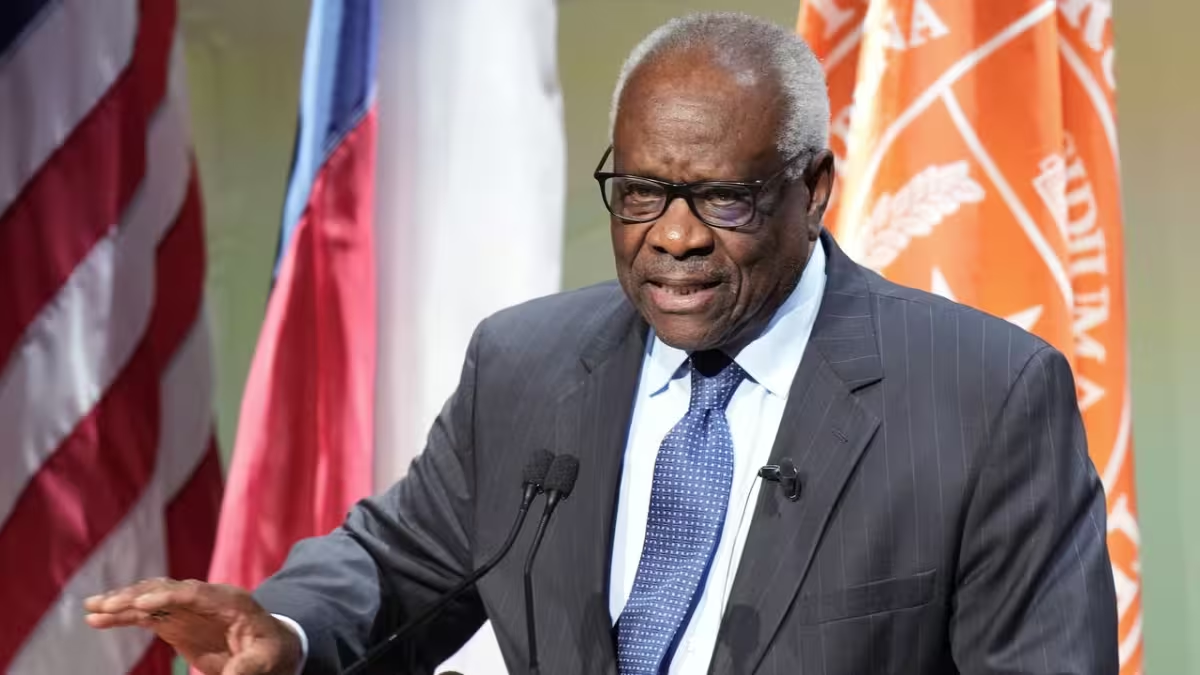
In a concurring opinion, Thomas said the court should reexamine the doctrine, writing that lower federal courts have applied it broadly without clear authority to do so and adding, in effect, that the doctrine itself has become commonplace in federal litigation despite thin statutory support and no clear Supreme Court foundation. He said the rule was first recognized in an 1857 Tennessee state court decision, stayed on the fringe for decades and only gained wider use in the mid-20th century.



The case, Keathley v. Buddy Ayers Construction, began with a familiar bankruptcy problem. Keathley filed for Chapter 13 bankruptcy in 2019 and agreed to repay creditors in full over time. While that case was still open, he was involved in a car accident, hired a lawyer and later failed to disclose the personal injury claim to the bankruptcy court.
Buddy Ayers Construction argued the lawsuit should be thrown out under judicial estoppel, and lower courts agreed, saying under Fifth Circuit precedent that Keathley’s omission could not count as an inadvertent mistake. The Supreme Court rejected that rigid five-factor approach in a unanimous opinion written by Justice Ketanji Brown Jackson, with Justice Sonia Sotomayor also writing separately to support the outcome and criticize a one-size-fits-all application of the doctrine.
The decision solves Keathley’s immediate problem, but Thomas’s concurrence opens a much broader one. Judicial estoppel is meant to stop parties from playing fast and loose with the courts, yet the justice’s message was that the modern doctrine may have outgrown its roots. The court did not say it will revisit that question now. It left open whether a future case will give Thomas the review he is asking for.



