



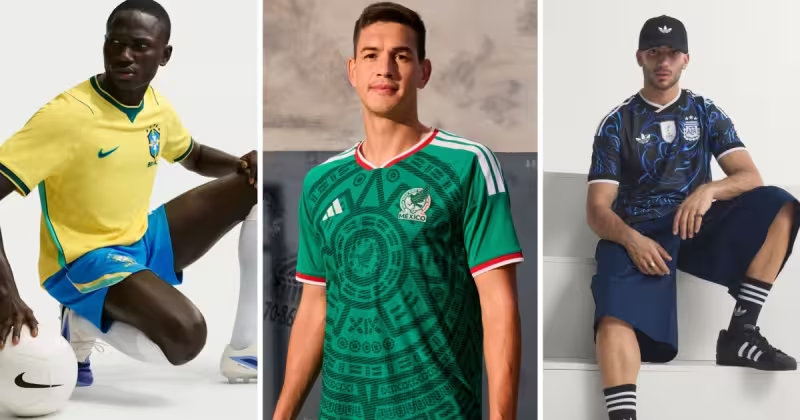
The Mexico soccer jersey for the 2026 World Cup is built around a bold, green Aztec pattern with an imprint of the Piedra del Sol and a deliberate visual nod to the shirt Mexico wore at the 1998 tournament in France.
That combination — a forward-looking Aztec motif layered with a clear throwback — is the kit’s defining decision. Reporters who spoke with Mathew Davis, owner of vintage jersey shop Saturdays Football, said he praised the shirt’s look and construction, calling it among the most elegant on display and arguing it manages to carry cultural meaning without shouting.

Those two facts explain what the jersey is and why it landed on fans’ radar now: the 2026 World Cup cycle has revived interest in national kits as items people wear to stadiums, fan zones and watch parties, and a design that ties modern Aztec imagery to an explicit 1998 reference gives collectors and casual buyers a concrete talking point about symbolism and lineage.
The friction in that choice is immediate. The Aztec pattern and Piedra del Sol imprint push the design into contemporary cultural territory — visible, specific and tied to a major piece of pre-Hispanic art — while the homage to the 1998 France shirt anchors the jersey in nostalgia. In practice that means the kit must satisfy two audiences at once: supporters who want a fresh, proudly Mexican visual, and collectors who prize continuity with past team iconography.

Context helps clarify how unusual — and deliberate — the work is. Modern World Cup kits often trade on stylized national cues: Brazil’s 2026 edition returns to canary yellow with layered green accents; the U.S. shirts use a curvy red-and-white pattern that reads like a waving flag; France uses alternating blues with a subtle F zig-zag and bronze logos; Argentina has added three gold stars above the crest to honor its three World Cup victories. Against that field, Mexico’s choice to make a central cultural sculpture part of a match shirt is both a design gamble and a clear statement.
Davis also spoke about fabric and fit ahead of match day, noting the cut and material choices matter as much as the graphics when shirts move from the shelf to the stadium. He argued the shirt’s tailored look and the way the pattern sits on the fabric are part of what makes it feel like more than a souvenir — a kit doing real cultural work, quietly, rather than a simple logo exercise.
For buyers the practical takeaway is straightforward: fans will be judging the shirt on three axes — the Aztec pattern and Piedra del Sol motif, the retro reference to 1998 that shapes color and trim choices, and how the fabric and fit hold up in real wear. Those are the points that will determine whether the jersey becomes a best-seller or a collector’s curiosity.
The most consequential unanswered detail remains the same as when the design first circulated: the maker of the kit has not been identified and there is no confirmed date for an official release or match debut, so the single thing that will change the conversation is the brand and timing attached to the shirt’s rollout.



