




Bleacher Report outlined a sign-and-trade that would send LeBron James from the Los Angeles Lakers back to the Cleveland Cavaliers, with the deal slated to be consummated on July 6 after the NBA's moratorium ends.
Under the proposal, Cleveland would receive LeBron, his son Bronny James, Deandre Ayton, Jake LaRavia, Dalton Knecht and a $28 million trade exception; the Lakers would get Jarrett Allen, Dennis Schröder, Dean Wade and Sam Merrill. The arrangement would have LeBron sign a three-year contract worth $63 million — including a $20 million salary for 2026–27 — and move him in what would be a 24th season in the league at age 41.

The numbers are the story’s weight: Cleveland would trigger a first-apron hard cap at $209.1 million as structured, and the deal would send Dean Wade to Los Angeles at a $12.3 million starting salary on a three-year, $38.6 million package. The swap also hands the Cavaliers a sizable $28 million trade exception to use in follow-up moves.
Timing matters here. The Lakers arrive at this offseason after a sweep in the playoffs by the Oklahoma City Thunder, and the Cavs are coming off an Eastern Conference Finals run — their first since James last played for the franchise — before losing to the New York Knicks. The July 6 window gives both clubs a single date to execute the sign-and-trade once the league lifts its moratorium.


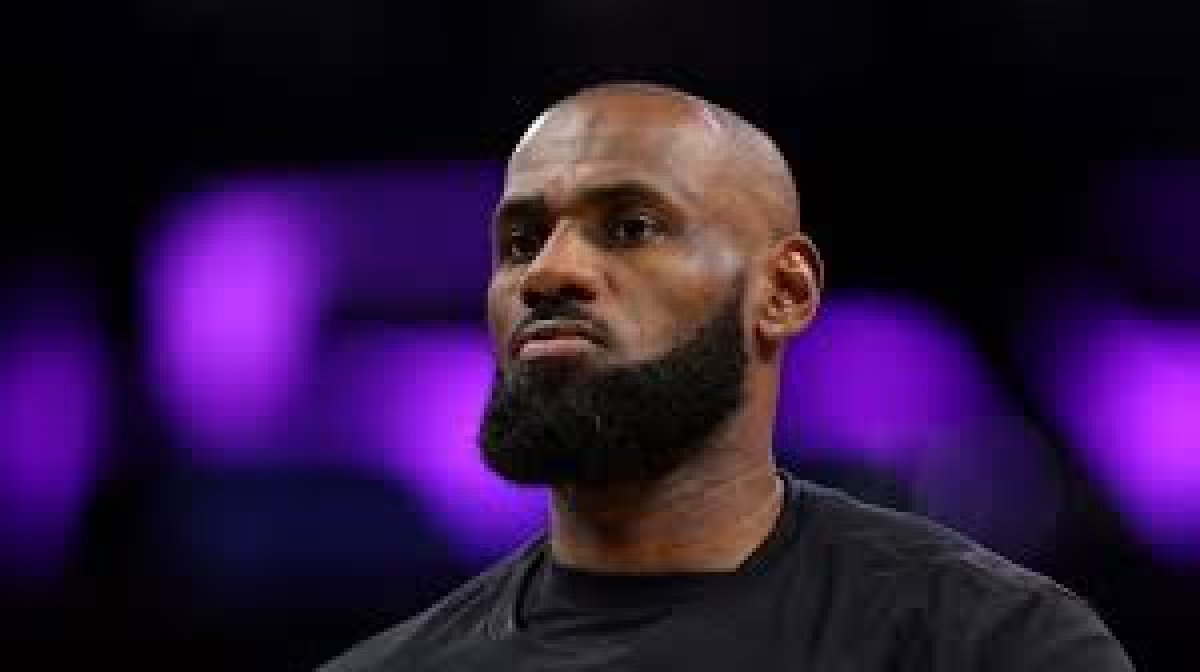
The proposal solves short-term roster questions for the Lakers by bringing back frontline pieces in Allen and Schröder while giving Cleveland a marquee reunion and floor spacing via Ayton and shooting additions in LaRavia and Knecht. It also inserts Bronny James into the Cavaliers’ mix after his brief playoff minutes for Los Angeles in the first round against the Houston Rockets.
But the friction is immediate and specific: the Cavs would push past the NBA’s first-apron threshold, a position that the report says would force Cleveland to move payrolled players to make the math work. Names tied to that squeeze include Jarrett Allen, Dennis Schröder and Sam Merrill — exactly the sorts of role players whose salaries and tradeability the Cavaliers would have to recalibrate to avoid hard-cap complications.
That constraint shapes how realistic the scenario is. A sign-and-trade can package salaries and trade exceptions to balance ledgers, but triggering a first-apron hard cap limits Cleveland’s flexibility for further additions and forces more consequential roster churn than a single headline reunion suggests. For Los Angeles, the transaction is packaged as a step toward retooling after the postseason sweep: it adds size, playmaking and veteran depth while converting James’ contract into younger assets and movable salary.
What remains unresolved is whether either front office will move from concept to pitch before July 6. The proposed deal is a concrete blueprint — the players, salaries, term lengths and the moratorium date are all laid out — but it assumes both clubs accept the payroll consequences and that Cleveland is willing to jettison the pieces the plan makes expendable. If the Cavs balk at activating the apron or cannot find partners for the necessary outgoing contracts, the whole structure collapses.
The simplest conclusion: the proposal is a plausible transaction design, not a done deal. July 6 will be the test — if the Cavs can clear the payroll mechanics and both teams agree on final protections and timing, LeBron’s return to Cleveland could be executed that day; if not, the Lakers remain responsible for deciding whether to convert a veteran icon’s contract into the specific mix of players and exceptions outlined or to pursue other paths this offseason.



