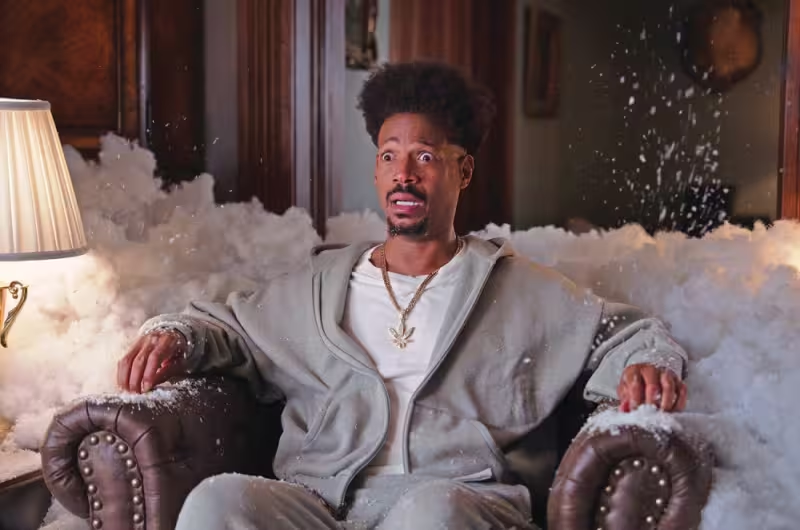
Scary Movie opened to $55 million in North America this weekend, the largest opening in the 25‑year series and a new benchmark for the sixth installment.
The launch handily eclipsed the prior franchise high — Scary Movie 4’s $49.7 million debut in 2006 — and generated $105.5 million globally from 53 markets. Backed by a $30 million production budget from Miramax, the film’s early receipts put it well into profitable territory before home windows begin.

Industry analyst David A. Gross called the turnout “an outstanding opening for a comedy sequel this far into its series” and framed the result as a correction to the franchise’s low point in 2013, when the previous installment underperformed after Anna Faris and Regina Hall were left out of that entry.
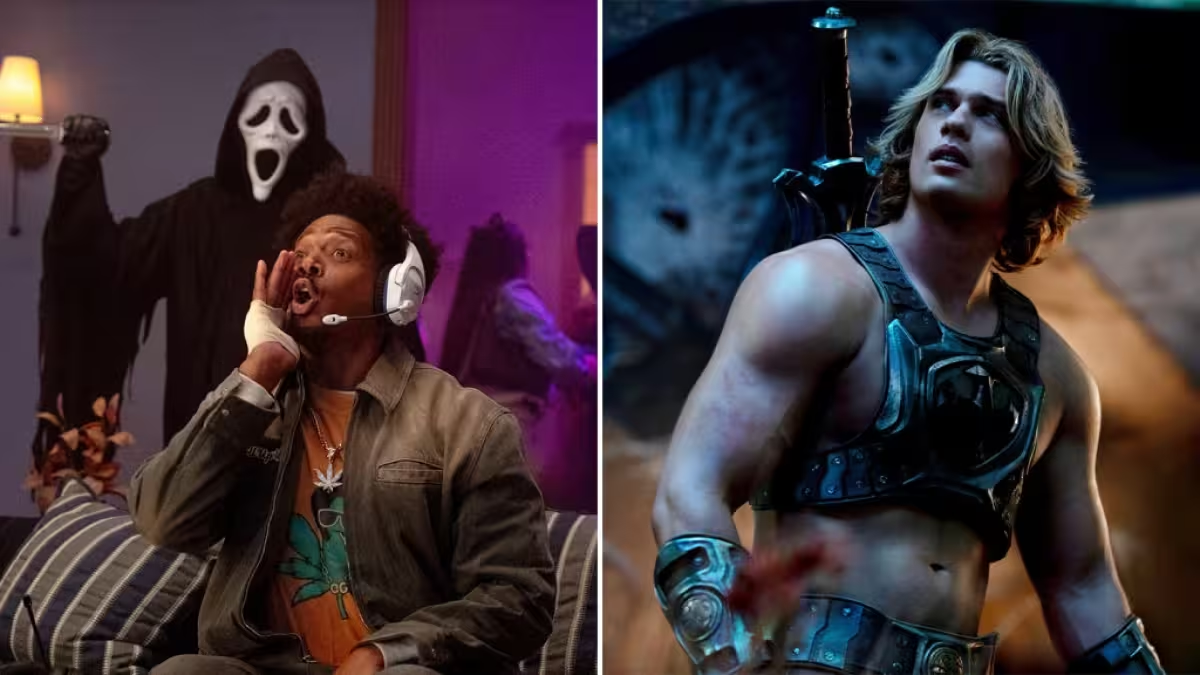
The weekend’s box office map underscores how strong Scary Movie’s start was in context. Travis Knight’s Masters of the Universe finished second domestically with $29.3 million and added $25 million from 86 overseas markets for a $54 million global opening — a respectable bow but tiny relative to its nearly $200 million production cost. Meanwhile, horror title Backrooms showed the volatility of the market this year, dropping 70 percent in its second weekend to finish with $25.9 million.
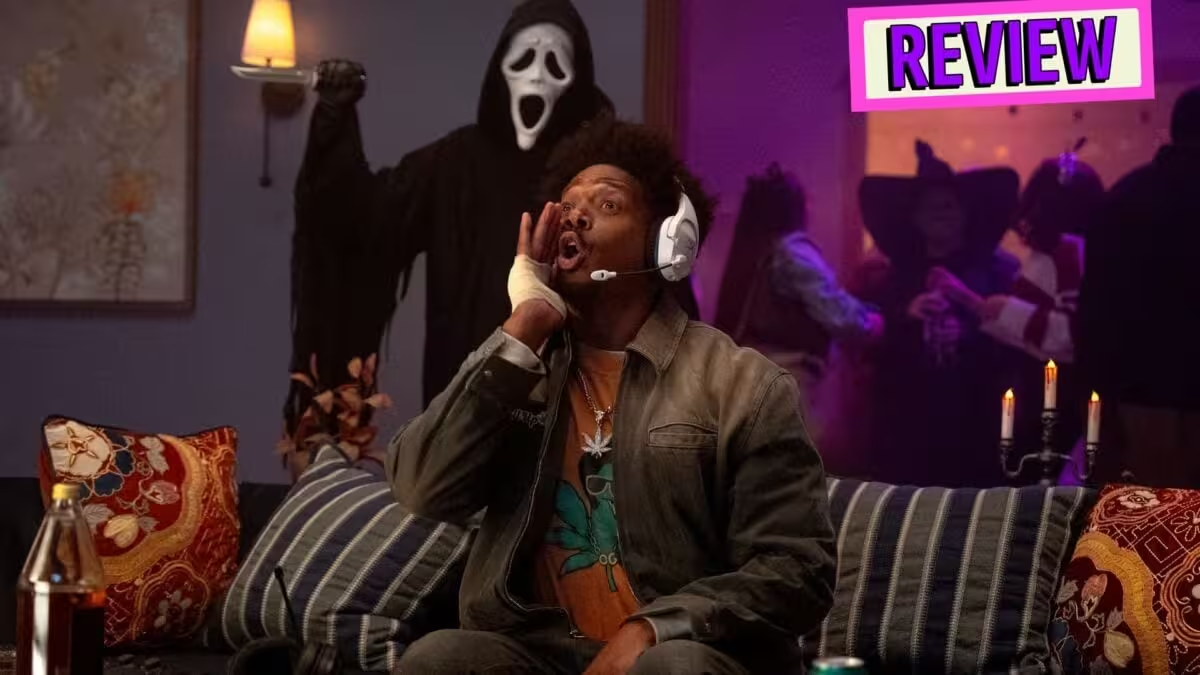
The decisive metric is not only where Scary Movie started but how it compares to films around it: a $55 million domestic opening and $105.5 million global haul from 53 territories gives the comedy momentum that most genre sequels do not enjoy this deep into a run. Miramax financed the picture for $30 million, so the early box office already flips the economics in the studio’s favor.
But the number that mattered in 2013 was the gap between expectation and product. Gross noted that the earlier film “crashed” when Faris and Regina Hall were excluded — a reference that keeps the present result from being read as only a headline number. The history creates a clear tension: a record opener, yes, but one that must now translate into sustained attendance rather than a brief weekend peak.
On that point, Kevin Wilson said the director and cast had delivered work that matched the marketing plan, and that the opening validated a distribution strategy meant to build awareness and engagement that would extend beyond theaters. That defense of the rollout is the practical counter to the 2013 lesson: strong initial demand plus a broad campaign can convert a big opening into longer legs.
What happens next is simple and measurable. The $55 million start puts Scary Movie in a position to recoup comfortably and to rival earlier franchise totals, but its future hinges on the hold in week two and the coming weeks’ drops — the same yardstick that exposed the 2013 failure. If Scary Movie sustains a routine comedy hold, Miramax will have engineered a clear comeback; if it follows the pattern of steep second‑week declines, this will register as a spectacular opening that did not close the series’ revival loop.