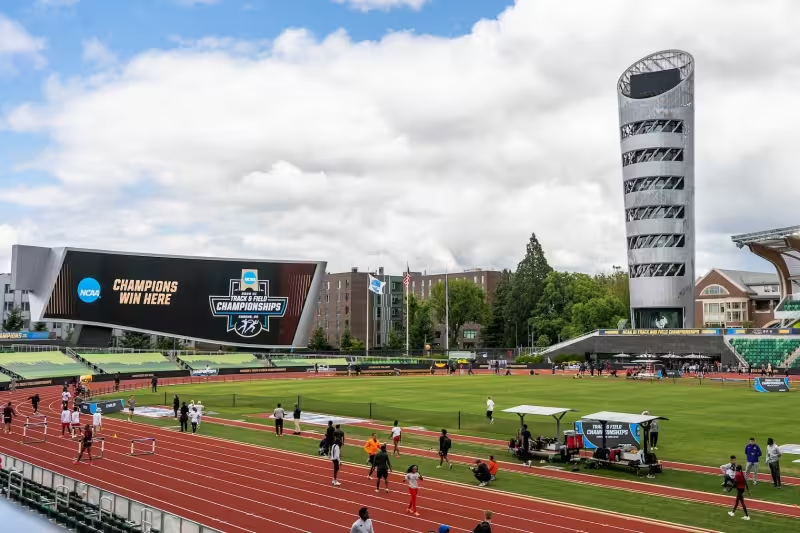
The 2026 DI outdoor NCAA Track And Field Championships opened at Hayward Field in Eugene, Oregon, and run June 10–13, with Wednesday’s action beginning at 1 p.m. PT / 4 p.m. ET.
Competition began with combined events on the first day, and early decathlon standings were already taking shape: after three events — the long jump, 100 meters and shot put — Miami’s Edgar Campre was leading with 2,624 points. Campre placed second in both the 100 and the shot put in those early rounds, while the high jump and 400 meters remained on the Day 1 order.

The field at Hayward Field was set after a two-stage selection process this spring. The top 48 declared student-athletes in individual events and the top 24 declared relay teams were accepted into first-round competitions, with the top 12 competitors and top 12 relay teams advancing from each first-round site. Official final site selections were announced Monday, June 1, following first-round meet selections released on Thursday, May 21.
That procedural outline matters for this meet because it concentrates the nation’s best collegiate competitors into one four-day championship block. Hayward Field — home of the Oregon Ducks — will host individual and relay finals as well as combined events, a program that the NCAA’s live updates noted includes past and future Olympians across the weekend.


There is an immediate, practical tension in the decathlon numbers: Campre’s 2,624 through three events gives him a visible advantage on the scoreboard, but two events still remained that day. Leading after partial play in a multi-event competition is useful, not decisive — the high jump and 400 meters remaining on Day 1 can rearrange the standings and reshape who goes into Day 2 with momentum.
Organizers and coaches will also be watching the progression from the first-round qualification structure. With a cap of 48 athletes in individual events and 24 relay teams admitted to the meet, the path from regional first rounds to national finals is narrow; advancing through those rounds required finishing among the top 12 at each first-round site during the selection process that culminated June 1.
Practical details for fans and teams are straightforward: the meet runs through Saturday, June 13, and Wednesday’s schedule opened with the combined events that set early pecking orders in multi-discipline contests. Beyond the decathlon, the championships will resolve national titles in individual and relay events across the four days at Hayward Field.
The single most consequential unanswered question as the meet begins is also the simplest: which athletes and programs will convert early positions — like Campre’s Day‑1 lead — into NCAA championships over the remaining sessions through June 13 at Hayward Field? The answer will come in stages, event by event, as the high jump and 400 meters close Day 1 and the weekend’s finals decide team and individual crowns.