



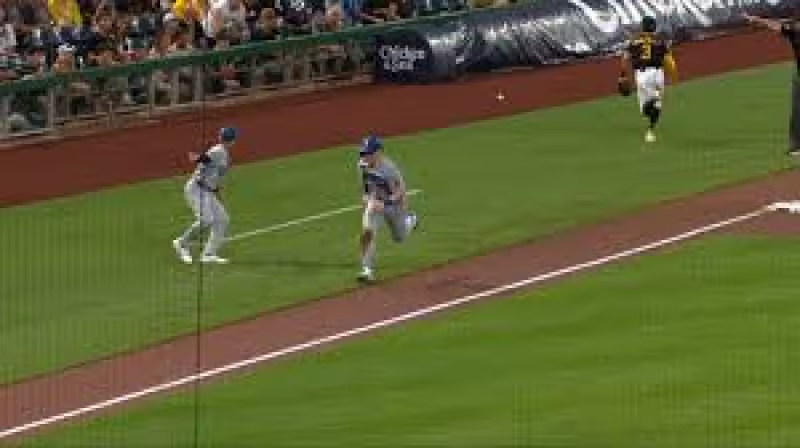
Dalton Rushing’s slide in the fifth inning of the Los Angeles Dodgers’ June 9, 2026 road win at PNC Park has been characterized as illegal under today’s sliding rules, even though the play helped complete a double play and the Dodgers went on to win. The catcher's feet met the dirt as Pittsburgh shortstop Jared Triolo finished a throw to first to complete the twin killing.
The play’s immediate weight is in what it did on the field: Triolo’s feed to first base erased the runner, and the sequence ended the inning. But it also landed as a rule question. A postgame review called the move “textbook” for much of baseball history — roughly 1930 through 2016 — while saying it would violate the modern standard that governs how runners may slide into fielders.

That modern standard traces to the 2015 NLDS, when Chase Utley’s violent slide into Rubén Tejada prompted Major League Baseball to tighten enforcement. Rule 6.01(j) now requires a runner to make a bona fide slide. Under the rule a bona fide slide means the runner makes contact with the ground before reaching the base, is able to and attempts to reach the base with a hand or foot, is able to and attempts to remain on the base at the end of the slide except at home plate, and does not change his path to initiate contact with a fielder.
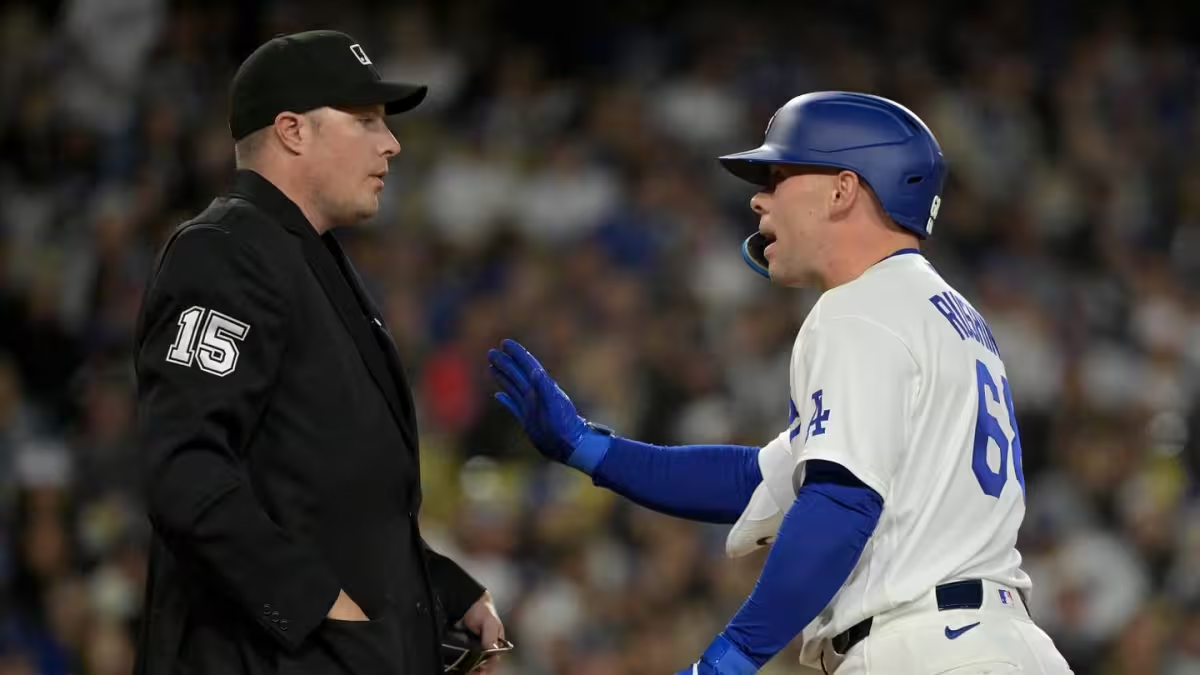


The tension here is historical. From about 1930 through 2016, the sort of takeout slide Rushing used was baseball orthodoxy — a legal, even admired, way to break up a double play. By today’s definition, however, the literal purpose of Rushing’s slide was to take out the shortstop, a description that places the move on the wrong side of the bona fide-slide test: changing path to initiate contact or making contact beyond the attempt to get to the bag are the particular red flags the rule was written to catch.
How that tension matters in practice is the open question. The verified record from the game is straightforward about the sequence — fifth inning, Triolo’s throw to first completed the double play over Rushing — and the Dodgers’ eventual victory. What the box score does not settle is whether umpires treated the slide as an infraction in real time, issued any penalties, or flagged the play for league review. That absence is consequential: enforcement — not the wording alone — determines whether plays like this change outcomes or merely animate postgame arguments.
The immediate consequence is a renewed debate on how modern rules reshape ordinary in-game decisions. If the slide is judged illegal under Rule 6.01(j), it illustrates how a motion that would have been routine for nearly a century now risks penalty; if it is allowed to stand without sanction, it underscores the gap between the rulebook and on-field enforcement. Either way, the clearest outstanding fact from June 9 is simple and unsettled: whether Rushing was penalized for the slide, and whether that ruling will prompt any official review or clarification from Major League Baseball.



