



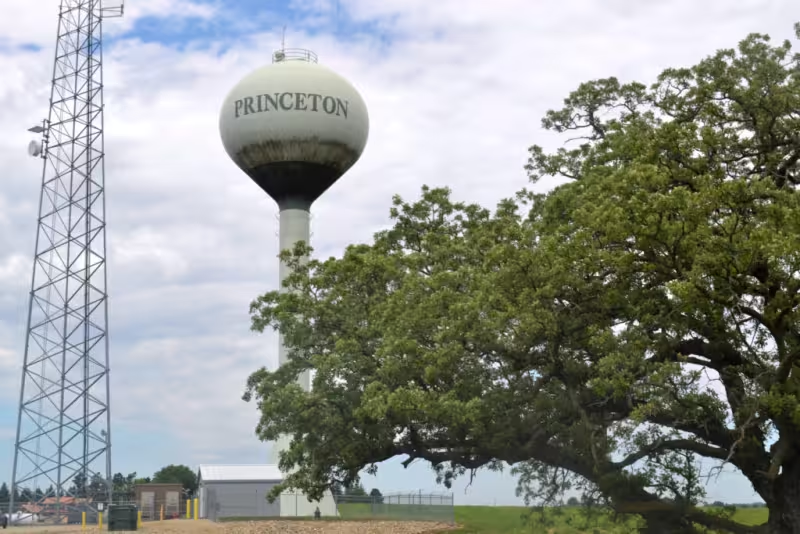
Princeton shut down a new backup well in September 2024 after tests found the water carried too much nitrate to meet federal drinking standards, leaving the town of nearly 1,000 residents reliant on its main well for clean water. The well, meant to give the Iowa river town a second source, could not be used after samples came back above the Environmental Protection Agency limit.
The problem showed up after the town spent nearly $800,000 drilling the well and building a water tower to go with it. In September 2024, the Iowa Department of Natural Resources told city officials that the latest samples had violated the EPA's maximum nitrate contaminant level of 10 milligrams per liter, and water from the well tested at 12.1 milligrams per liter. The city shut it down immediately.


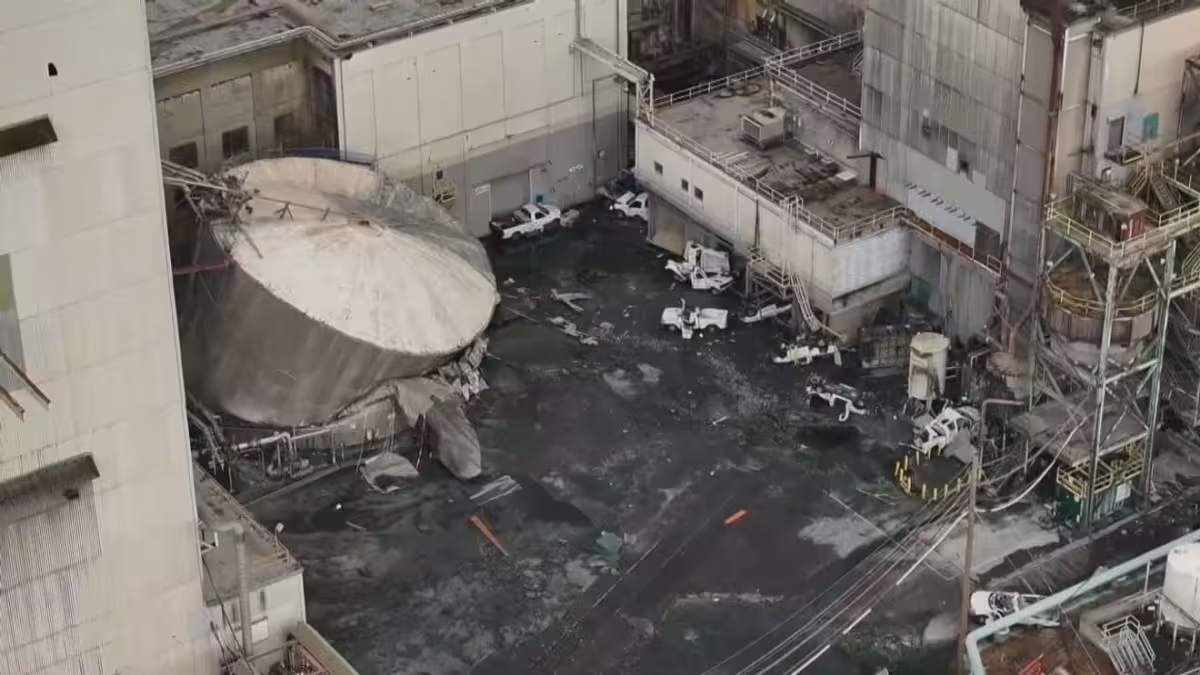
Princeton's water problem did not begin with that well. The town capped its 40-year-old auxiliary well in 2009 after years of state violations for high nitrate levels, then ran into another crisis in late 2022 when an overly powerful pump caused eight months of costly water main breaks. When crews installed a smaller motor, nitrate contamination in the new well became clear.
That left Princeton trying again to build a dependable backup for a system that has long been fragile. The town sits on the banks of the silty Mississippi River, and its main well, drilled in 1963, still supplies enough clean water for its 350 households and businesses. The new well was supposed to give the community room to grow, but it has become another reminder of how hard it is to secure a second source in a place where nitrate has kept showing up.
Chris Rindler, who continues to sample the decommissioned well, said the town cannot afford to leave nearly 1,000 people without reliable potable water. He said concentrations peaked in spring 2025 at around 16 milligrams per liter, and since the shutdown not a single sample has fallen within the allowable range. The unresolved question is whether Princeton can find a backup source that actually works, or keep depending on one well far longer than officials want.



