



The Milwaukee Bucks are continuing to evaluate whether to trade Giannis Antetokounmpo and expect to have an answer by the June 23 NBA Draft.
Co‑owner Jimmy Haslam said in early May that the team should know by that date, and this week he reiterated the franchise is not shy about moving a cornerstone player if the price is right.

Less than three weeks remain until the June 23 deadline, and teams around the league are parsing postseason results and late roster moves to decide how much they can and will offer for a player of Antetokounmpo’s stature.
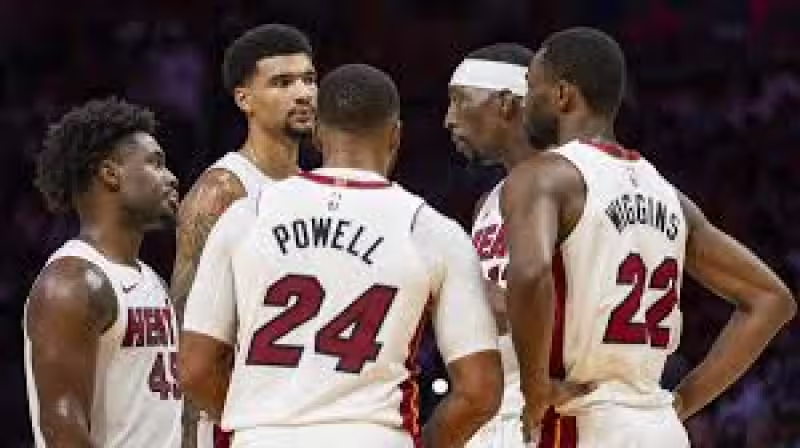
Among the destinations drawing the most chatter, Miami registers highest on leaguewide talk: many people around the league believe Antetokounmpo will end up there, and Miami was among the most dogged teams pursuing him at the trade deadline.
New York remains part of the conversation as well; Antetokounmpo showed legitimate interest in playing for the New York Knicks last summer, a fact that keeps the Knicks on lists compiled by rival executives and scouts.
Portland is routinely described as an unlikely fit because Antetokounmpo prefers to remain in the Eastern Conference, and Oklahoma City was not expected to pursue him, even though the Thunder hold an unusually deep stable of future assets.
That asset picture for Oklahoma City is stark on paper: the Thunder own 12 first‑round picks and 13 second‑round picks between 2026 and 2033, and they also hold Nos. 12 and 17 in this year’s draft—currency that would be attractive in many scenarios even if the Thunder themselves were not expected to press for Antetokounmpo.
The trade market for Antetokounmpo is evolving during the postseason. Teams are watching playoff trajectories, salary flexibility and the draft closely; front offices say they are adjusting valuations in real time rather than making fixed offers now.
The Bucks can afford a measured approach, a posture the ownership has signaled publicly, but the friction is simple and immediate: the patience runs up against a calendar date. By June 23 the franchise has said it expects to know whether it will move the player who has defined its recent identity.
That deadline concentrates consequences. A trade before or at the draft would reshape Milwaukee’s roster construction and ripple across the league, changing how teams frame both short‑term contention and long‑range asset management. It would also settle long‑running speculation that has followed Antetokounmpo since last season.
What remains unresolved is not the timing but the price. The single most consequential open question is which team, if any, will actually meet Milwaukee’s asking package—one that would have to reflect Antetokounmpo’s status as a generational two‑way star and the Bucks’ willingness to convert a championship window into future assets.
Expect clarity on the when by June 23; expect the who and the final structure of any deal to be the hard part. Until another franchise demonstrates the willingness to match Milwaukee’s valuation, the market will keep shifting around a fixed calendar point: less than three weeks from now, when the draft forces a public answer.



