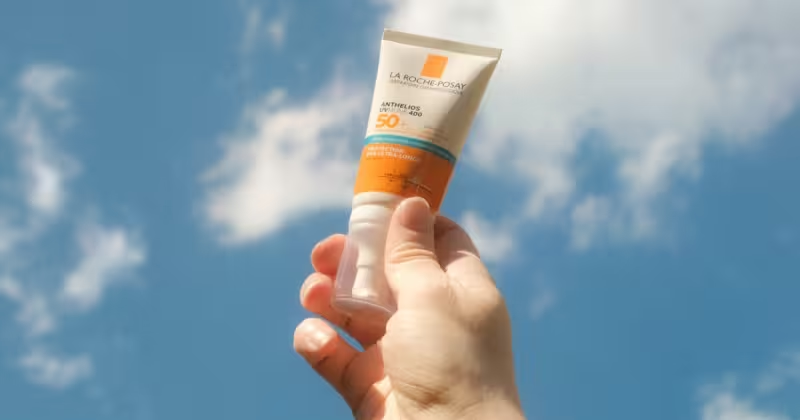
The Food and Drug Administration on Tuesday added bemotrizinol to its list of allowed sunscreen ingredients, clearing the way for a new UV filter that has long been used abroad and could reach U.S. shoppers by the end of the year.
The move matters because bemotrizinol is broad-spectrum, blocks both UVA and UVB rays and is far more stable than current U.S. chemical filters, which can break down in the sun. The FDA said the ingredient has low levels of absorption into the body, and the Environmental Working Group praised the decision, saying it offers better protection against UVA rays in particular. David Andrews called it “a great day for American consumers and everyone who has fought to improve sunscreen options and close the UVA protection gap in U.S. sunscreens.”

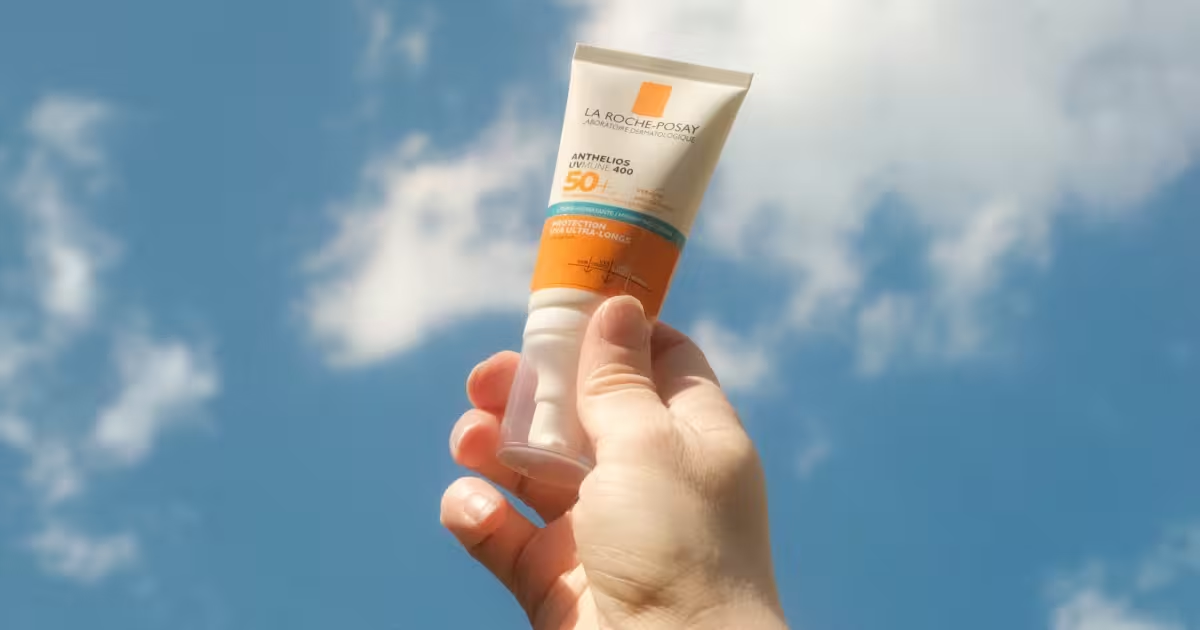

Bemotrizinol has been popular for years in Europe, Australia and some Asian countries, but the United States had not added a new compound to its sunscreen ingredient list for more than 20 years. That gap helped keep American sunscreen formulas narrower than many overseas options, even as demand grew for products that protect more fully without the tradeoffs seen in some mineral sunscreens, which can leave a white cast on the skin.
The friction is simple: the ingredient is now allowed, but that does not mean consumers can buy it immediately. Current U.S. chemical sunscreen filters protect against either UVA or UVB, and none are broad-spectrum on their own, which is why bemotrizinol has drawn so much attention. DSM-Firmenich said sunscreens containing the ingredient are expected to be available by the end of the year, though it did not specify which products will arrive first or exactly when they will hit shelves.
For manufacturers, the FDA decision opens a long-closed door. For consumers, it could mean a wider set of sunscreen choices with stronger protection against the sun’s rays, but the real test will be whether companies move quickly enough to turn the approval into products people can actually buy this year.