



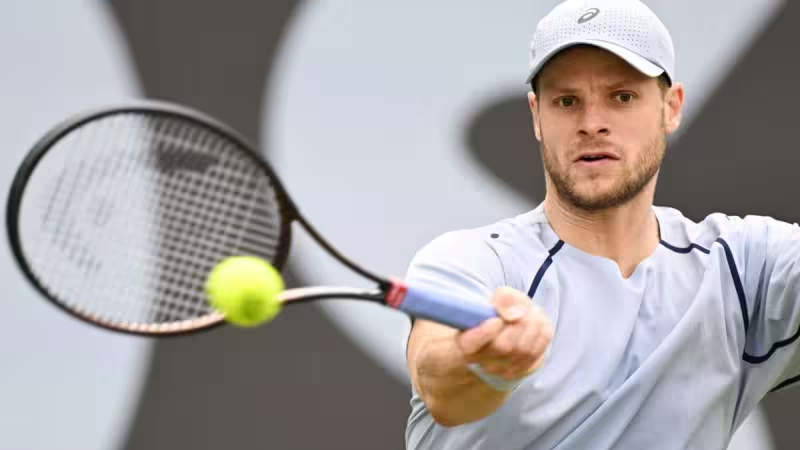
Edwin Weindorfer, tournament director of the Boss Open in Stuttgart, said on Tuesday that his event will not change how it distributes prize money despite a wider dispute over Grand Slam payouts, noting that at Stuttgart “das Preisgeld inklusive der üblichen Antrittsprämien traditionell 20 bis 30 Prozent vom Gesamtbudget aus.” The winner in Stuttgart receives about 117,000 euros this year, Weindorfer added.
The comment came as the debate over how much of tournament revenue should go to players has intensified since before the French Open, where winners in men’s and women’s singles each took home 2.8 million euros and semifinalists received 750,000 euros. Some top players have publicly pushed for a larger cut: a group argues prize money is roughly 15 percent of tournament revenue now and wants Grand Slams to move to 22 percent.

Players’ dissatisfaction has been explicit on the court and off it. Jannik Sinner said the fight is about respect: "Es geht um Respekt," and warned broadly that “Denn ich glaube, wir geben weit mehr, als wir zurückbekommen. Das gilt nicht nur für die Topspieler, sondern für alle Spieler.” Aryna Sabalenka likewise raised the possibility of a boycott. Those threats are the immediate trigger for the current scrutiny of how events from Grand Slams down to ATP 250s account for and spend revenue.
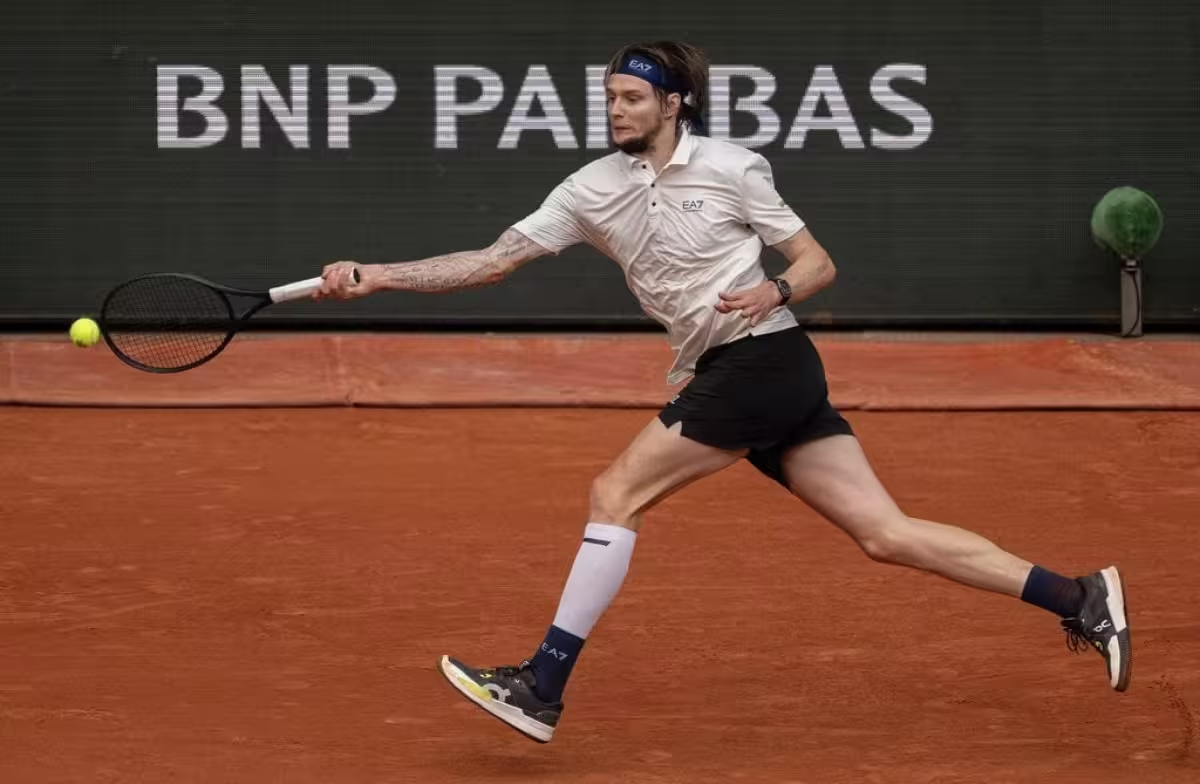
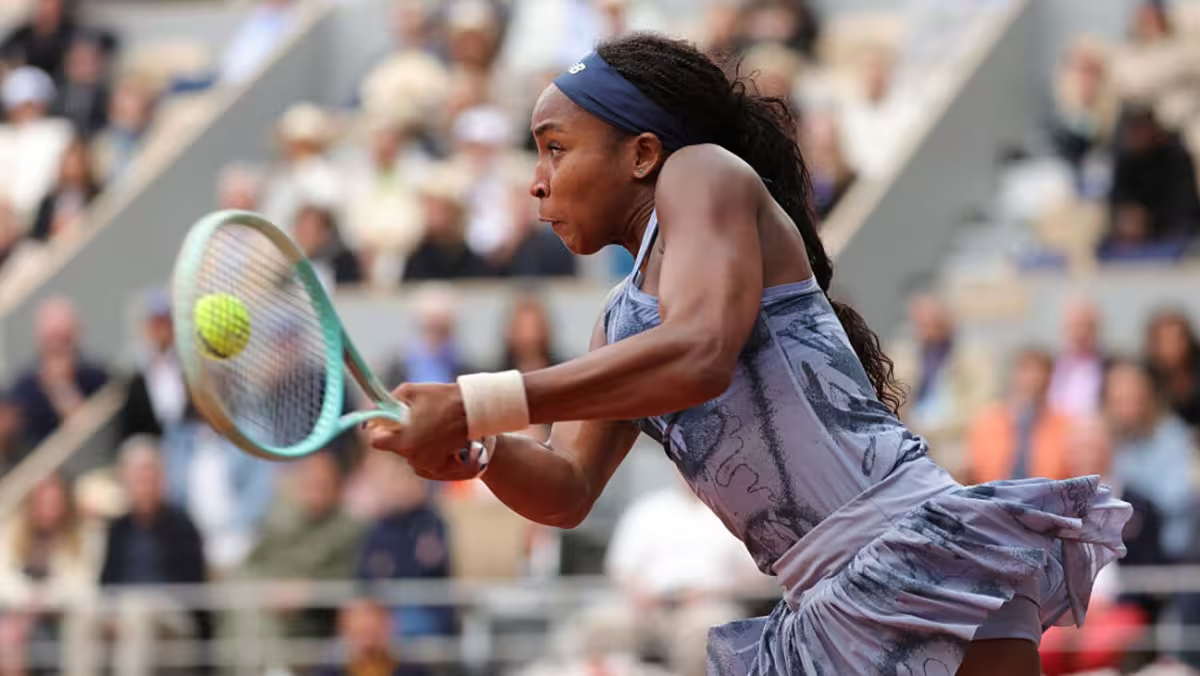
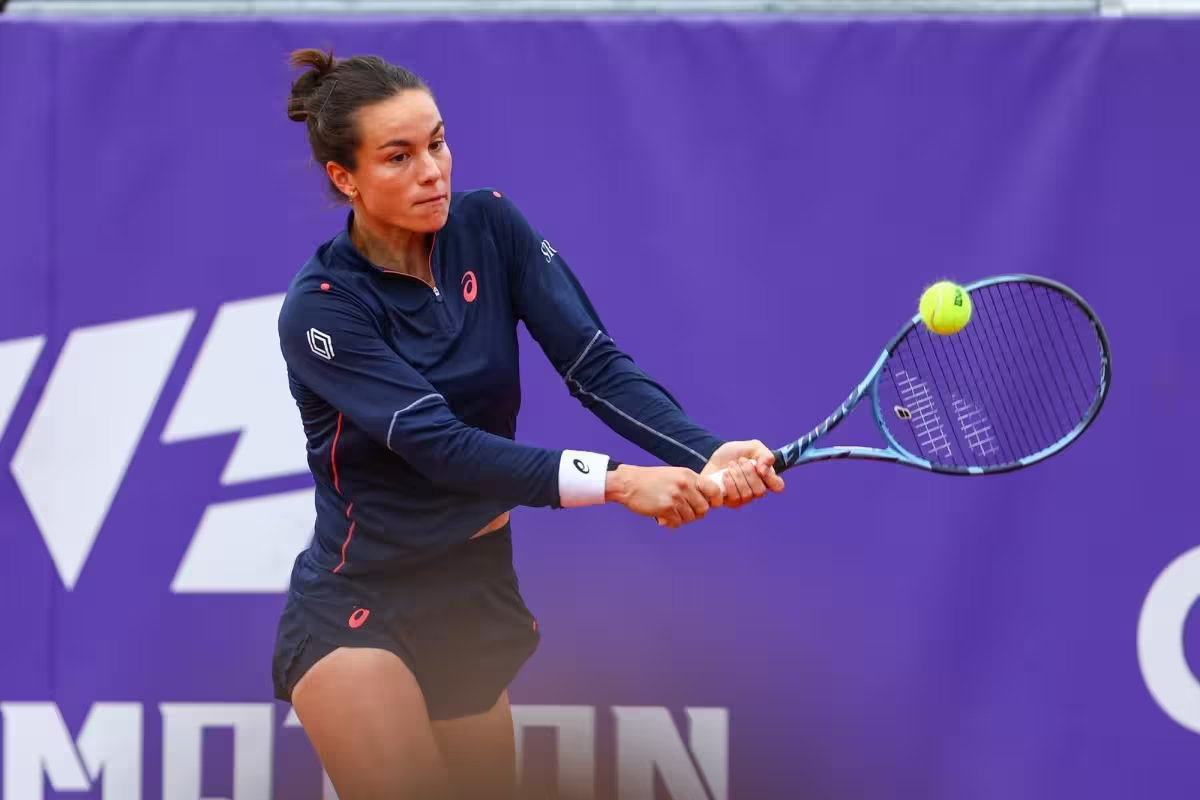
Weindorfer framed Stuttgart’s position as pragmatic and local. Speaking from the VIP terrace at Weissenhof, he stressed that "Tennisprofis" — and then elaborated that they "verdienen sehr gut und haben meist ein sorgenfreies Leben – sie bekommen bei den Turnieren die Übernachtung in Fünfsternehotels bezahlt und einen Fahrdienst an die Seite, ihnen wird alles geliefert und geboten." He also pointed out that ATP Tour prize money generally rises by five to ten percent each year, and that Boss Open budgets have long set aside roughly a fifth to a third of total spending for prize money and standard appearance fees.
The practical consequence is a clear benchmark: an ATP event such as Stuttgart budgets prize money at about 20–30 percent of its totals and pays a mid-tier winner roughly 117,000 euros — a small fraction of Grand Slam champions’ 2.8 million-euro cheques. That gap helps explain why top players pressing Grand Slam organizers are focused on the Slams’ separate finances rather than on individual ATP tournaments, because the Grand Slams manage their revenue independently from the ATP Tour.
Still, the mismatch between player demands and local budget practices creates strain. Weindorfer said plainly, "Die jüngsten Diskussionen haben keinen Einfluss auf unser Handeln," even as threats of boycotts linger above the calendar. Yannick Hanfmann, who won his opening match on Centre Court in Stuttgart in two sets, said it would be welcome if the tours moved toward greater financial unity; his comment underlined how players see coordination as part of any durable solution.
What remains unresolved is whether Grand Slam organizers will concede to the 22 percent demand or whether players will follow through on boycott threats. For now, Stuttgart offers a concrete example of how one tournament balances appearance fees, operations and prize pools — and, in doing so, highlights the scale of the decision the sport must still make about redistributing revenue.



