



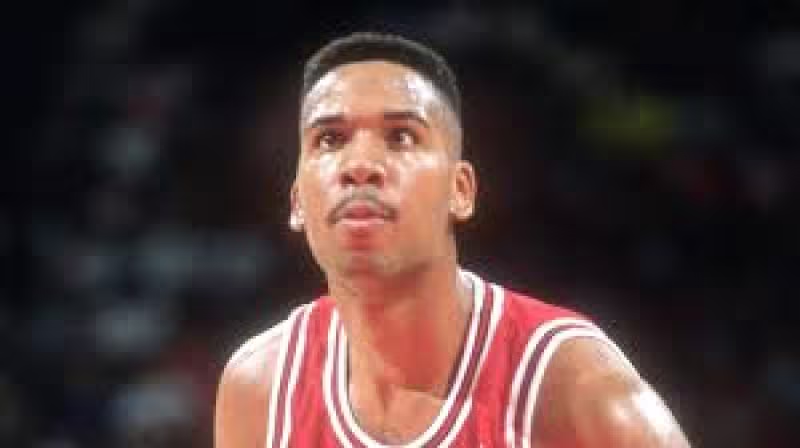
Stacey King, a member of the Chicago Bulls’ early 1990s championship teams and the franchise’s long‑time television voice, has died at age 59, the Bulls announced Sunday.
King was drafted sixth overall out of Oklahoma by the Bulls in 1989 and played alongside Michael Jordan and Scottie Pippen during the club’s back‑to‑back title run in 1991 to 1993. After his time in Chicago he spent parts of his career with the Timberwolves, Heat, Celtics and Mavericks before returning to Chicago to anchor Bulls TV broadcasts.

In a statement, Bulls owner and chairman Jerry Reinsdorf called King “a cherished member of the Bulls family and one of the truly unique personalities in our organization’s history.” Reinsdorf added that “his connection to Chicago, the Bulls and our fans spanned more than three decades — first as a player and later as the unmistakable voice that helped bring Bulls basketball into the homes of generations of fans.”
The announcement frames King’s death as an immediate loss to the organization and its fan base. Reinsdorf concluded, “We will miss him deeply and remember the joy, energy, humor, candor and passion that he brought to our organization, our broadcasts, and our fans every day.” For many viewers, King’s post‑playing career made him as recognizable as his role on those championship rosters.

Despite the quick public acknowledgment by the Bulls, the team did not provide a cause of death. The organization also did not outline any public memorial plans or next steps for fans seeking ways to pay respects, leaving several practical questions unanswered.
King’s arc with the franchise — top draft pick, role player on title teams, then the familiar TV presence in living rooms across the city — tied him to Chicago for more than three decades. That long association helps explain the rapid, personal tone of the club’s response and why his passing has been met with immediate reaction from supporters.
Readers looking for more on King’s career and the Bulls’ statement can find background coverage and related items on FilmoGaz, including a retrospection on his role with the team and recent coverage that links to other sports pieces on the site. For context on how the roster and media roles have evolved, see the FilmoGaz profile of King and a separate story on league smaller players and roster trivia.
The single most consequential unanswered question remains what caused King’s death; the Bulls have not provided that detail and have not announced memorial arrangements. Until the organization releases more information, fans and media will be left waiting for those specifics and for plans to honor a figure who spent decades representing the team on and off the court.



