



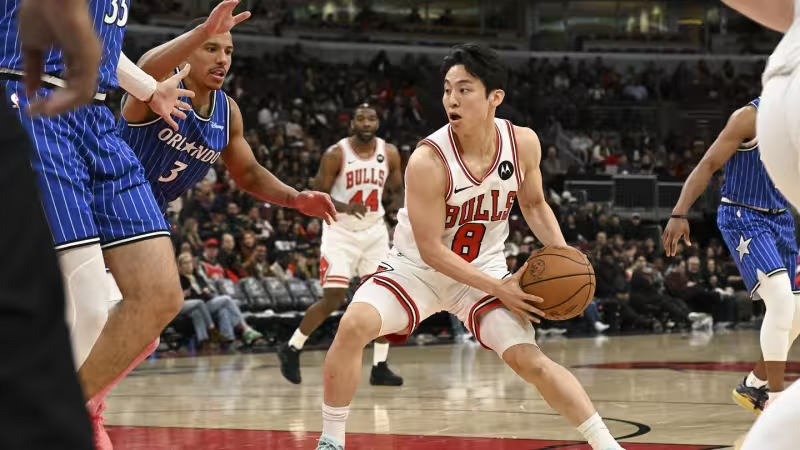
Yuki Kawamura walked into an NBA arena this season carrying a simple, unavoidable fact: the league lists him at 5 feet 7, making him the shortest NBA player on a roster at 25 years old.
That single measurement rewrites a common shorthand. Kawamura stood four inches shorter than the cluster of 5-foot-11 guards who make up the second-shortest group in the league, and he finished the season having appeared in 18 contests, averaging 3.4 points in 11.6 minutes per night.

Kawamura’s path to that listing was not a straight line. His breakout came on the international stage at the 2024 Olympics, where his play drew NBA scouts; a strong preseason with the Memphis Grizzlies turned those looks into a two-way contract and 22 games as a rookie, and he signed with Chicago for summer league action in 2025. He suffered a blood clot during training camp, and once he recovered the Bulls signed him to a two-way deal that allowed him to log those 18 regular-season appearances.
The numeric weight of Kawamura’s height matters beyond novelty. In a league with a handful of players under 6 feet, being listed at 5 feet 7 is a substantive outlier: it changes matchups, defensive assignments and the expectations teams bring to a roster slot. Kawamura’s minutes—modest but real—are proof that teams are willing to use roster flexibility on players whose strengths outweigh perceived physical limits.
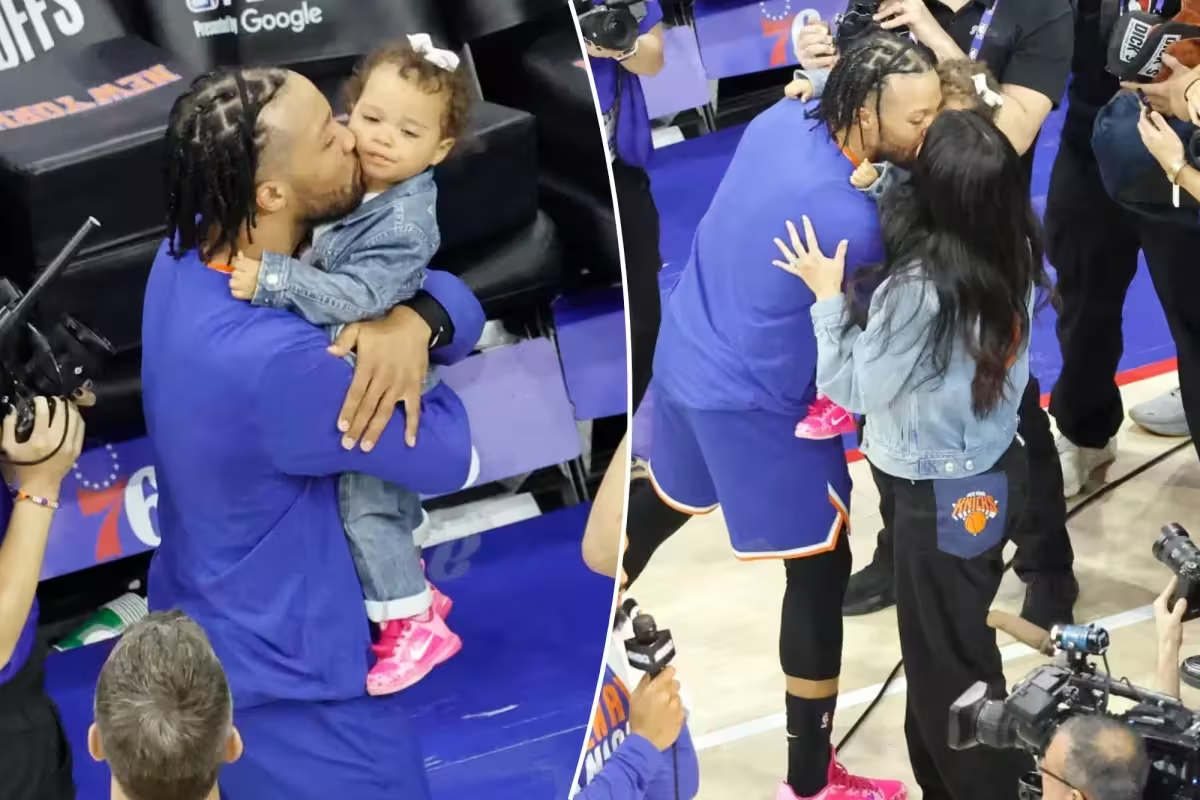
That point reframes comparisons fans hear every season. Guards like Steph Curry and Jalen Brunson are commonly described as small in public conversation, but neither is anywhere near Kawamura’s listed height; the shorthand of “diminutive” often misses how extreme Kawamura’s place on a roster is by the league’s measures.
Still, the story contains friction. Kawamura’s place on a roster arrived only after a medical scare—a blood clot in training camp—and after using a two-way contract to earn his minutes. The gap between earning short-term roster access and securing a lasting spot remains wide, especially for players who give teams niche value in limited minutes.
Context helps explain why teams will keep testing that gap: the three-point era has opened room for smaller guards to function as shooters, ballhandlers and spacing catalysts. Kawamura’s Olympic exposure and his work in Memphis and Chicago show the mechanisms franchises now use to identify and evaluate those traits—summer league, two-way deals and short stints in real games.
What the record does not settle is the most consequential question for Kawamura and for roster construction: will an NBA team keep a 5-foot-7 player on a standard contract when rosters are reshaped this summer? The public facts end with Kawamura’s 18-game season and his averages; his next roster move remains unconfirmed.
For now, Kawamura’s listing is both a headline and a hinge. It announces that a 25-year-old who rose through the Olympics and the G League can hold minutes at the highest level, and it sets the stage for the off-season decision every evaluator must make—can his production in 11.6 minutes a night be scaled into a role that survives the league’s churn?



